




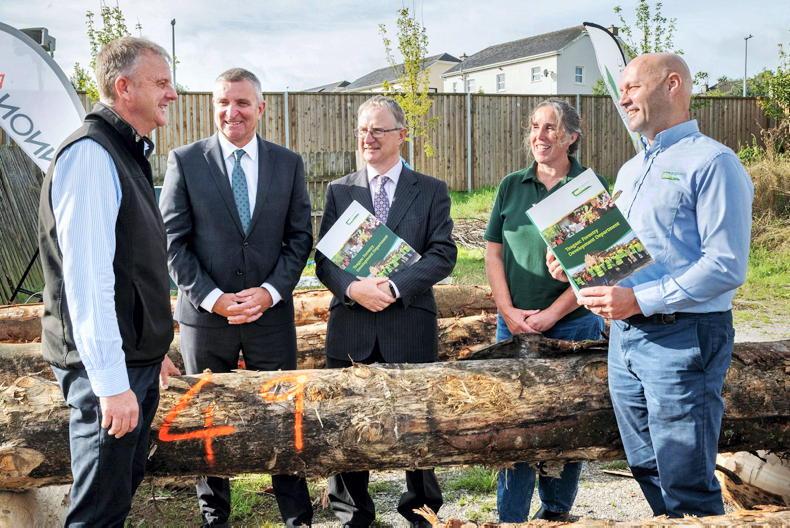
Two and a half years after it was established, the interdepartmental and industry timber in construction steering group (TCSG), chaired by Professor Owen Lewis has published its final findings.
The 29-page report contains seven key recommendations that “form a roadmap towards safe regulation and increased use of timber”, said Minister of State with responsibility for forestry Niall Collins.
Unlike other European countries that now acknowledge wood as a major construction and energy medium, Ireland has an embedded masonry rather than a wood culture, so Lewis is cautious in his report foreword, saying the TCSG “has sought to balance ambition with realism”.
Recommendations
The report’s recommendations, which cover technical specifications, procurement policies, education reform and the need for industry collaboration, are:
The implementation of the recommendations “will require sustained collaboration between government and industry, backed by clear accountability and a long-term commitment to see this transformation through”, the report states.
“A structure is necessary to oversee their timely implementation,” while the group proposes that these “would be included in the next Climate Action Plan”.
Comment
The work carried out by the TCSG since 2023 has been invaluable in drawing together the expertise of 64 institutions and organisations. These have produced “technical and policy-oriented publications” that were lacking.
A key element in the implementation of the TCSG recommendations will be long-term timber supply – and this is now in danger. Recent average afforestation programmes of 2,000ha (2022-2026) ensure timber production after 2035 will fall off a “cliff edge”, according to Henry Phillips in his 2024 report, Impact of Forest Policy and Forest Regulations on Future Commercial Timber Supply and the Sustainability of Timber Processing.
A key aim of the TCSG was to “maximise the use of home-grown timber”. There are no references to home-grown timber in the group’s final report or to the slump in afforestation, which this year could be the lowest since the 1930s.
While comment on Ireland’s underperforming planting programme was outside the group’s remit, the report is not unaware of the threat to long-term timber supply and the need for consistent afforestation “to avoid a shortage of Irish grown timber with an increase in demand”.
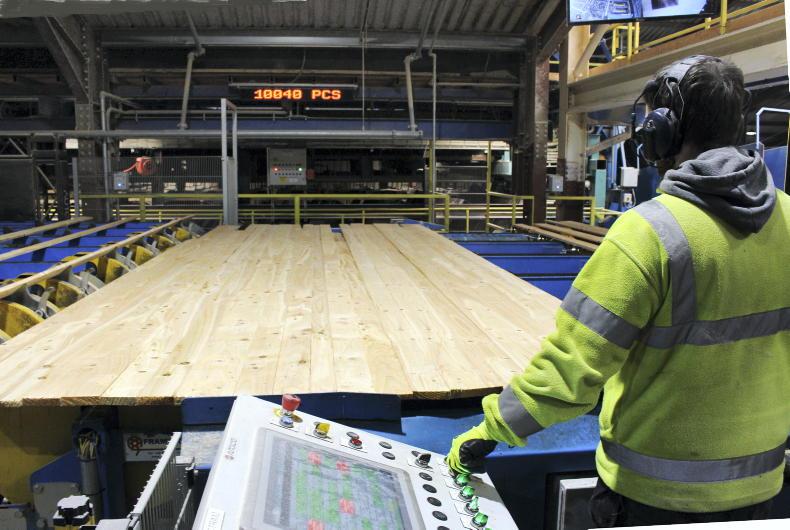
It highlights the importance of timber frame construction in meeting Ireland’s housing needs, estimated at “over 50,000 homes per year, with a pathway to achieve 60,000 homes annually in 2030 and thereafter”. It also draws comparisons with Scotland “where the use of timber frame construction exceeds 90% of scheme houses”.
However, Scotland has achieved an average annual afforestation programme of over 10,000ha in recent years. To achieve its goals Prof Lewis says that none of the recommendations will be achieved in isolation.
Forestry Development Agency
The same approach will be required within the forestry and forest products sector. Few sectors have a greater degree of interdependency than forestry. How the various links along the forest value chain perform and interact determines the viability of the sector as a whole.
Representatives of these links including forest owners, foresters, sawmillers, university forestry faculties and nursery owners have called for an independent forestry development agency to lead and promote the sector. Minister of State Niall Collins, who is charged with the implementation of the TCSG report, should listen to them, as forestry is the only natural resource without such an agency.
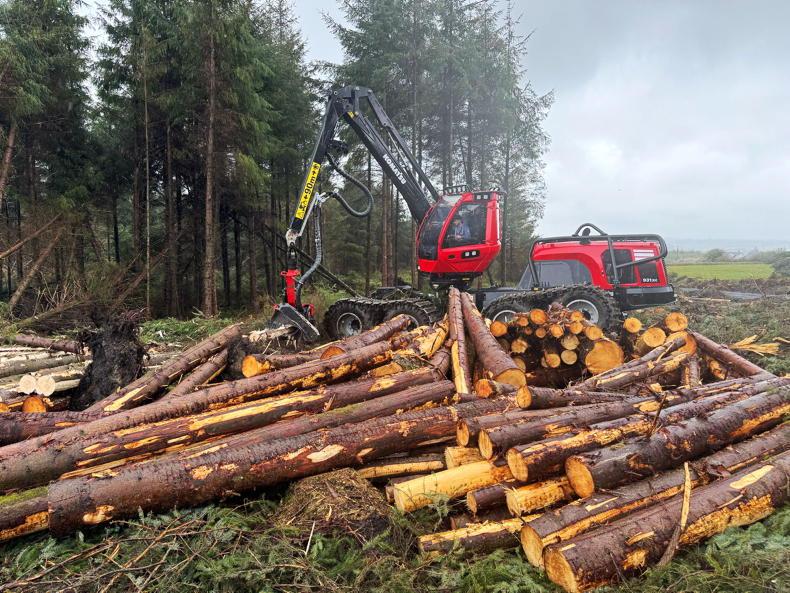
The headline figures issued by CSO recently for timber supply in 2025 showed an increase of 18% over 2024, but the breakdown of where the timber was sourced surprised many in the sector. While the overall increase was not surprising because of windblow damage, many expected Coillte’s supply to exceed private harvest, but the opposite has happened.
Few anticipated that private log supply would increase by a record 48% to 2.95m m3 over 2024, while Coillte’s supply actually fell by 6%,which is the second lowest volume removed from the company’s forests for 10 years. In 2016 for example, log supply from Coillte was at 2.59. m³, while private supply was only 0.86m m³.
All forestry companies interviewed, said they were surprised that private supply was so high. The prevailing view was that sawmills “hoovered up” high volumes from privately owned windblown forests in the aftermath of storm Éowyn. Many growers sold timber to sawmills who were offering relatively good prices during the first and second quarters last year while export markets rapidly opened as well.
However, one forestry company said “an increase of 20% by the private sector might have been expected but the harvesting and haulage capacity simply doesn’t exist to remove volumes of this magnitude”.
Overall timber prices were down. In 2025, the value of wood taken from forests was €238m.
This was 1% higher than the value of wood in 2024, in contrast to the 18% increase in volume of wood removed in 2025. While this decrease was expected due to a sluggish market, it is mainly due to increased harvesting costs, which on windblow sites can be 35% to 45% higher than in standing sales.
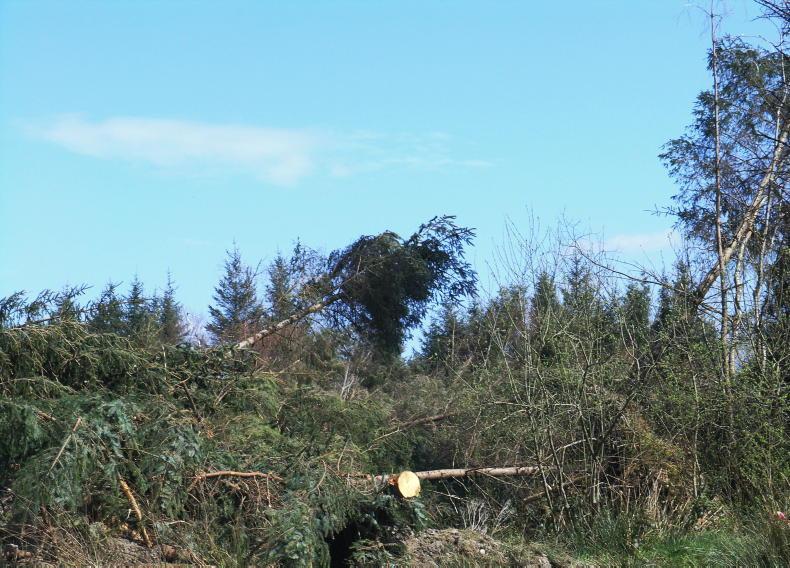
The Irish Timber Growers Association (ITGA) is organising a field day, on managing windblown forests on Friday 26 June in Kiltynaskellan Forest, Co Cavan.
Held in collaboration with the Irish Forestry Unit Trust (IForUT), the event will assess the damage caused by storm Éowyn since January 2025 and outline the subsequent windblow management, site harvesting, timber marketing and reforestation operations.
Department forestry inspectors will outline the recent Reconstitution Scheme for Windblow and forest protection issues such as potential threats from forest pests and diseases. Due to safety considerations and available space, booking is essential. While ITGA members receive first preference, non members are accommodated as far as possible. Book by email (info@itga.ie) prior to June 22 for information on field day schedules, meeting points and other details.


SHARING OPTIONS