



There were 9,000 eligible calves born in NI during the first year of the Suckler Cow Scheme which will not receive the £100 payment.
To join the scheme, farmers are required to “opt-in” by completing a short, one-off application on the DAERA website.
However, new figures from the department show that 1,600 farms which had eligible calving events during 2025/26 had not completed the opt in process.
At a payment rate of £100 per eligible calving, the unclaimed funding works out at £560 per farm on average and equates to £900,000 overall.
The latest DAERA figures indicate that 85% of eligible farms did opt in to the scheme and approximately 135,500 calvings events will draw down the payment in the first year.
The department state that 60% of heifers met the scheme criteria in 2025/26 by having their first calf by 34 months of age.
With mature cows, 75% of calving events met eligibility criteria of a maximum calving interval of 415 days.
The second year of the scheme is now underway and eligibility criteria has been tightened to a 405-day calving interval, and 32-month age of first calving.
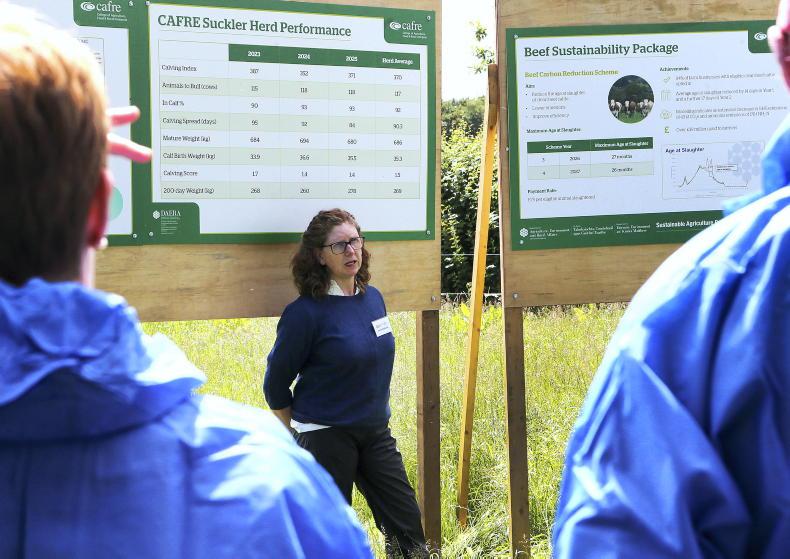
At farm walk at Greenmount last week, Aveen McMullan from CAFRE said farm businesses that did not opt in to the first year of the Suckler Cow Scheme can still join for year two.
“For the farms that completed the opt in for 2025/26, there is no need to do it again for subsequent years,” she said.
Figures were also presented for the Beef Carbon Reduction Scheme (BCRS) where 94% of farms with eligible cattle have completed the online opt in.
The BCRS started in 2024 when scheme criteria set a maximum age of slaughter of 30 months.
This dropped to 28 months last year and is currently 27 months in 2026.
McMullan said average slaughter ages dropped by 14 days in the first year of BCRS, fell by a further 17 days in year two, and is down by another seven days so far in 2026.
“There is evidence of a definitive shift in age at slaughter,” she said.



SHARING OPTIONS