Although we still have some good covers of grass available on the farm, we now have all cattle housed for the winter. Sheep will clean off these grass covers with the aim to get swards grazed down to between 3.5cm and 4.0cm. As with summer grazing, ewes are rotated around fields.
We always find at this time of the year that it is difficult to get cattle to graze out swards without causing some field damage, or having an impact on cattle performance.
The plan is to have the driest fields eaten off first as they will be needed for turning cattle out early next spring. These are also mainly the fields with the highest perennial ryegrass content.
Generally speaking, I have found that closing up perennial ryegrass swards from now is beneficial as any regrowth during the winter will be available for grazing next spring.
However, on older swards, I have found that trying to carry any grass covers over the winter is a waste. On older swards, grass covers tend to disappear, or rot, over the winter, resulting in poor grass quality next spring and it delays spring growth.
Breeding
Breeding progressing well
in autumn-calving herd
The last of the autumn-calving cows and replacement heifers were housed by early October. Early housing helped cows to settle on to their new diet and surroundings before breeding started on 15 October.
We have 37 cows coming forward for breeding again this year out of a group of 41 scanned in-calf last winter. Two cows lost calves at birth and are being fattened for slaughter. A third cow was slaughtered after coming in heat during the summer, despite being scanned in-calf last January.
By 28 October, 27 of the 37 cows have been bred to AI. Cows are being bred to observed heats. Over the same two-week period, 10 out of 20 potential replacements have been inseminated.
I intend retaining 10 of these heifers for myself. The remainder will be sold on as herd replacements. The heifers were weighed on 4 October and averaged 384kg.
Improving fertility in autumn cows
When I started keeping an autumn-calving herd five years ago, it was made up of a handful of cows which had slipped from a group of spring-calving cows. Five years ago, the calving index for this group was 392 days.
The calving interval for the cows that calved this autumn was 370 days. In my experience, the main things affecting fertility in this herd are:
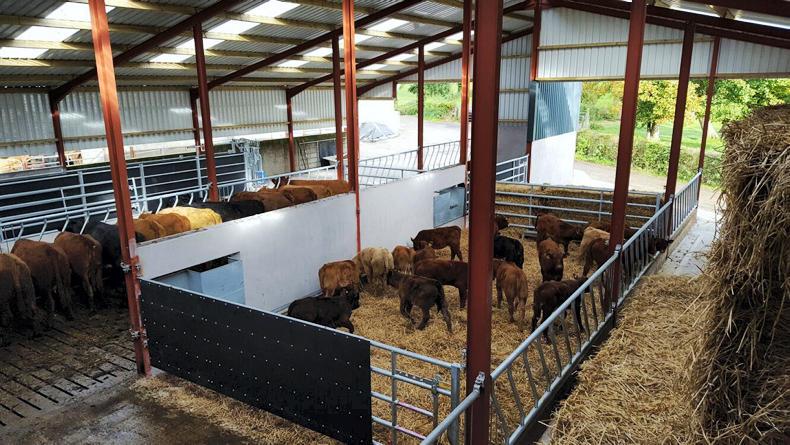
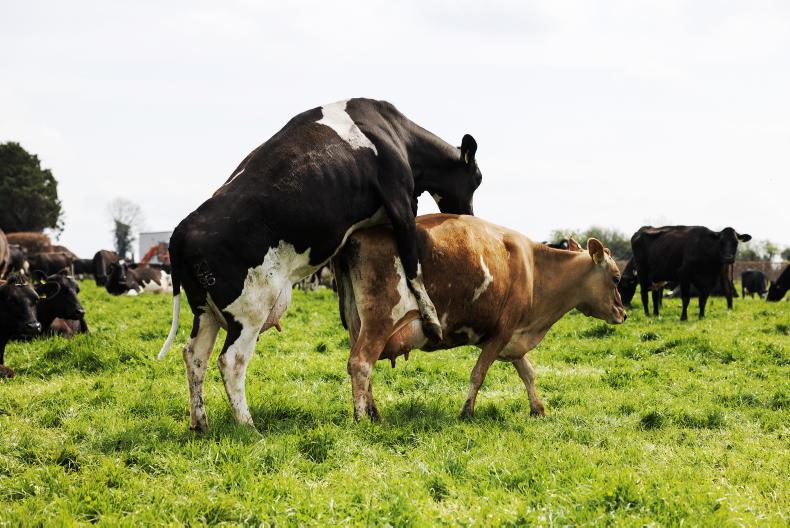
Body conditions score: after calving during August and September, cows can quickly lose condition as grass energy levels and dry matter drops off. I am much better having these cows housed so that diet and body condition score can be controlled. Even with the best quality silage, some supplementation is needed.Get them housed and settled in advance of breeding: as well as helping maintain body condition by housing earlier, it also means cows are not being disrupted during breeding which I have often found to reduce conception rates.Cow type: with indoor feeding being more expensive, an easily fleshed cow with moderate mature weight (630kg to 650kg) is more likely to be able to maintain condition on silage and a modest amount of meal. Some traditional breeding seems to help this.Housing considerations: traditionally, both cows and replacement heifers have had access to open yards during breeding. I believe having access to a solid floor underfoot rather than just slats, increases the amount of activity at breeding. This makes heat detection easier.Having access to an open yard also gives animals more roaming space. This year, I erected additional housing and, with the autumn calvers in mind, I have left one solid pen accessible to cows to aid activity.
Restricted suckling: this seems to play a major role in helping cows to cycle earlier. I allow calves to suckle twice daily. Again, when designing the new cattle housing, I used stock boarding to keep calves out of sight from their mothers. This also seems to be a help. Another benefit of keeping calves away from their dams is that there is less risk of injuries during mounting activity.Tight breeding period: similar to the spring-calving herd, a tight calving period (less than 12 weeks) automatically helps to improve fertility. Having more cows at a similar stage of their production cycle increases activity and also allows herd management to be more focused on specific tasks, ie breeding.Replacement heifers: target breeding weights for heifers is 380kg to 400kg, which is 60% to 65% of mature cow weight. In my experience, this is not difficult to achieve with reasonable summer grazing. Similar to cows, heifers need to be supplemented with 1kg to 2kg/day of meal even with good quality silage during the breeding season.Finishing cattle
Fat cows
The first animals to be finished in the autumn are cull cows. We try to scan cows around six weeks after breeding has finished. This lets me pull out empty cows and give them extra feeding before housing.
In the past, we often sent these cows for slaughter directly off grass. However, more recently, we have looked at cow weights and potential for addition weight gain more closely.
An intensive finishing period of 40 to 60 days after weaning on 10kg/cow/day often gives weight gains of up to 2kg/day. As a result, cows kill out better and give a return on the additional feeding. Cows slaughtered this year will average 380kg to 400kg deadweight.
Steers
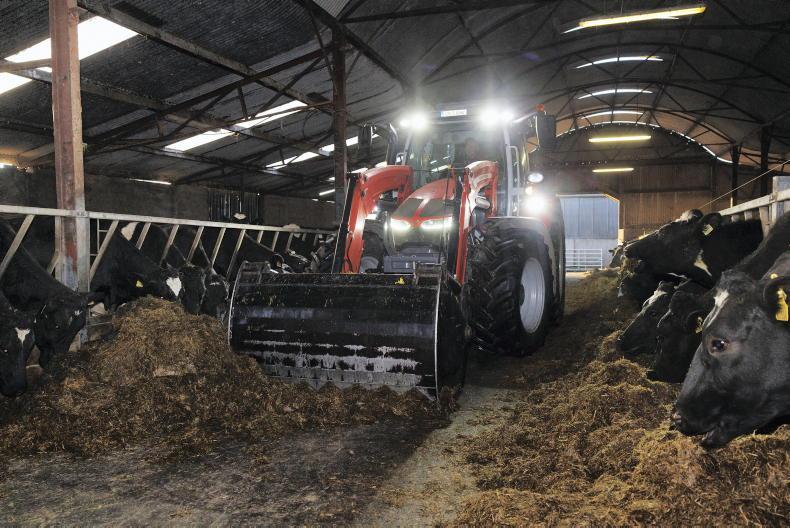
All of the spring 2015-born steers were housed in late August at an average weight of 498kg. After weighing again on 27 October, they averaged 597kg, which is an average daily gain of 1.48kg from housing. They are being fed first-cut silage (DM 22.0%, 11.3 ME, 11.2 protein, 71 D-value) and 7kg of a 14% high energy blend and will be slaughtered by Christmas.
Young bulls
The 2015 autumn-born bulls have also performed well since housing, after some disappointing performance at grass. Bulls were housed on 13 August at an average weight of 407kg.
On 27 October, they weighed 557kg, giving an average gain of 2.02kg/day. Up until now, they have been on 8kg/day of meal, along with silage.
Bulls are now moving on to ad-lib meal and straw to finish under 16 months by mid-December. The target carcase weight will be 360kg or higher.
Surplus spring-born heifers
sold in-calf
For the third year, all surplus heifers that had breeding potential were bulled and sold in-calf during September.
This year, we sold 12 which would otherwise be currently housed and fed for slaughter. This has been a huge help in reducing housing requirements during herd expansion. Another benefit is that cattle are sold on earlier and with less inputs required. There are 37 cows and 11 heifers scanned to calve in our spring herd in 2017.
Although we still have some good covers of grass available on the farm, we now have all cattle housed for the winter. Sheep will clean off these grass covers with the aim to get swards grazed down to between 3.5cm and 4.0cm. As with summer grazing, ewes are rotated around fields.
We always find at this time of the year that it is difficult to get cattle to graze out swards without causing some field damage, or having an impact on cattle performance.
The plan is to have the driest fields eaten off first as they will be needed for turning cattle out early next spring. These are also mainly the fields with the highest perennial ryegrass content.
Generally speaking, I have found that closing up perennial ryegrass swards from now is beneficial as any regrowth during the winter will be available for grazing next spring.
However, on older swards, I have found that trying to carry any grass covers over the winter is a waste. On older swards, grass covers tend to disappear, or rot, over the winter, resulting in poor grass quality next spring and it delays spring growth.
Breeding
Breeding progressing well
in autumn-calving herd
The last of the autumn-calving cows and replacement heifers were housed by early October. Early housing helped cows to settle on to their new diet and surroundings before breeding started on 15 October.
We have 37 cows coming forward for breeding again this year out of a group of 41 scanned in-calf last winter. Two cows lost calves at birth and are being fattened for slaughter. A third cow was slaughtered after coming in heat during the summer, despite being scanned in-calf last January.
By 28 October, 27 of the 37 cows have been bred to AI. Cows are being bred to observed heats. Over the same two-week period, 10 out of 20 potential replacements have been inseminated.
I intend retaining 10 of these heifers for myself. The remainder will be sold on as herd replacements. The heifers were weighed on 4 October and averaged 384kg.
Improving fertility in autumn cows
When I started keeping an autumn-calving herd five years ago, it was made up of a handful of cows which had slipped from a group of spring-calving cows. Five years ago, the calving index for this group was 392 days.
The calving interval for the cows that calved this autumn was 370 days. In my experience, the main things affecting fertility in this herd are:
Body conditions score: after calving during August and September, cows can quickly lose condition as grass energy levels and dry matter drops off. I am much better having these cows housed so that diet and body condition score can be controlled. Even with the best quality silage, some supplementation is needed.Get them housed and settled in advance of breeding: as well as helping maintain body condition by housing earlier, it also means cows are not being disrupted during breeding which I have often found to reduce conception rates.Cow type: with indoor feeding being more expensive, an easily fleshed cow with moderate mature weight (630kg to 650kg) is more likely to be able to maintain condition on silage and a modest amount of meal. Some traditional breeding seems to help this.Housing considerations: traditionally, both cows and replacement heifers have had access to open yards during breeding. I believe having access to a solid floor underfoot rather than just slats, increases the amount of activity at breeding. This makes heat detection easier.Having access to an open yard also gives animals more roaming space. This year, I erected additional housing and, with the autumn calvers in mind, I have left one solid pen accessible to cows to aid activity.
Restricted suckling: this seems to play a major role in helping cows to cycle earlier. I allow calves to suckle twice daily. Again, when designing the new cattle housing, I used stock boarding to keep calves out of sight from their mothers. This also seems to be a help. Another benefit of keeping calves away from their dams is that there is less risk of injuries during mounting activity.Tight breeding period: similar to the spring-calving herd, a tight calving period (less than 12 weeks) automatically helps to improve fertility. Having more cows at a similar stage of their production cycle increases activity and also allows herd management to be more focused on specific tasks, ie breeding.Replacement heifers: target breeding weights for heifers is 380kg to 400kg, which is 60% to 65% of mature cow weight. In my experience, this is not difficult to achieve with reasonable summer grazing. Similar to cows, heifers need to be supplemented with 1kg to 2kg/day of meal even with good quality silage during the breeding season.Finishing cattle
Fat cows
The first animals to be finished in the autumn are cull cows. We try to scan cows around six weeks after breeding has finished. This lets me pull out empty cows and give them extra feeding before housing.
In the past, we often sent these cows for slaughter directly off grass. However, more recently, we have looked at cow weights and potential for addition weight gain more closely.
An intensive finishing period of 40 to 60 days after weaning on 10kg/cow/day often gives weight gains of up to 2kg/day. As a result, cows kill out better and give a return on the additional feeding. Cows slaughtered this year will average 380kg to 400kg deadweight.
Steers
All of the spring 2015-born steers were housed in late August at an average weight of 498kg. After weighing again on 27 October, they averaged 597kg, which is an average daily gain of 1.48kg from housing. They are being fed first-cut silage (DM 22.0%, 11.3 ME, 11.2 protein, 71 D-value) and 7kg of a 14% high energy blend and will be slaughtered by Christmas.
Young bulls
The 2015 autumn-born bulls have also performed well since housing, after some disappointing performance at grass. Bulls were housed on 13 August at an average weight of 407kg.
On 27 October, they weighed 557kg, giving an average gain of 2.02kg/day. Up until now, they have been on 8kg/day of meal, along with silage.
Bulls are now moving on to ad-lib meal and straw to finish under 16 months by mid-December. The target carcase weight will be 360kg or higher.
Surplus spring-born heifers
sold in-calf
For the third year, all surplus heifers that had breeding potential were bulled and sold in-calf during September.
This year, we sold 12 which would otherwise be currently housed and fed for slaughter. This has been a huge help in reducing housing requirements during herd expansion. Another benefit is that cattle are sold on earlier and with less inputs required. There are 37 cows and 11 heifers scanned to calve in our spring herd in 2017.





SHARING OPTIONS