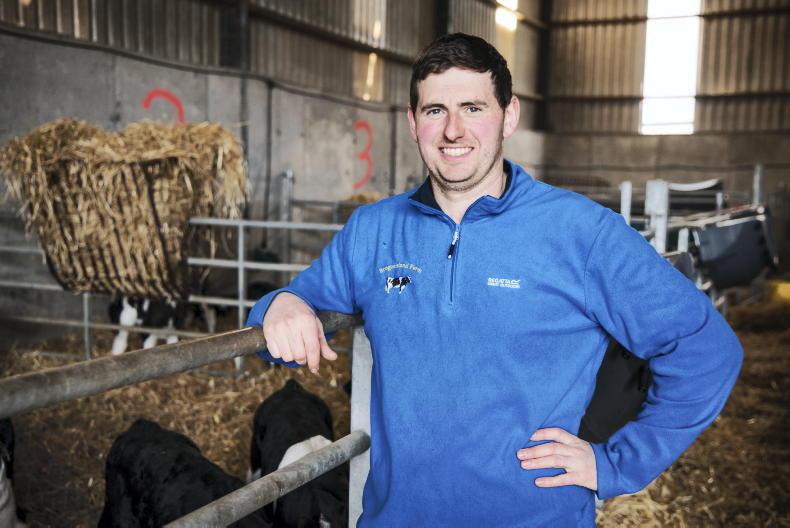
Randalstown farmer Greg O’Boyle has stopped spreading chemical fertiliser on his heavily stocked grazing blocks.
In total, he farms 72 acres, with 38 acres used for sheep grazing and 34 acres is silage ground.
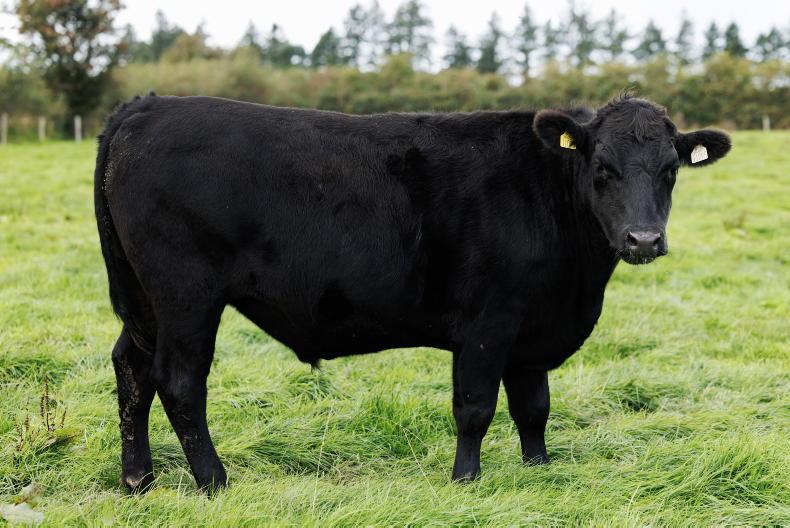
He runs just over 200 ewes and houses 60 cattle for a local beef finisher in a B&B arrangement.
In 2022, he started measuring and budgeting grass covers on a weekly basis.
Cattle slurry is applied to grazing ground in the early spring and the experience from the past three years has been that grass growth has met demand without the need for any nitrogen applications.
“When we started measuring grass, we realised we didn’t need to spread any fertiliser,” Greg told visitors to his farm last week.
A first key step towards the current system happened ten years ago when Greg moved from set stocking to rotational grazing.
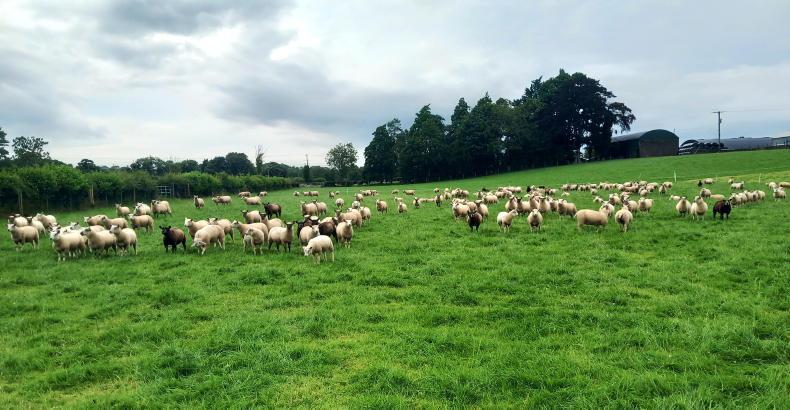
Sheep on the O’Boyle farm are now grazed in a paddock system where stock are typically moved every three days or so. There are usually just two groups of sheep on the farm during the main grazing season.
On the home farm, there is a single group of 100 ewes and twin lambs.
Then there is an outfarm three miles away, where another 100 ewes and mostly single lambs rotationally graze a 17ac block. Greg said two large groups of stock are much easier to manage than having several smaller groups.
He said whilst large groups require more frequent moves, they are easier to check each day, and it is more efficient when bringing sheep into the yard for treatments or weighing.
Soil fertility
Despite nitrogen only being applied to silage ground, grass yields across the whole farm averaged an impressive 10.5t dry matter per hectare (DM/ha) last year.
It is, therefore, no surprise that soil nutrient levels are in a good place on the O’Boyle farm. The target soil pH is 6.2, but a regular liming programme means fields are generally above that. Most indexes for phosphorus and potassium are either two or three, which comes from regular slurry applications, as well as historic applications of turkey manure.
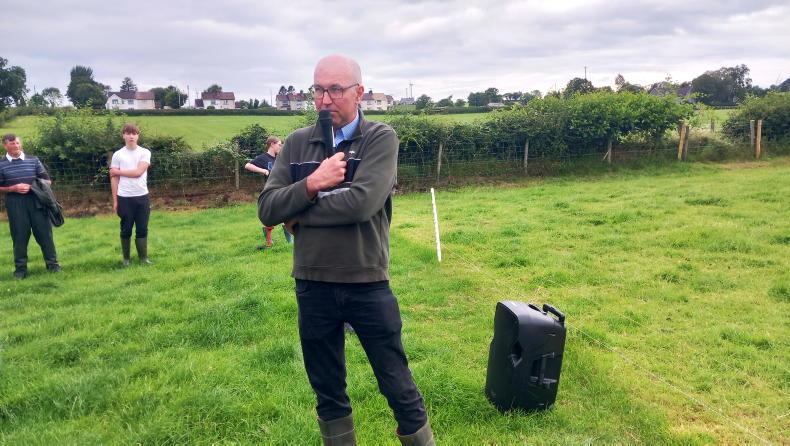
Greg O'Boyle is part of AgriSearch's GrassCheck programme.
Sheep breeding and rearing pet lambs
Greg runs a closed flock, so all replacements are homebred. The ewe lambs that are being kept this year were sired by either Charollais or Clun Forest rams.
Clun Forest is a relatively uncommon breed in NI. It is a native breed originating from Shropshire and is known for good maternal traits and hardiness.
There has also been Lleyn rams on the farm in the past and these genetics remain in the existing ewe flock. Greg said he wants his ewes to have at least half their genetics coming from a maternal breed.
Replacement ewe lambs on the O’Boyle farm are tupped with a Blue Texel ram for ease of lambing, and they only rear one lamb in their first year. Any hoggets with twins, as well as any ewes with triplets, have a surplus lamb lifted and it is reared in an automatic milk feeder. As such, there are usually over 50 pets reared on the O’Boyle farm every year. They are weaned off milk replacer abruptly when they are at around 12kg, which is usually around five weeks of age. After that, pet lambs stay indoors where they are offered ad lib meal and straw as a fibre source.
Several uses for high quality grass silage
Greg takes no additional winter grazing for ewes, so to free up grass for tupping, lambs that are still on the farm in the autumn are housed for finishing.
Concentrates are usually introduced at housing time, and this means around half his lambs are finished off grass alone.
All ewes are housed at scanning time in late December or early January, so there is no grazing until ewes start to lamb in mid-March.
Greg aims to make high-quality silage which helps cut down on concentrate cost for both ewes pre-lambing and finishing store lambs.
In recent years, he has only had to offer bought in feed to ewes from four weeks before lambing.
He feeds 100g of soya and 100g of meal per scanned lamb, per day. This equates to 11kg per ewe, which is low, given that his scanning rate is over 190%.
B&B
However, by far the biggest demand for silage comes from the cattle enterprise. The B&B arrangement sees Greg supply the sheds, silage and labour, with a local beef finisher providing the cattle and meal.
Greg said the arrangement suits him well because he does not have to purchase cattle to fill his sheds and he has steady income with payments for the B&B arrangement coming monthly.
He also gets cattle slurry for his land, and he has a use for surplus silage which is produced from his farm every summer.
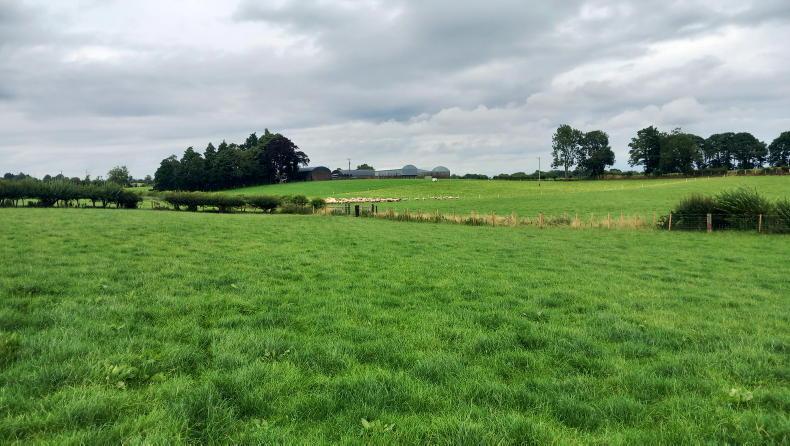
Greg tops paddocks after stock with a mower when necessary to help keep quality and consistency in the sward.
Managing grass for ‘fussy eaters’
At a farm walk organised by AgriSearch last week, Greg O’Boyle explained that his sheep go into grass covers of around 2,800-3,000kg DM/ha and graze it down to 1,600-1,700kg DM/ha.
In terms of sward height, this means sheep start grazing grass which is around five inches tall and come out when it is around two inches.
The constant grazing by sheep on the O’Boyle farm means grass swards are very dense, so pre- and post-grazing covers are not as tall as cattle-only farms.
Greg said it can be difficult to achieve target residual covers, especially as the season progresses, because sheep tend to be “fussy eaters”.
“Some bits are grazed bare, and other places are left with clumps of grass,” he said. Greg tops paddocks after stock with a mower, when necessary. This helps keep quality and consistency in the sward for the following round.
The weekly grass measuring and budgeting also lets Greg see when he has surplus grass, which can be taken out for silage.
He has been baling surplus grass throughout the grazing season and points out that these light silage crops tend to make excellent winter feed for sheep.
Grass wedge
John Morrow from AgriSearch presented a grass wedge chart for the O’Boyle farm from the week previous, which showed grass covers were running ahead of demand.
As a result, 4.5 acres were mowed and baled and this brought supply back in line with demand.
Greg said if he has too much grass, he quickly realises this when he is walking round the grazing block measuring grass covers with the plate meter.
However, it is only when he puts the grass measurements into software programme AgriNet that he knows exactly how much needs to come out for silage. Measuring also lets him see the total yield of each paddock over the season and so poor-performing paddocks are earmarked for reseeding the following year.
Greg said he has no set target for reseeding a certain area every year. Instead, he just reseeds fields when performance drops.
Finishing lambs and controlling worms
Lambs were weaned in early July and are currently grazing in two mobs, with one batch on the home block and the other on the outfarm.
Visitors to the O’Boyle farm last Thursday saw a group of around 200 lambs grazing as part of a paddock system. Since weaning, paddocks have been further sub-divided by two strands of electric fence wire and a portable drinker is serviced by a 1,000l cube of water. Greg said the plan this autumn is to install more permanent drinkers by running an extra water pipe along the bottom of the field.
However, a problem with intensively grazing sheep in a paddock system can be a quicker build-up of worms. Greg takes dung samples from lambs regularly for faecal egg count monitoring.
In particular, coccidiosis can be an issue on his farm, although he said the exact pattern of cocci build up seems to vary from year to year.
This year, his lambs received a broad-spectrum group three (clear) wormer a week before weaning and were treated for coccidiosis at weaning.

Randalstown farmer Greg O’Boyle has stopped spreading chemical fertiliser on his heavily stocked grazing blocks.
In total, he farms 72 acres, with 38 acres used for sheep grazing and 34 acres is silage ground.
He runs just over 200 ewes and houses 60 cattle for a local beef finisher in a B&B arrangement.
In 2022, he started measuring and budgeting grass covers on a weekly basis.
Cattle slurry is applied to grazing ground in the early spring and the experience from the past three years has been that grass growth has met demand without the need for any nitrogen applications.
“When we started measuring grass, we realised we didn’t need to spread any fertiliser,” Greg told visitors to his farm last week.
A first key step towards the current system happened ten years ago when Greg moved from set stocking to rotational grazing.
Sheep on the O’Boyle farm are now grazed in a paddock system where stock are typically moved every three days or so. There are usually just two groups of sheep on the farm during the main grazing season.
On the home farm, there is a single group of 100 ewes and twin lambs.
Then there is an outfarm three miles away, where another 100 ewes and mostly single lambs rotationally graze a 17ac block. Greg said two large groups of stock are much easier to manage than having several smaller groups.
He said whilst large groups require more frequent moves, they are easier to check each day, and it is more efficient when bringing sheep into the yard for treatments or weighing.
Soil fertility
Despite nitrogen only being applied to silage ground, grass yields across the whole farm averaged an impressive 10.5t dry matter per hectare (DM/ha) last year.
It is, therefore, no surprise that soil nutrient levels are in a good place on the O’Boyle farm. The target soil pH is 6.2, but a regular liming programme means fields are generally above that. Most indexes for phosphorus and potassium are either two or three, which comes from regular slurry applications, as well as historic applications of turkey manure.

Greg O'Boyle is part of AgriSearch's GrassCheck programme.
Sheep breeding and rearing pet lambs
Greg runs a closed flock, so all replacements are homebred. The ewe lambs that are being kept this year were sired by either Charollais or Clun Forest rams.
Clun Forest is a relatively uncommon breed in NI. It is a native breed originating from Shropshire and is known for good maternal traits and hardiness.
There has also been Lleyn rams on the farm in the past and these genetics remain in the existing ewe flock. Greg said he wants his ewes to have at least half their genetics coming from a maternal breed.
Replacement ewe lambs on the O’Boyle farm are tupped with a Blue Texel ram for ease of lambing, and they only rear one lamb in their first year. Any hoggets with twins, as well as any ewes with triplets, have a surplus lamb lifted and it is reared in an automatic milk feeder. As such, there are usually over 50 pets reared on the O’Boyle farm every year. They are weaned off milk replacer abruptly when they are at around 12kg, which is usually around five weeks of age. After that, pet lambs stay indoors where they are offered ad lib meal and straw as a fibre source.
Several uses for high quality grass silage
Greg takes no additional winter grazing for ewes, so to free up grass for tupping, lambs that are still on the farm in the autumn are housed for finishing.
Concentrates are usually introduced at housing time, and this means around half his lambs are finished off grass alone.
All ewes are housed at scanning time in late December or early January, so there is no grazing until ewes start to lamb in mid-March.
Greg aims to make high-quality silage which helps cut down on concentrate cost for both ewes pre-lambing and finishing store lambs.
In recent years, he has only had to offer bought in feed to ewes from four weeks before lambing.
He feeds 100g of soya and 100g of meal per scanned lamb, per day. This equates to 11kg per ewe, which is low, given that his scanning rate is over 190%.
B&B
However, by far the biggest demand for silage comes from the cattle enterprise. The B&B arrangement sees Greg supply the sheds, silage and labour, with a local beef finisher providing the cattle and meal.
Greg said the arrangement suits him well because he does not have to purchase cattle to fill his sheds and he has steady income with payments for the B&B arrangement coming monthly.
He also gets cattle slurry for his land, and he has a use for surplus silage which is produced from his farm every summer.

Greg tops paddocks after stock with a mower when necessary to help keep quality and consistency in the sward.
Managing grass for ‘fussy eaters’
At a farm walk organised by AgriSearch last week, Greg O’Boyle explained that his sheep go into grass covers of around 2,800-3,000kg DM/ha and graze it down to 1,600-1,700kg DM/ha.
In terms of sward height, this means sheep start grazing grass which is around five inches tall and come out when it is around two inches.
The constant grazing by sheep on the O’Boyle farm means grass swards are very dense, so pre- and post-grazing covers are not as tall as cattle-only farms.
Greg said it can be difficult to achieve target residual covers, especially as the season progresses, because sheep tend to be “fussy eaters”.
“Some bits are grazed bare, and other places are left with clumps of grass,” he said. Greg tops paddocks after stock with a mower, when necessary. This helps keep quality and consistency in the sward for the following round.
The weekly grass measuring and budgeting also lets Greg see when he has surplus grass, which can be taken out for silage.
He has been baling surplus grass throughout the grazing season and points out that these light silage crops tend to make excellent winter feed for sheep.
Grass wedge
John Morrow from AgriSearch presented a grass wedge chart for the O’Boyle farm from the week previous, which showed grass covers were running ahead of demand.
As a result, 4.5 acres were mowed and baled and this brought supply back in line with demand.
Greg said if he has too much grass, he quickly realises this when he is walking round the grazing block measuring grass covers with the plate meter.
However, it is only when he puts the grass measurements into software programme AgriNet that he knows exactly how much needs to come out for silage. Measuring also lets him see the total yield of each paddock over the season and so poor-performing paddocks are earmarked for reseeding the following year.
Greg said he has no set target for reseeding a certain area every year. Instead, he just reseeds fields when performance drops.
Finishing lambs and controlling worms
Lambs were weaned in early July and are currently grazing in two mobs, with one batch on the home block and the other on the outfarm.
Visitors to the O’Boyle farm last Thursday saw a group of around 200 lambs grazing as part of a paddock system. Since weaning, paddocks have been further sub-divided by two strands of electric fence wire and a portable drinker is serviced by a 1,000l cube of water. Greg said the plan this autumn is to install more permanent drinkers by running an extra water pipe along the bottom of the field.
However, a problem with intensively grazing sheep in a paddock system can be a quicker build-up of worms. Greg takes dung samples from lambs regularly for faecal egg count monitoring.
In particular, coccidiosis can be an issue on his farm, although he said the exact pattern of cocci build up seems to vary from year to year.
This year, his lambs received a broad-spectrum group three (clear) wormer a week before weaning and were treated for coccidiosis at weaning.

SHARING OPTIONS