



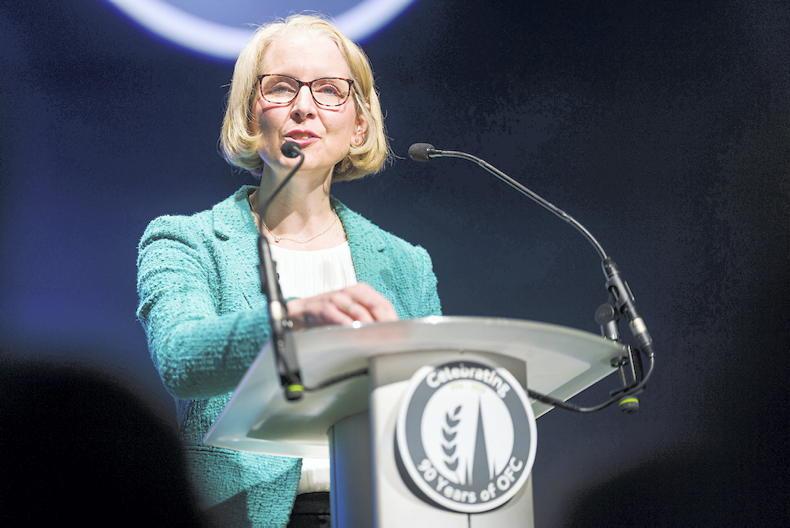
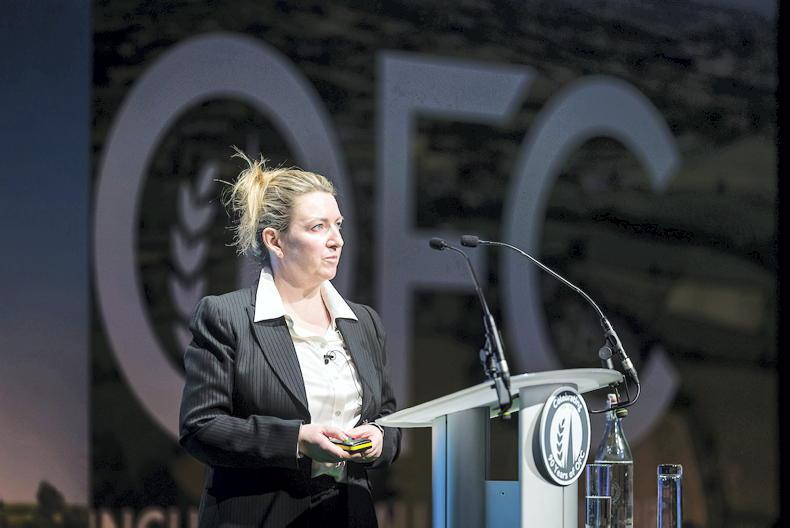
The Secretary of State at DEFRA, Emma Reynolds, has ruled out any more concessions around agricultural and business property relief (APR/BPR) from inheritance tax (IHT), despite the farm lobby continuing to argue for proposed changes to be scrapped.
Just before Christmas, government confirmed a new threshold for APR/BPR, originally planned to be at £1m, would be increased to £2.5m. That was in addition to a previous concession that the relief could be transferred between spouses. It means married couples will effectively have a £5m APR/BPR limit from April 2026.
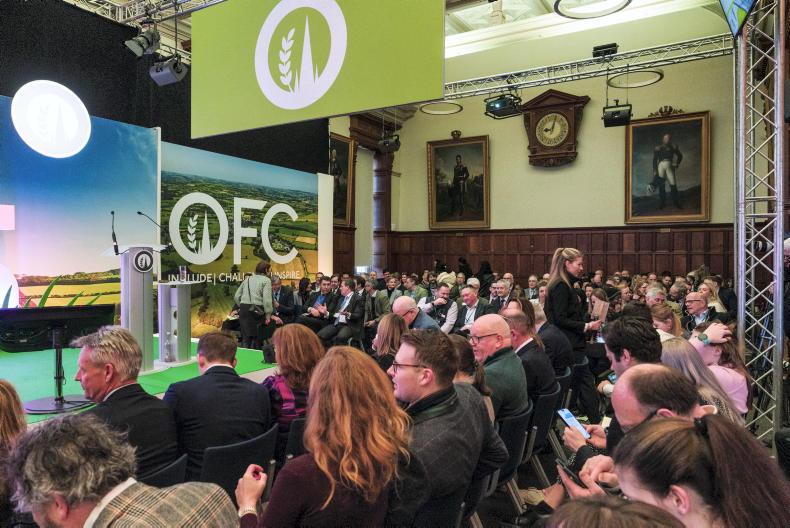
At the Oxford Farming Conference on Thursday, the DEFRA secretary was asked whether farm organisations are “wasting their time” continuing to push for 100% APR/BPR relief to be restored.
“I was pleased that the National Farmers’ Union (NFU) warmly welcomed the changes that we announced before Christmas. From our point of view, that’s it, I’m afraid. We have made the changes; announced the changes; they will be legislated for and introduced in April,” responded Reynolds.
Protest
However, her presence at the event did attract a protest involving dozens of tractors, with their horns clearly audible for much of the Thursday morning session.
“With the greatest respect to those outside, it is the people in this room who’ve engaged with us constructively and relatively quietly, that have had an influence on this, not the people banging and sounding their horns,” countered Reynolds.
Criticism
However, that remark drew some criticism at a later session involving devolved agriculture ministers from across the UK.
“I thought Emma [Reynolds] was wrong to criticise the people outside. If they’re outside, they’re there for a reason because their mental health is telling them right now, we’ve got a problem,” said her Scottish counterpart, Jim Fairlie.
Emma Reynolds keen to fix English farm scheme
DEFRA Secretary of State Emma Reynolds used her speech at the Oxford Farming Conference to announce changes to the Sustainable Farming Incentive (SFI) scheme, which is the post-brexit replacement for area-based payments in England.
The SFI offers payments based on various environmental actions, however, in March 2025, it was unexpectedly closed after budget limits had been reached.
Last Thursday, the Secretary of State set out her intention to significantly amend the scheme.
In 2025, she said there were 102 potential actions which farmers could chose, but fewer than 40 of these actions absorbed 90% of the spending. Going forward, there will be fewer actions, which will mean less complexity, said Reynolds.
She is also considering a payment cap, given that just 4% of farmers get one quarter of the money.
The SFI will open for smaller farmers (under 50ha) and those not already in an environmental scheme, in June 2026, with a second window from September for all farms.
“We will publish full scheme details before the first window opens and set clear budgets for each window.
“There will be no more sudden unexpected closures. We will give you regular updates so you know when a window is close to being fully subscribed,” said Reynolds.
Opportunity to grow horticulture and poultry
One of the main recommendations from a government commissioned review of farm profitability by former NFU President, Minette Batters, was to create a new farming and food partnership board.
In December 2025, DEFRA secretary Emma Reynolds, confirmed the new board would include representatives from farming, food and government, with the aim to drive growth and profitability across sectors. At the Oxford Farming Conference, she indicated the first sector plan developed by the board will be for horticulture, followed by poultry.
Muir keen for closer ties with EU
In his remarks at the Oxford Farming Conference, NI Agriculture Minister Andrew Muir made clear he thinks the UK should look to re-join the EU customs union and single market.
According to the Alliance MLA, that integration of trading relationships would “help to clean up the mess left from brexit” as well as some of the “disastrous trade deals inflicted upon our farmers by the previous UK government”.
While formal rejoining of the single market is not a policy currently being pursued by the Labour government, it has committed to a “reset” in relations, including a deal to improve trade in agri-food (a so-called SPS deal).
“Getting an SPS agreement is great, but it falls short when bigger benefits can be achieved,” said Minister Muir.
However, he acknowledged an SPS deal will free up trade in goods between Britain and NI, adding that when it comes to understanding the importance of relationships with the EU, this government is “chalk and cheese” when compared to the last one.
Also commenting, DEFRA Secretary Emma Reynolds said an SPS agreement with the EU will “slash red tape and costs” for UK traders.
On trade deals with other countries, she said that unlike the previous government, which “sold the sector down the river” in deals with Australia and New Zealand, her government will uphold high food and animal welfare standards.
“We have made those standards red lines in trade deals with big countries around the world such as the US and we will continue to do that,” she said.
NFU supportive of EU SPS deal
In recent years, EU food imports into the UK have remained relatively steady, but since 2019, UK exports of beef to the EU are down 24%, lamb is down 14%, poultry has dropped by 38% and dairy exports have reduced by nearly 16%.
While there are a number of factors at play, some of that drop off is due to post-brexit trade barriers. As a result, the National Farmers’ Union (NFU) in England welcomes the government plan to do an SPS deal with the EU to ease the flow of agri-food goods, said its head of trade, Gail Soutar.
She expects agreement to be reached later this year and implementation in 2027.
The basis for the deal is so-called ‘dynamic alignment’, where the UK effectively agrees to follow EU food standards. In practice, it is likely to mean the UK has to implement similar rules in areas such as EU Animal Health Law, but not around farm payments.
Muir hits out at mis-information online
NI Agriculture Minister Andrew Muir used his platform at the Oxford Farming Conference to criticise those who use social media to spread misinformation.
“Farming and industry must see through these false friends of the farmer who are attempting to lead farming on a journey of denial, rejecting science and the reality of climate change and biodiversity loss,” he said.
He suggested that much of the social media content is negative and often not true, with influencers suggesting the challenges the industry faces are not real and issues around animal disease are made up.
“That’s not where we want to be because we trade on the basis of actually taking these issues really seriously,” said the Minister.
He also took a swipe at “some political forces” who do not want to see successful resolution found to important issues such as ammonia emissions or the nutrients action programme.
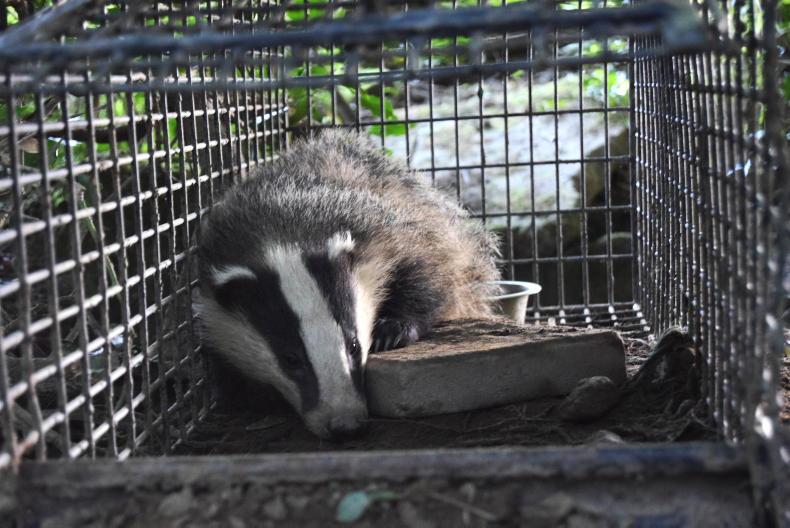
Speaking during the same political session, DEFRA farming minister Angela Eagle bemoaned how polarised society has become, citing the debate around badger control. “Different sectors of society have to work together so that we can make certain we come to the best possible conclusions. It is harder in the political environment we’re in now than it was when for example, I first went into parliament in the 1990s,” she said.
Farmers rely on public trust
While regulations now exist in England which allow for the commercial cultivation of gene-edited crops, the same rules do not extend to other parts of the UK.
During the politics session at the 2026 conference, it was put to devolved ministers that their farming pioneers are being left behind by their failure to adopt similar rules.
However, that notion was rejected by Scottish Government minister, Jim Fairlie, who argued for a precautionary approach and highlighted the reaction of the general public to use of the methane-suppressing feed additive, Bovaer, in recent trials on dairy farms.
“We cannot do anything in our sector which has the public saying, ‘we do not trust you’. I clearly remember what happened during BSE. I clearly remember what happened when we were talking about GM crops and Frankenstein Foods. The media turned us into public enemy number one,” he said.



SHARING OPTIONS