



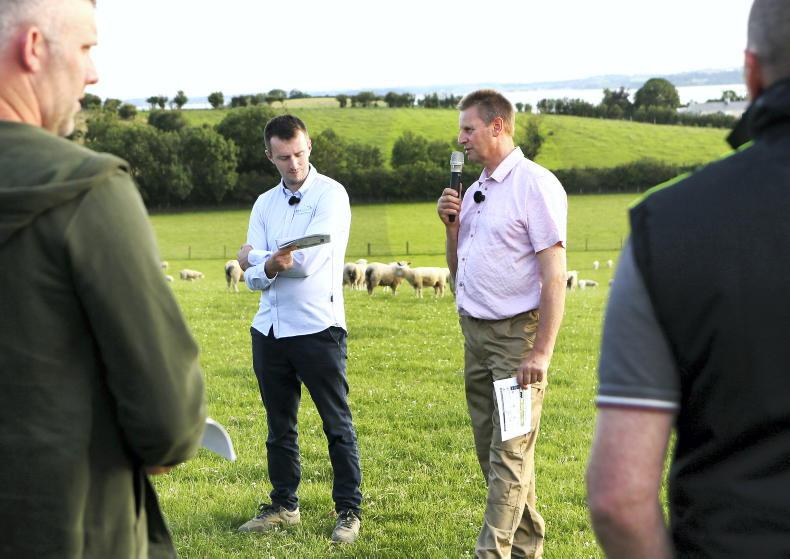
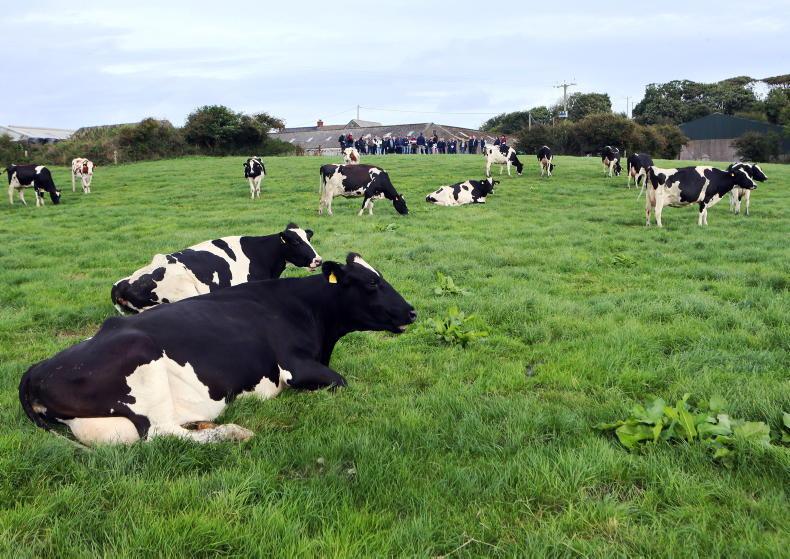
The current sustained period of dry weather is expected to ensure the amount of grass available to livestock on the Co Down farm of John and Alexander Martin comes back into line with demand.
A surplus had built up in recent weeks, in part due to a well-managed rotational grazing system, but also because the Greyabbey farm had received “its fair share of rain”. In addition, the Martins has previously reared a group of dairy heifers each year, but there are none on farm at present, while 7ha (17 acres) of rough grazing has been taken on in 2026, which is currently stocked with dry ewes.
Grass is measured every week and at an AgriSearch GrassCheck event on the farm last Thursday, data from AgriNet showed there were 24 days of grass ahead of stock – even if growth halved this week, there is still a surplus.
“I have had the other extreme in the last few years as well. Two years ago, this place was brown and as a result we cut numbers a bit. I think dryness will fix the surplus,” said John.
Silo pits are full and around 150 bales have already been made from surplus grass, with some more to do. “I don’t want lots more bales – the country around here is full of bales. I will probably sow less fertiliser. With no cattle and a lot of growth, it is a challenge to manage grass,” he added.
Willow
Back in 2004-2005, 15.5ha of willow was established on the farm, with woodchip dried and used to heat the house at nearby Mount Stewart. However, that willow is coming to the end of its productive life and John plans to bring the land back into active farming over the next few years.
Longer term, he is considering options around reintegrating a cattle enterprise, but in the meantime, the January lambing flock is to be increased from 160 to 300 next year, which will also give the scope to increase the numbers lambing in March. Those January ewes provide ewe lamb replacements for the main March lambing flock.
The Martins try to ensure their “most efficient” ewes lamb in January, along with any ewes that might only have one year left on farm, so can be culled when weaning takes place in April.
A few January lambers go to the March flock if they are not in lamb at scanning, but apart from that, everything is sold if they are not in-lamb, including ewe lambs.
Breeds
John Martin used to buy Suffolk Cheviot hoggets, which resulted in ewes with a mature weight averaging around 117kg. He describes a “light bulb moment” when he worked out he could keep an extra 100 lighter ewes (under 80kg) and still have a lower cumulative feed demand.
“That prompted me to look at maternal breeds. I started with Lleyn, then Aberfield, Highlander and Belclare. There is Highlander, Aberfield and Belclare in most of the ewes,” he said.
Performance recorded Highlander and Aberfield rams were sourced from Britain, however, Bluetongue restrictions mean that trade has been suspended since November 2023.
That has left John and Alexander “scratching our heads” as to what to do next. There hasn’t been a Belclare ram bought in a number of years, but they are hoping to source some genetics this year.
There is also one EasyCare ram on the farm, but “the jury is still out” on whether to go further down that route, said John.
The March lambing flock is put to terminal sires, with Texel and SuffTex rams on the farm, alongside Charollais rams which are used on ewe lambs.
John Martin has taken part in various on-farm trials led by researchers at the Agri-Food and Biosciences Institute over the last 20 years and recalls initial work to target 1kg of lamb weaned per kg of ewe put to the ram.
By changing breeds and regular recording of data to help identify the most efficient ewes, he is getting closer to that target. “We have had a weigh crate since 2010 – that has been a gamechanger for the efficiency of our sheep enterprise,” he said.
Growth rates
Growth rates on the farm are excellent, with lambs averaging over 320g/day pre-weaning and over 270g/day post-weaning.
However, there is always that challenge to maintain performance post-weaning, whether it is dry weather, the stress of weaning or potentially some trace element deficiencies.
This year, ewe lambs being retained for breeding were worm dosed on 27 May and given a cobalt-only bolus on 7 June. “They have been doing 370 to 400g ever since – something is working. Maybe cobalt is the issue,” said John.
Ewes receive a 4-in-1 bolus pre mating and again at pre-lambing.
Scanning
To improve reproductive performance, January lambers are treated with Regulin implants pre-breeding, which has helped to ensure scanning percentages of 210 to 215%. Across all ewes and ewe lambs on the farm, scanning percentage is over 200%, with the aim to rear 1.8 to 1.85 lambs per ewe to the ram and produce 450 to 520kg of carcase weight per hectare.
Lambing is done indoors on straw bedding. January lambers strip-graze hybrid brassica (Redstart) post lambing and are offered some silage, with the aim to save grass for the March flock.
Farmers who put in place a paddock grazing system will grow a lot more grass, but especially in sheep-only enterprises, if grass gets ahead of stock, performance can suffer.
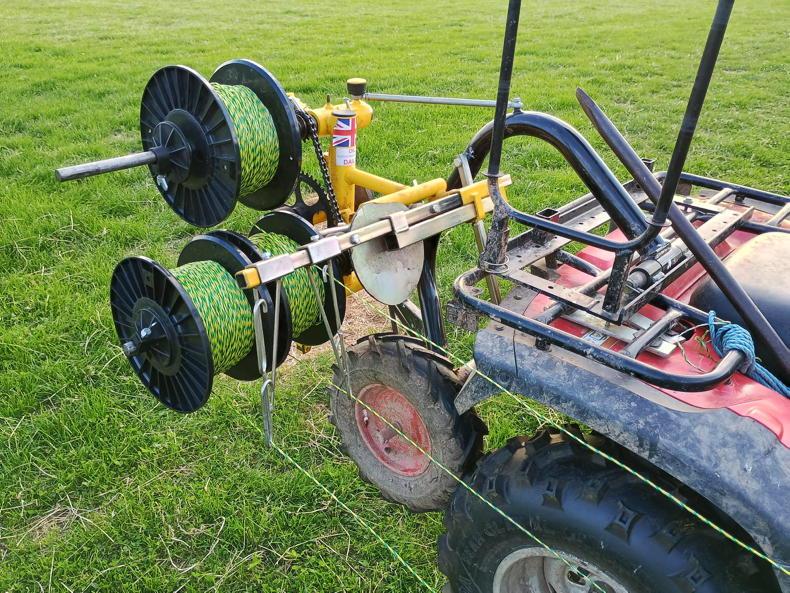
“It is great if you get it right, but if you do it badly, it will have a bad impact. Going into high covers can do more harm than good,” said John Morrow from AgriSearch.
He is a strong advocate of a leader-follower system at this time of year, with weaned lambs going into fresh covers of around 2,600 to 2,800kg of dry matter per hectare (approx. 8cm) every few days and the dry ewes coming in behind to clean out paddocks. By not forcing lambs to graze tightly it should improve performance and also reduce expose to worms.
By grazing lighter covers, overall grass growth on the farm will probably be lower (given the old adage ‘it takes grass to grow grass’), but “it’s about how much lamb you produce, not the amount of grass you grow,” said Morrow.
The principles behind refugia (taken from a latin term which means ‘in-refuge’) are key to managing worms and ensuring we still have treatments which work on farm, a Co Down vet has said.
Addressing an AgriSearch event last Thursday, Cormac White said triple drench resistance to white, yellow and clear wormers has left some farmers in New Zealand with little option but to turn their land over to forestry.
While anthelmintic resistance in sheep parasites is also a growing problem in Ireland, he said there is still an opportunity to manage the issue and preserve existing products.
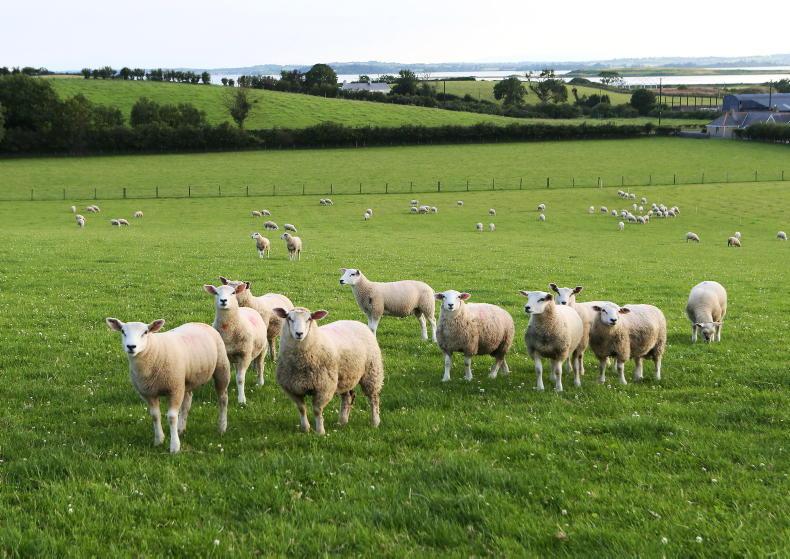
“Every time we drench, we are selecting for resistance. We want a low burden of susceptible worms that we can manage,” he said. “ We need gradual exposure to worms, especially of our breeding flock. Understanding refugia is key to managing worms in the future.”
Susceptible
In simple terms, refugia involves leaving behind some drench-susceptible worms to reproduce, in the hope that they continue to outnumber drench-resistant counterparts. If all the susceptible worms are killed at once, it gives resistant worms the scope to multiply unchecked.
He said one “golden rule” is never to dose lambs and move to clean pasture in the same step – they should either be dosed and put back to existing pasture for a few days before going to clean grazing, or put to clean pasture ahead of being dosed. It is also important to avoid blanket dosing of ewes around lambing.
When it comes to timing of dosing, he said best practice is to target treatments based on need, whether it is when weight gains in individual lambs drop below a certain trigger point (e.g. 300g/day) and/or Faecal Egg Count (FEC).
He said a “pet-peeve” is when dung samples are sent into the practice for testing that were not taken properly.
“You have to take samples from a minimum of 15 animals and if over 100 in the group, it should be 20 to 25. And don’t take a big chunk from one lamb. If you don’t do it right, it is a complete waste of time,” he said.
Haemonchus
Good practice around faecal sampling will also be vital to get a handle on the growing problem of Haemonchus (Barber’s Pole worm), an abomasal blood sucking roundworm that causes poor thrive, weight loss, bottle-jaw and potential death.
“Haemonchus is here. We have the ideal climate for it in Ireland. We are going to be dealing with it,” explained Cormac.
He added there is also a role for other management strategies on farms, whether it is introducing break crops or alternating grazing between cattle and sheep.
With 20% of the lambs carrying 80% of the worms, breeding and genetics “is also part of the picture as well,” he said.



SHARING OPTIONS