



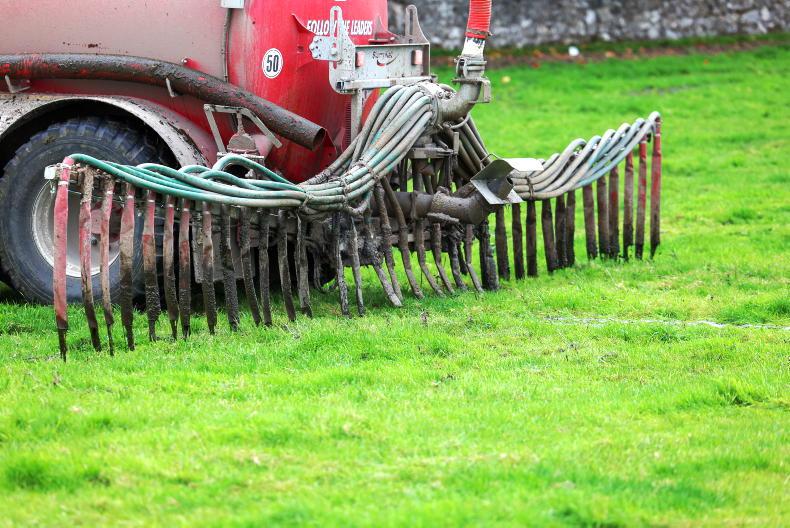
In its response to the public consultation on proposed changes to the Nutrients Action Programme (NAP), farmer-funded research body, AgriSearch has stressed the need to give farmers time to establish their starting point and assess options to comply with new rules.
The latest consultation closes at midnight on Monday 7 September, and in their submission, AgriSearch acknowledge that the revised proposals are a lot more balanced and practical than those originally put forward by DAERA in May 2025.
The new plan was drawn up by representatives from across farming, food, environment and government, as part of a task and finish group appointed by DAERA Minister Andrew Muir, and a similar NAP steering group is to be retained to monitor overall progress.
That principle is supported by AgriSearch, who also recommend a delivery group is established to coordinate technical and advisory support for more intensive farms.
It is these farms which are the main focus of the AgriSearch analysis. In total, there are just over 2,000 highly-stocked farms in NI (dairy and intensive beef) with manure nitrogen (N) loads above the current limit of 170kg per hectare.
These farms are also seen as being at greatest risk of having high phosphorus (P) surpluses, with this excess P the main driver of poor water quality in NI.
However, these farms also generate 50% of all output, from 20% of the land, so they are crucial to NI food processing.
Their main option is that they join a new ‘Nutrient Stewardship Programme’, and commit to reducing P by at least 10% over four years or get to the current nitrates derogation requirement of 10kg P/ha.
In their submission, AgriSearch recommends that the farms are given the option of a three-year average when working out their baseline N load and P balance.
New bands
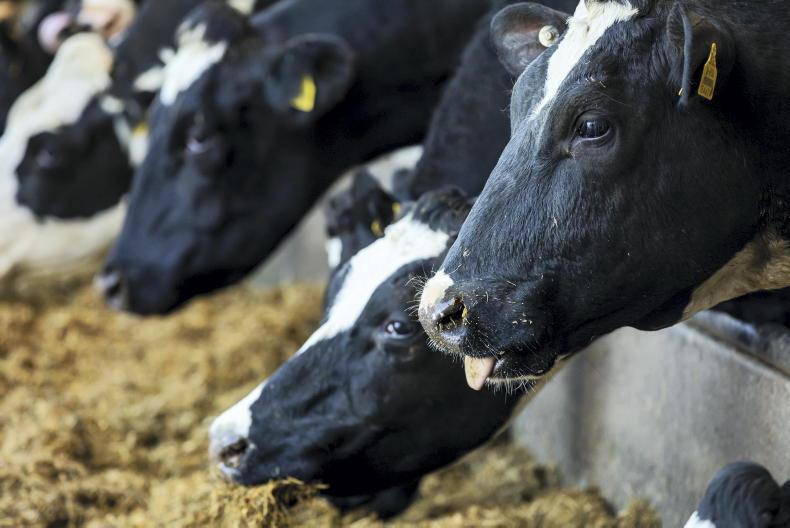
One issue potentially pushing more dairy farms over the 170kg manure N limit are proposed new bands based on milk output.
Under the current NAP, each dairy cow is assumed to excrete 100kg of N and 19kg of P per year. The latest proposals are that dairy cows yielding under 5,000l will be assumed to excrete 77kg N and 11kg P each year, rising to 149kg N and 22kg P for cows yielding over 12,000l.
If this banding is to be introduced, AgriSearch suggests it should take effect no earlier than 2028 and should be phased in, thereby allowing time for farmers to “assess their position and adapt their systems”.
Helping these farmers to comply will also require significant numbers of suitably qualified advisers with nutrient-management expertise, states the AgriSearch document.
Review
One of the roles of a new NAP steering group will be to review progress within two years of updated NAP legislation coming into force.
The AgriSearch submission highlights the need for patience, noting that water quality improvements may lag considerably behind changes in farm practice.
It also stresses that successful implementation of NAP depends on progress in other areas, including around farm planning rules and the development of technologies to process slurry.





SHARING OPTIONS