A comprehensive review of all the various indirect costs of bovine TB borne by farmers has estimated that the annual bill comes to just over £96m.
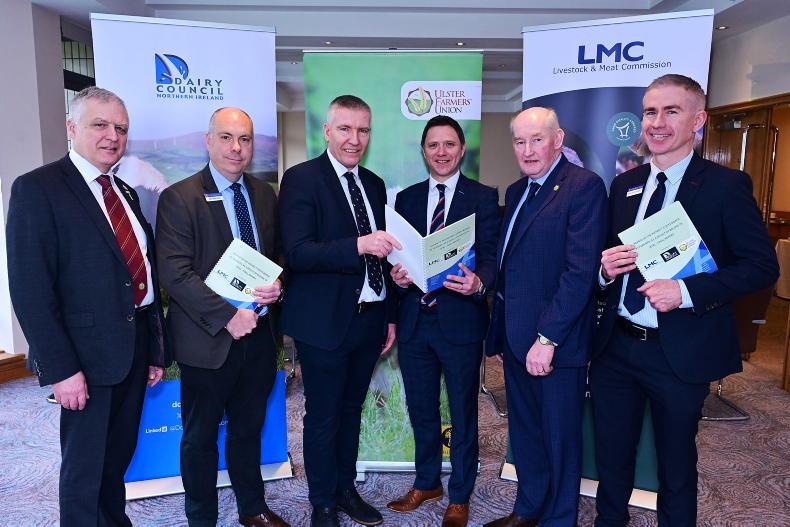
The review, conducted by consultants at the Andersons Centre, was commissioned by the Dairy Council for NI, the Livestock and Meat Commission and the Ulster Farmers’ Union – it is the first NI-based study to quantify the scale and composition of the indirect costs of TB.
The £96m total outweighs the annual cost to taxpayers of the current TB programme, which is around the £60m mark and covers the likes of payments for reactor cattle and testing by private vets.
In their final remarks within a 92-page review report, the Andersons consultants point out that farmers bear the majority of the overall economic cost of TB.
“Whilst there may be moves in some circles for farmers to share the burden of public (direct) expenditure on TB controls, there must also be acknowledgement that farmers are already paying more than their fair share when the full economic costs are considered,” states the report.
Methodology
The study started off with a review of evidence which examined research done on the costs of TB, including work by Scotland’s Rural College (SRUC) on costs incurred when a farm was under movement restriction due to a TB breakdown.
Also referenced was the output from a Better Regulation Review published in NI back in 2009, which looked at the number of hours it took farmers to get TB tests completed and the overall cost of each test.
Following the review of evidence, detailed interviews were undertaken with 30 industry leaders and organisations in NI to get an insight into the major cost issues associated with TB. A farmer survey was also conducted online, with 415 completed responses.
The final phase of the work saw all the evidence from interviews and the farmer surveys brought together to produce a robust set of indirect cost estimates for bovine TB in NI.
As well as financial costs, the report authors were also tasked with assessing the environmental consequences of TB and the impact the disease has on the mental health of farmers.
Effectiveness of current controls
One of the issues explored in the early part of the Andersons review was the widespread belief among NI farmers that despite all the effort, TB is getting worse, not better.
That disillusionment, leads to disengagement by farmers and fewer actions being taken to keep TB out of herds.
However, studies have identified other reasons for the failure to deal with TB, including the density of cattle farming, the structure of the industry and the prevalence of the disease in wildlife.
The report explores how and why Australia and New Zealand were able to eradicate the disease.
In Australia there was no infected native wildlife, while in New Zealand the disease existed in possums, feral pigs and wild deer. With all of these being non-native species, there was very little public or political opposition to wildlife control.
Partnership
Both countries also adopted a partnership approach between government and farmers.
“This saw the industry having a much greater say in policy-making and ensured a greater degree of industry buy-in than is currently seen in NI,” states the Andersons report.
Farmer survey identifies raft of issues
The farmer survey done as part of the Andersons review was conducted between August and October 2025, with 415 completed responses, of which over half (56%) cited beef as their main enterprise.
One of the issues explored was the number of injuries suffered by animals during a test, with responses from beef farmers suggesting an average of 2.65% of animals sustained some form of injury, compared to 1.33% on dairy farms. Injuries to farmers and vets was also identified as an issue.
The survey also asked farmers to estimate annual labour costs associated with testing and confirmed that farmers tend to hold extra livestock in case new reactors are found. On farms where TB has a “high” impact, respondents estimated that 18 to 20% additional stock are kept when compared to normal circumstances. “This adds significantly to cost for the affected farms,” notes the report.
Environment
Other costs included the negative impact on output when cows are culled due to TB, additional feed and forage costs when under movement restriction and cashflow pressures during breakdown periods.
Outside of costs, the survey highlighted environmental pressures on farms due to TB restrictions, whether via increased nutrient loads or a higher carbon footprint because extra concentrate has to be fed.
Mental health
It also identified that 63% of respondents found TB testing to be “extremely stressful” and when a breakdown occurs it has other mental health impacts leading to anxiety and difficulty sleeping. Just over half of all respondents (50.9%) said they have considered leaving farming due to TB.
TB-free herds account for over half of all costs
To get to their estimate of £96.1m for the annual indirect cost of bovine TB, Andersons produced a set of models to calculate costs on dairy and beef/sheep farms across four broad categories of:
Testing costs.Reactor culling and isolation costs.Movement restriction costs.Business operations costs.Three different ‘impact levels’ were also assessed, with the ‘low impact’ scenario being farms that are free of the disease and only have one TB test per year.
In the ‘medium impact’ scenario, a farm has one or more reactors at one test, but subsequent tests are clear. For the ‘high impact’ scenario, the farm is continually down with TB and ends up testing every two months.
For large farms in this ‘high impact’ scenario the Andersons analysis suggests annual TB costs could be as high as £166,833 on an individual beef farm and £125,944 on a dairy farm.
Costs reduce by business size and for part-time farms they are £27,675 and £31,095 respectively.
It is no surprise that farms which remain free of the disease incur even lower costs, but there is still the time required to do a test, haul cattle between farms, a post-testing yield loss and money spent keeping boundaries secure.
For a TB-free part-time beef farm, the Andersons model estimates an annual cost of £3,574 and for a part-time dairy farm, an annual cost of £2,278.
While these TB-free farms have much lower annual costs, it is important to note that at any given point in time, around 90% of all NI livestock farms are normally free of the disease. So as a collective, they actually account for over half of the indirect costs of TB (51%).
Movement restrictions
For TB breakdown herds, the study by Andersons highlights that it is expenses related to movement restrictions which account for around 50% of all their costs.
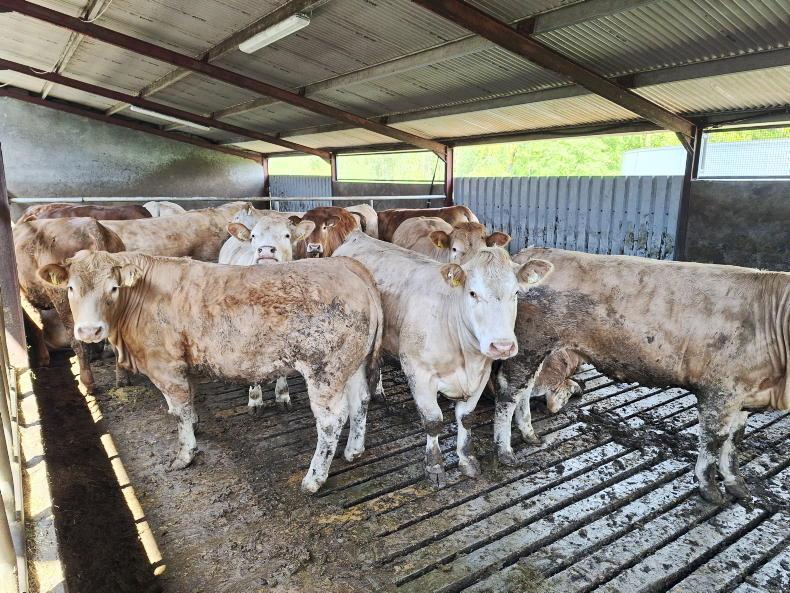
Those expenses include extra feed and bedding, the hours spent looking after these animals, a cost for renting extra housing and the fact stock are often sold simply to free-up space rather than when their value can be maximised.
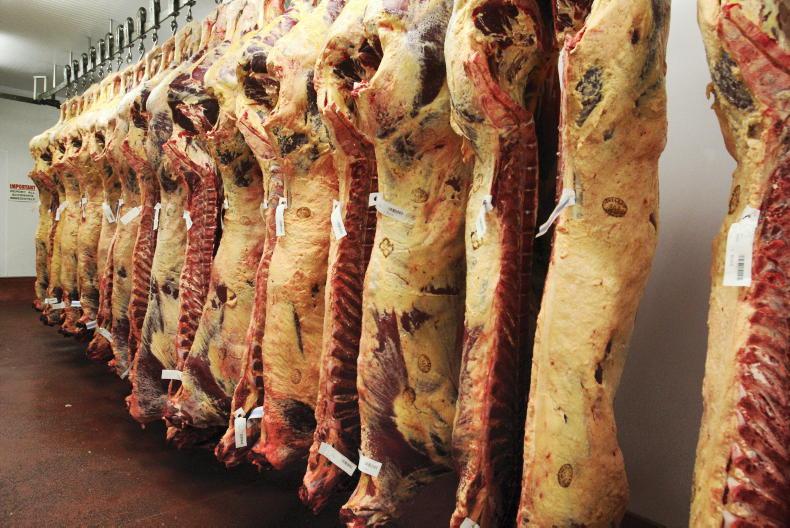
On beef farms there is also a significant cost related to post-testing yield loss (estimated at 4kg per animal per test), while on dairy farms, there is a major financial hit in terms of lost future output, especially when high numbers of cows are culled.
A comprehensive review of all the various indirect costs of bovine TB borne by farmers has estimated that the annual bill comes to just over £96m.
The review, conducted by consultants at the Andersons Centre, was commissioned by the Dairy Council for NI, the Livestock and Meat Commission and the Ulster Farmers’ Union – it is the first NI-based study to quantify the scale and composition of the indirect costs of TB.
The £96m total outweighs the annual cost to taxpayers of the current TB programme, which is around the £60m mark and covers the likes of payments for reactor cattle and testing by private vets.
In their final remarks within a 92-page review report, the Andersons consultants point out that farmers bear the majority of the overall economic cost of TB.
“Whilst there may be moves in some circles for farmers to share the burden of public (direct) expenditure on TB controls, there must also be acknowledgement that farmers are already paying more than their fair share when the full economic costs are considered,” states the report.
Methodology
The study started off with a review of evidence which examined research done on the costs of TB, including work by Scotland’s Rural College (SRUC) on costs incurred when a farm was under movement restriction due to a TB breakdown.
Also referenced was the output from a Better Regulation Review published in NI back in 2009, which looked at the number of hours it took farmers to get TB tests completed and the overall cost of each test.
Following the review of evidence, detailed interviews were undertaken with 30 industry leaders and organisations in NI to get an insight into the major cost issues associated with TB. A farmer survey was also conducted online, with 415 completed responses.
The final phase of the work saw all the evidence from interviews and the farmer surveys brought together to produce a robust set of indirect cost estimates for bovine TB in NI.
As well as financial costs, the report authors were also tasked with assessing the environmental consequences of TB and the impact the disease has on the mental health of farmers.
Effectiveness of current controls
One of the issues explored in the early part of the Andersons review was the widespread belief among NI farmers that despite all the effort, TB is getting worse, not better.
That disillusionment, leads to disengagement by farmers and fewer actions being taken to keep TB out of herds.
However, studies have identified other reasons for the failure to deal with TB, including the density of cattle farming, the structure of the industry and the prevalence of the disease in wildlife.
The report explores how and why Australia and New Zealand were able to eradicate the disease.
In Australia there was no infected native wildlife, while in New Zealand the disease existed in possums, feral pigs and wild deer. With all of these being non-native species, there was very little public or political opposition to wildlife control.
Partnership
Both countries also adopted a partnership approach between government and farmers.
“This saw the industry having a much greater say in policy-making and ensured a greater degree of industry buy-in than is currently seen in NI,” states the Andersons report.
Farmer survey identifies raft of issues
The farmer survey done as part of the Andersons review was conducted between August and October 2025, with 415 completed responses, of which over half (56%) cited beef as their main enterprise.
One of the issues explored was the number of injuries suffered by animals during a test, with responses from beef farmers suggesting an average of 2.65% of animals sustained some form of injury, compared to 1.33% on dairy farms. Injuries to farmers and vets was also identified as an issue.
The survey also asked farmers to estimate annual labour costs associated with testing and confirmed that farmers tend to hold extra livestock in case new reactors are found. On farms where TB has a “high” impact, respondents estimated that 18 to 20% additional stock are kept when compared to normal circumstances. “This adds significantly to cost for the affected farms,” notes the report.
Environment
Other costs included the negative impact on output when cows are culled due to TB, additional feed and forage costs when under movement restriction and cashflow pressures during breakdown periods.
Outside of costs, the survey highlighted environmental pressures on farms due to TB restrictions, whether via increased nutrient loads or a higher carbon footprint because extra concentrate has to be fed.
Mental health
It also identified that 63% of respondents found TB testing to be “extremely stressful” and when a breakdown occurs it has other mental health impacts leading to anxiety and difficulty sleeping. Just over half of all respondents (50.9%) said they have considered leaving farming due to TB.
TB-free herds account for over half of all costs
To get to their estimate of £96.1m for the annual indirect cost of bovine TB, Andersons produced a set of models to calculate costs on dairy and beef/sheep farms across four broad categories of:
Testing costs.Reactor culling and isolation costs.Movement restriction costs.Business operations costs.Three different ‘impact levels’ were also assessed, with the ‘low impact’ scenario being farms that are free of the disease and only have one TB test per year.
In the ‘medium impact’ scenario, a farm has one or more reactors at one test, but subsequent tests are clear. For the ‘high impact’ scenario, the farm is continually down with TB and ends up testing every two months.
For large farms in this ‘high impact’ scenario the Andersons analysis suggests annual TB costs could be as high as £166,833 on an individual beef farm and £125,944 on a dairy farm.
Costs reduce by business size and for part-time farms they are £27,675 and £31,095 respectively.
It is no surprise that farms which remain free of the disease incur even lower costs, but there is still the time required to do a test, haul cattle between farms, a post-testing yield loss and money spent keeping boundaries secure.
For a TB-free part-time beef farm, the Andersons model estimates an annual cost of £3,574 and for a part-time dairy farm, an annual cost of £2,278.
While these TB-free farms have much lower annual costs, it is important to note that at any given point in time, around 90% of all NI livestock farms are normally free of the disease. So as a collective, they actually account for over half of the indirect costs of TB (51%).
Movement restrictions
For TB breakdown herds, the study by Andersons highlights that it is expenses related to movement restrictions which account for around 50% of all their costs.
Those expenses include extra feed and bedding, the hours spent looking after these animals, a cost for renting extra housing and the fact stock are often sold simply to free-up space rather than when their value can be maximised.
On beef farms there is also a significant cost related to post-testing yield loss (estimated at 4kg per animal per test), while on dairy farms, there is a major financial hit in terms of lost future output, especially when high numbers of cows are culled.





SHARING OPTIONS