



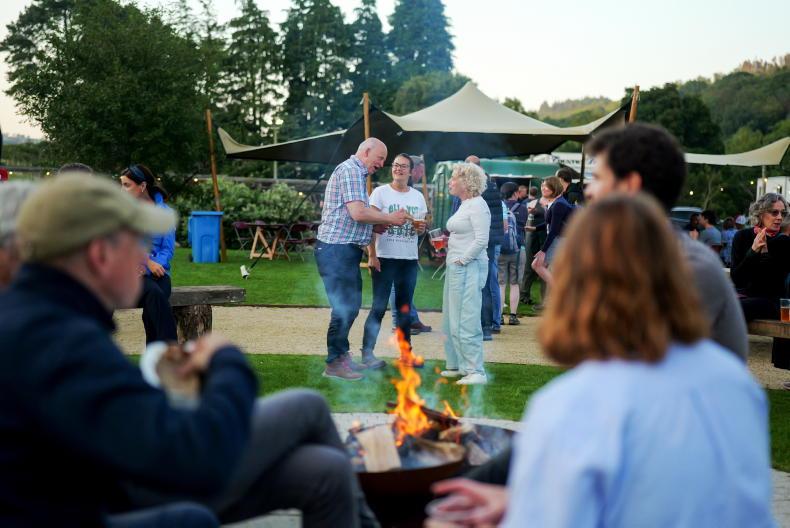
There are lessons in regenerative agriculture for all types of farmers, according to Fields Good organiser Bronagh O’Kane.
The drystock farmer from Cookstown is behind the one-day regenerative farming event which takes place in Glenarm next Saturday 6 September.
Speaking to the Irish Farmers Journal, Bronagh is clear that there are no specific criteria that a farmer must meet for them to be able to call themselves “regenerative”.
“Regenerative agriculture is not a strict rulebook. It is a direction. It is not a destination,” she explained.
“It is about working with natural systems to restore soil health, boost biodiversity, and build a more resilient farm,” Bronagh said.
While the term has gained popularity in recent years, it was first used almost 50 years ago by Robert Rodale from the Rodale Institute, an organic research centre based in the USA.
However, Bronagh is keen to point out that regenerative farming and organic farming are not the same thing.
“You don’t have to be absolutely organic. I think the misconception that you can’t use fertilisers or pesticides scares farmers away from regenerative agriculture,” she said.
Advocates
Many of the well-known advocates of regenerative agriculture are based in the likes of the USA or Australia, where long-term arable farming has depleted soil organic matter levels.
It could be argued that a lot of the lessons from these farmers, which mainly involve introducing livestock, do not apply to NI as we already are mainly grassland.
However, Bronagh said livestock farmers can still learn a lot from regenerative arable farmers, particularly with improving soil and plant health.
By already having livestock, she argues that grassland farmers in NI have “some of the best opportunities” for getting into regenerative agriculture.
“You can tweak your grazing patterns, protect soil covers, and improve how you use manure and slurry.
“It can help turn your soil into a thriving world full of worms and microbes that cycle nutrients far better than any bag or bottle,” she maintained.
Knowledge
Fields Good is now in its second year and Bronagh said a key reason for holding the event is to deliver “knowledge and understanding” which should precede any changes being made to a farming system.
“You have got to understand how plants grow, how roots function and how nutrient cycles work, then you can start to make tweaks,” she said.
“It’s about finding what changes you can make to your system so that it still works for you. It’s up to the farmer to find that out because they know and understand their land better than anyone,” Bronagh said.
Second year of Fields Good festival
The second Fields Good festival takes place on 6 September at The Sheddings, near Glenarm, Co Antrim.
The all-day event includes talks in three speaker tents, as well as demonstrations and dedicated agroforestry and horticulture stands.
Food, drink and music are planned for the evening. There are also camping facilities to stay overnight.
Tickets cost £50 and are available online. A limited supply will be available at the gate on the day.
McDonald’s fund regenerative beef course
A nine-month course designed to provide beef farmers with the skills, tools and confidence to adopt regenerative grazing is due to commence in September.
Delivered by FAI Farms in collaboration with Harper Adams University’s School of Sustainable Food and Farming, the regen beef training course is fully funded by McDonald’s UK & Ireland.
It involves a combination of online delivery and on-farm visits to regenerative beef producers.
The aim is to provide participants with insights into multi-paddock grazing to improve productivity, boost farm biodiversity and build resilience. The course is aimed at UK beef farmers who are actively farming. The deadline for applications is tomorrow (Friday).



SHARING OPTIONS