




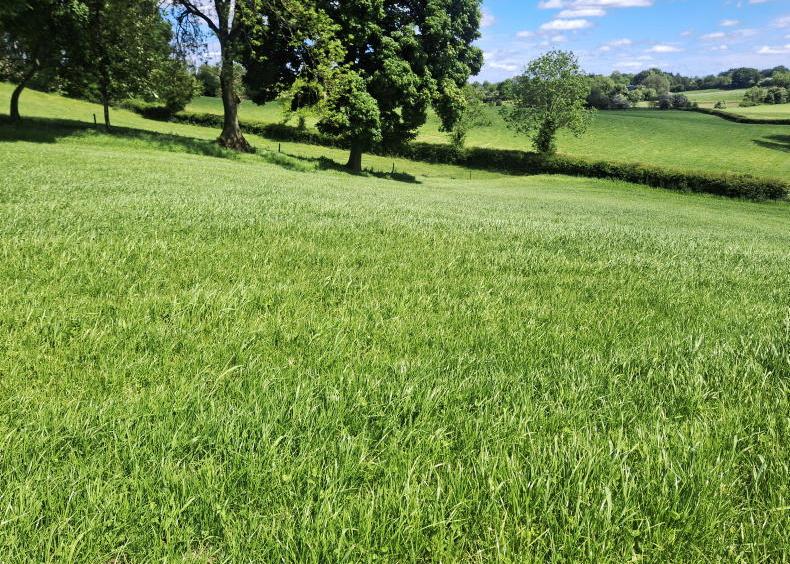
Excellent grassland management has meant Co Down beef and sheep farmer Paraic McNeill already has 17 acres of surplus grass taken off as round bales from his grazing block this year.
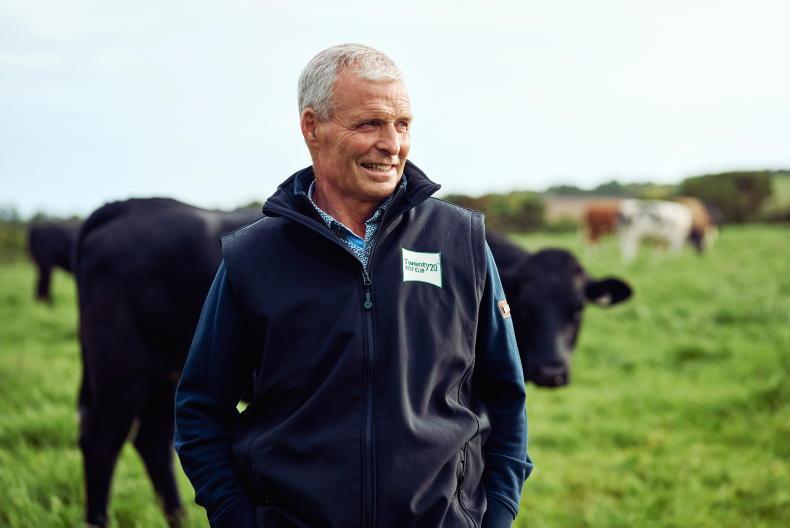
Farming 84 acres along with his father Seamus at Annaclone near Banbridge, Co Down, Paraic runs 270 ewes and replacements, plus around 20 suckler cows, with all stock taken through to finish.
The McNeill farm is set up in three-day paddocks, with Paraic measuring grass across his grazing block for a number of years. Since 2023 he has been recording grass growth as part of the GrassCheck programme.
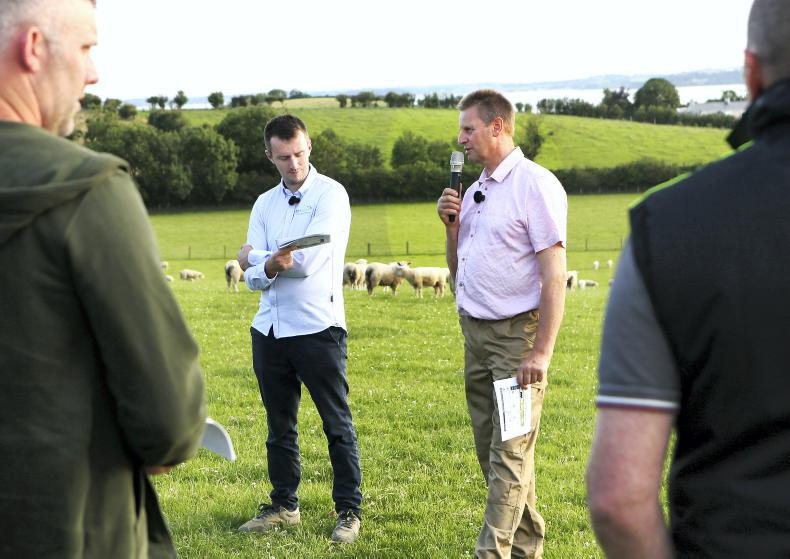
Hosting an AgriSearch event last Wednesday evening, Paraic said the main benefit of grass measurement isn’t to identify the best or worst growing paddock, but to show when the farm is moving into a surplus or deficit. In other words, when Paraic records data on the amount of grass in each paddock, this is compared against stock demand, creating a so-called grass wedge.
“My main focus is the wedge, not the total amount of grass I am growing. A few years ago I ran out of silage and I vowed that would never happen again. It took me a couple of years to get the confidence to take out grass at the right stage,” said Paraic.
To the end of July 2025, the McNeills have grown an average of 6.5t dry matter per hectare (DM/ha). That is well ahead of 2024, when growth was impacted by a late spring. Across all of last year, the farm grew 8t DM/ha.
In general, Paraic aims to go in at 2,800-3,000kg DM/ha (10-11cm) and graze down to 1,600 -1,700kg DM/ha (5-6cm). As the year progresses, it is harder to clean out paddocks, however, Paraic now has his ewes weaned and they can be used to remove any remaining grass.
Outstanding
Maintaining high quality grass in the diet ensures excellent performance is achieved, without having to revert to meal feeding and despite the high farm stocking rate. In 2025, lambs have achieved an average daily liveweight gain (DLWG) of 0.345kg in their first 60 days and an average DLWG of 0.28kg in the first 120 days, leaving average weights at 36.5kg. Average slaughter age in 2024 was 208 days.
“That is outstanding performance. If you can do around 200 days to slaughter on a tightly stocked farm – that is pretty rare,” said John Morrow from AgriSearch.
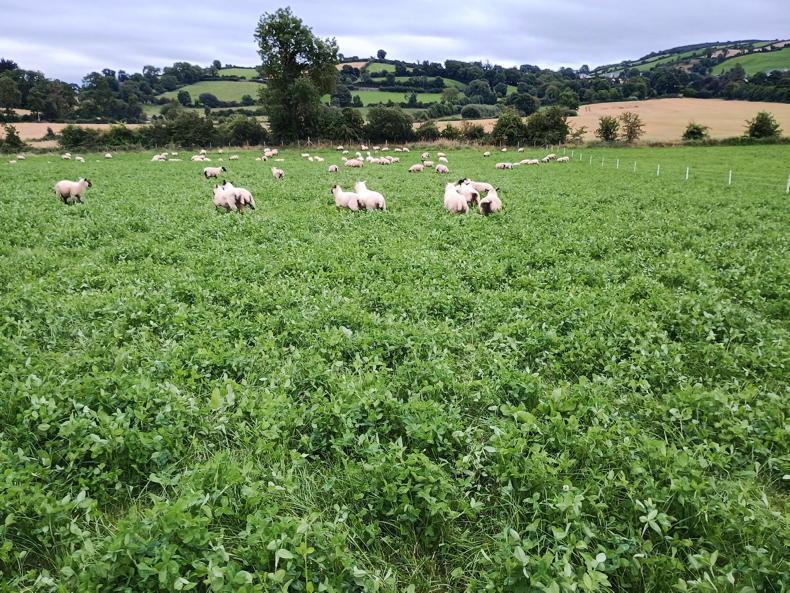
Having started out with a foundation flock of Texel and Suffolk sheep, Paraic McNeill added in maternal genetics, including some Lleyn and Mule ewes. However, the main source of maternal genetics is now via Belclare rams.
All rams on the farm are performance recorded, with a number being five star rated animals in the Sheep Ireland index.
“The figures are working for me. I don’t care if it has a pink or a purple head so long as the figures are good. I run a 72kg-73kg ewe across the farm,” Paraic told visitors last Wednesday.
He said that when it comes to selecting ewe lamb replacements, he looks at the 60-day weight of lambs as that weight is mainly driven by the maternal ability of the mother and is not overly influenced by management factors.
Lambing %
However, despite achieving excellent growth rates, Paraic would still like to see a slightly higher lambing percentage within his flock.
“I have tried boluses, taken blood samples etc. but 175 to 180% is where I can peak – I would like to go more, but not too much more,” he said.
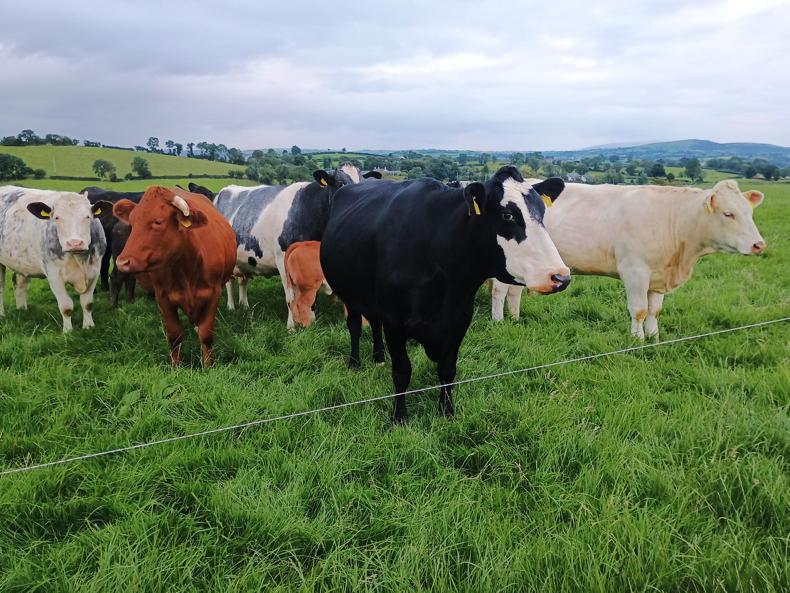
As well as measuring grass as part of the GrassCheck programme, Paraic McNeill is also one of eleven farmers across NI taking part in an AgriSearch-led project looking at the feasibility of growing grass without nitrogen (N) fertiliser.
Up to 5ha of red clover has been established on each of the farms within the ZeroNsile project, which started in 2023.
However, Paraic had some experience of growing red clover silage prior to 2023, with a field established in 2022 still performing well.
That interest in red clover was in response to poor growth during dry weather, with the farm prone to drought. This red clover sward is normally cut twice before being used to finish lambs later in the season.
Crown
To help prevent damage to the crown of red clover (which ultimately kills the plant), Paraic said he doesn’t graze down as tightly as with a grass and white clover sward.
Similarly, he said he did tedd a red clover crop on one occasion, but reckoned it damaged some crowns so wouldn’t do it again – instead the crop is left to dry in rows.
His advice is that a sward of red clover should not be left too long before cutting as the stems can become quite hard and unpalatable. “Six or seven bales per acre suits red clover much better,” he said
He also pointed out the importance of keeping soil pH above six (the farm currently averages 6.2) and while red clover doesn’t need N, it will require phosphorous (P) and potassium (K) in the form of slurry and probably also chemical fertiliser.
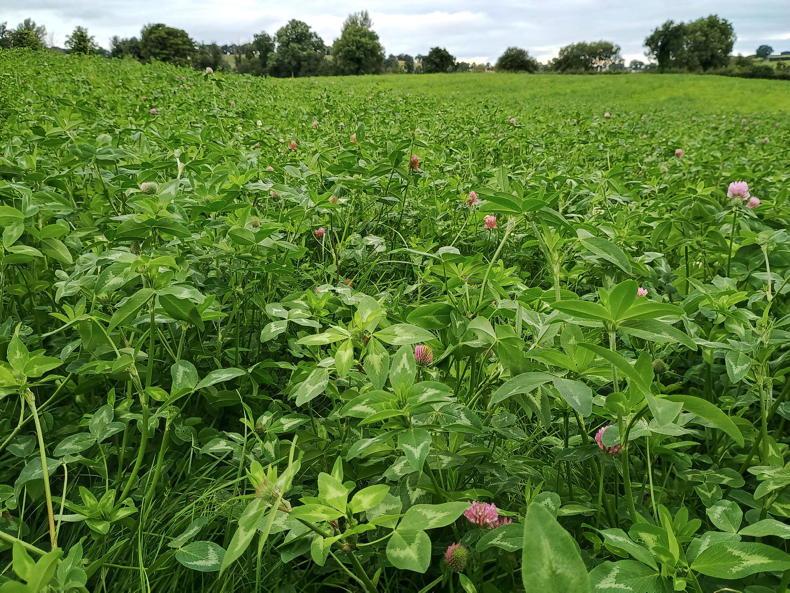
Best practice when establishing a new red clover sward is to deal with weeds in a previous year, before burning off the existing grass and undertaking a full plough reseed.
That advice was followed by Paraic when establishing a red clover sward in 2023 as part of the ZeroNsile project.
“It was sown out on 14 May 2023 in perfect conditions. It got one shower of rain shortly after and then didn’t see rain for five weeks,” said Paraic.
When the rain did come, it ended up being a very wet backend and a number of the project farmers struggled to get the red clover harvested.
On the McNeill farm there was a heavy infestation of weeds, especially red shank and also thistles, so Paraic decided to spray the sward with Triad. It killed the weeds and also the clover.
Open sward
After first-cut in 2024, red clover was stitched back into the sward using an Einbock air seeder. The grass was kept grazed down until the clover got established. While some of the field is a bit patchy, in other areas, there is enough red clover to drive grass growth without fertiliser N.
According to David Little from Germinal, stitching in can work, but only in an open sward, less than one year old. Ideally it should be done in May and June to give the clover time to get well established ahead of winter, but given the current settled weather there is potentially a window up until mid-August, he suggested.
“My preference is always a traditional reseed – don’t bury the seed too deep (more than 10mm) into a fine, firm seedbed. Aim for a pH of 6.5,” he said.
He recommended that red clover should be targeted at the driest fields on the farm and be included at a rate of 3-4kg, along with 1kg white clover and 8-10kg perennial ryegrass per acre.
While some farmers have grown swards of straight red clover to get a high protein forage, the sward is open, so weeds can be an issue. In addition, the red clover will fix excess N, which ultimately could leach out into waterways, said David.
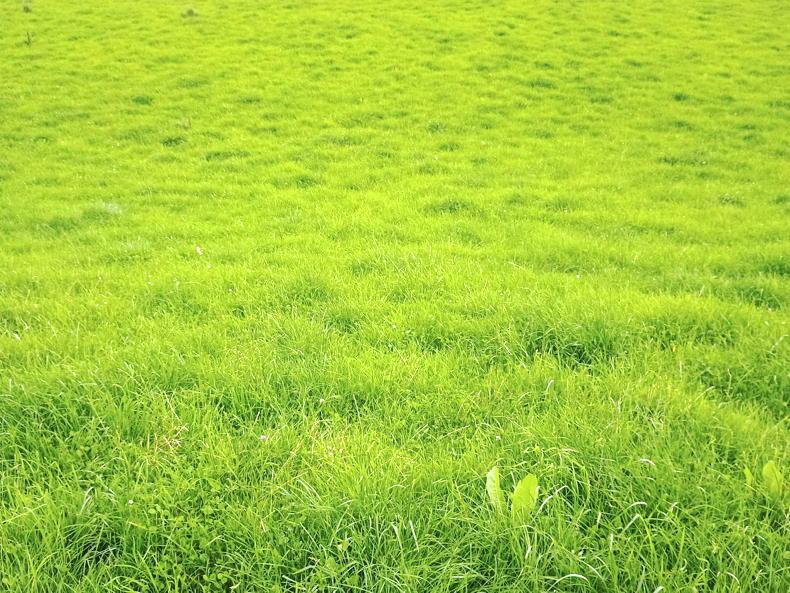
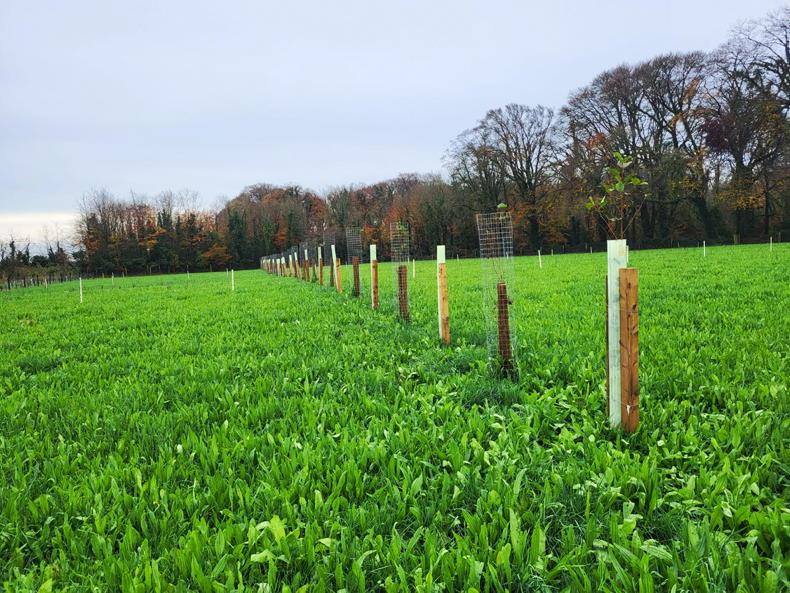
Paraic McNeill did establish a multi-species sward (MSS) in 2022 and while the plantain and chicory is now virtually gone, he has been left with a good grass clover sward.
In 2023 and 2024 Paraic found the MSS quite hard to manage, but despite some negatives, he wants to give it another try.
“In a dry time in 2023, it was alive, it was still growing strongly. It is also good for soil health and opens up the ground. I will go again with it in a bigger field,” he said.
The advice from David Little is not to put too much of the farm into MSS, with 2024 providing a reminder that it can be slow to respond in a cold spring. “But it will definitely do well in a drought,” he said.



SHARING OPTIONS