



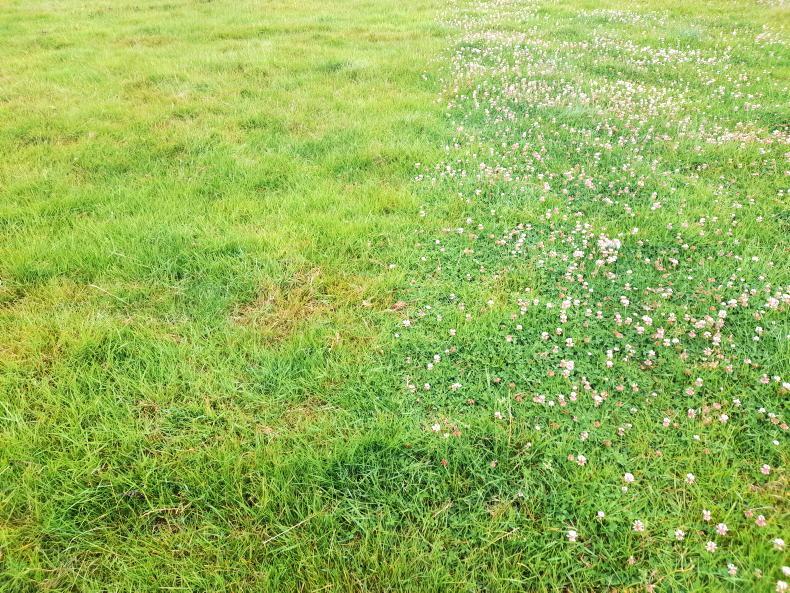
About 10 to 15 years ago, I worked myself into a high state of excitement regarding clover establishment in my grass swards.
I decided to become a sort of clover guru and my farm would be the talk of the country. As neighbouring farmers drove past, they would gaze in envious wonderment at grass fields with the clover bursting out through the gates.
And so, a range of failproof methods were experimented with, including traditional sowing, stitching, mixing with slurry and even feeding the seeds in cattle meal, so that dung pats would resemble mini clover plantations.
The long and the short of it seems to be that I wasn’t much use at maintaining whatever mediocre amounts of clover germinated (in some of the weirder methods, none brairded anyway).
I learned back then that just because agricultural publications feature articles showcasing how to be a technically magnificent farmer, it might not necessarily happen for me.
Negatives
The range of negatives began with non-germination in dry weather, on to slugs eating the clover seeds in wet weather, and even in perfect reseeds the clover just seemed a bit sparse from day one.
Then, of course, there is always the old herbicide issue. This was always a headache on a farm which traditionally grazed sheep along with generous applications of poultry litter.
As my father often remarked, the high levels of phosphate in hen dung, combined with the ability of sheep to spread weed seeds, is a perfect recipe for growing nettles.
If you add creeping thistle and docks to that list, allied to my fondness for keeping fields looking tidy, then those delicate clover plants didn’t stand a chance. Whether it was Grazon 90, Doxstar, or just MCPA that was used, the annihilation of grassland weeds roasted the clover too.
Satisfied
Such was my disillusionment that in more recent years I have almost given up on having clover-rich swards and settled for being satisfied with whatever clover grew in suitable summer weather.
The season past has been a perfect example because I had field after field with lovely displays of clover; all of it naturally occurring. Is natural clover less nutritious than the stuff we sow? Does it fix more or less nitrogen than those modern, large-leafed varieties? I presume that the warm, dry weather is the deciding factor in this and presumably all those acres of densely packed clover may disappear again next year? Who knows.
Try again
However, I took a notion back in early June and decided that I would try once again to establish some sort of a clover sward. It was just one field, we had taken a cut of silage off it and docks had been hit with full-rate Doxstar a month previously.
We gave the stubble a run with a rotavator, then single passed (power harrow/pneumatic drill) a mixture of red and white clover seeds (2kg/acre) into it along with some grass seed (4kg/acre). Even better, a damp week arrived afterwards and therefore germination was perfect.
Forty units of nitrogen were applied just to give it all a bit of a kickstart, and I closed the gate.
Along with a lovely stand of young clover plants came tiny docks, and even some baby thistles. Obviously, I have turned a blind eye to these weeds, because I am going to try really hard to grow a serious field of clover over the next couple of years.
I do think that, in general, there is a much wider acceptance nowadays of nuisance weeds in grassland and I am gradually training myself to accept them as a necessary evil if I am to become more of an eco-friendly farmer.
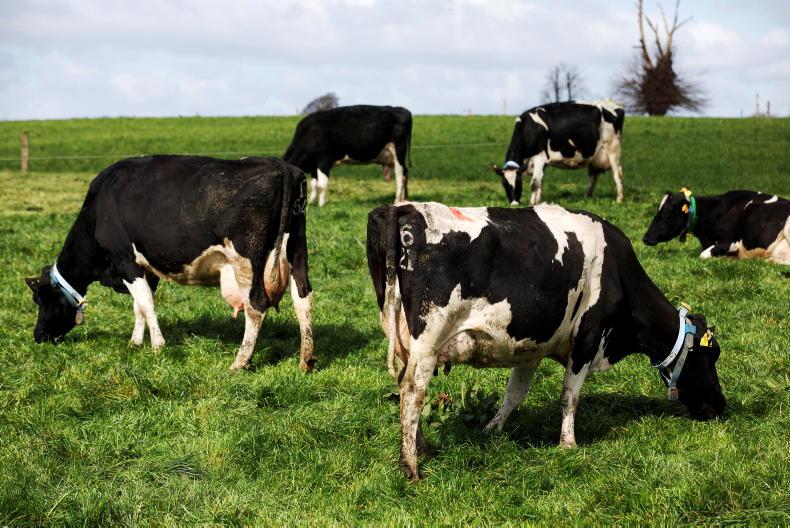
So far, I have grazed the field with cattle, then fat lambs, then cattle again and there are currently cull ewes tidying it up before winter.
It is far too early to draw any sort of conclusions, but I am wondering if livestock (particularly sheep) prefer white clover to red clover? Is red clover less palatable?
At times it has looked as if there was quite definite preferential grazing being practiced.
Incidentally, my keenness for putting red clover in the mixture wasn’t based on scientific research, potential silage quality, or even liveweight gain.
No, it was a bit more basic than all those legitimate reasons.
I just love the look of it as a plant, and the way it seems to attract bumble bees. Is that an acceptable excuse?



SHARING OPTIONS