



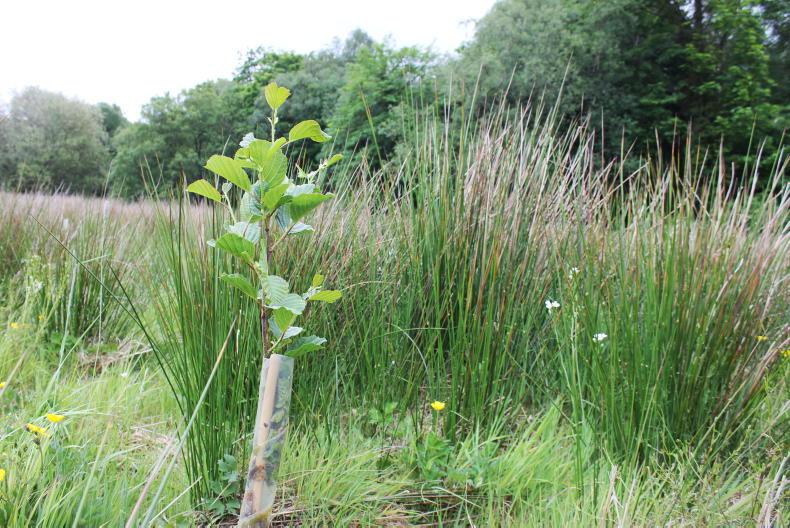
The system of annual payments under the Forest Expansion Scheme has been revised by Agriculture Minister Andrew Muir.
The old system had been in place since 2015 and saw annual payments range from £75 to £425 per hectare, depending on land type.
Under the new changes, a single annual payment rate of £469 per hectare has been introduced across all eligible land types.
This annual payment is available for 10 years, plus scheme participants can also receive up to 100% of eligible woodland establishment costs.
The 2026/27 application window for the Forest Expansion Scheme is now open and closes at 3pm on Monday 19 October.
Farmers who get their animals genomically tested under the new Bovine Genetics Project being run by Sustainable Ruminant Genetics (SRG) Ltd, will see their costs reimbursed within a few weeks.
Under the scheme, a farmer is charged when a tissue sample is received by a lab for processing, with the cost per sample to include the price of the tag, likely to be around £11.
In return, the department has committed to pay out a subsidy of £13 for every eligible sample for genomic testing received by the lab.
Originally, it was thought that DAERA would do a payment run every three to four months, however, a SRG spokesperson has confirmed that the department has committed to payments being issued on a monthly basis.
A bottleneck could develop in fertiliser supply chains, which would lead to supply shortages next spring, a group of industry representatives has said.
In a statement, the UK Fertiliser Farming Stakeholder Group warned farmers against placing orders for next season’s fertiliser too late.
“If too many orders are left until later in the season, the supply chain may not be able to process and deliver everything quickly enough,” the statement reads.
Secondary legislation to allow closure of the Renewable Heat Incentive (RHI) scheme has been passed by MLAs.
The legislation was brought to the Stormont Assembly chamber by Economy Minister Caoimhe Archibald on Monday and means the scheme has now entered into its closure phase. Annual closure payments will be made by her department, with eligible participants contacted individually when it is time for their installation to transition to a closure accreditation.
British Wool’s third sale of the 2026 season’s wool clip took place on 1 September and saw a much more positive trading environment.
Prices stabilised following a reduction in the previous two sales, with the clearance rate also jumping from 52.5% in the first sale to 76.4% in the second and 96.9% in the latest sale, for 994t offered.
The average price recorded for greasy wool was £1.693, similar to the price in the previous sale. This follows a reduction in the first sale held in July of 4p/kg in the average greasy price and 18p/kg in the average price paid for clean wool.
That dip in the trade was attributed to the absence of Chinese buyers and reduced demand from UK scouring plants due to refurbishment works taking place.




SHARING OPTIONS