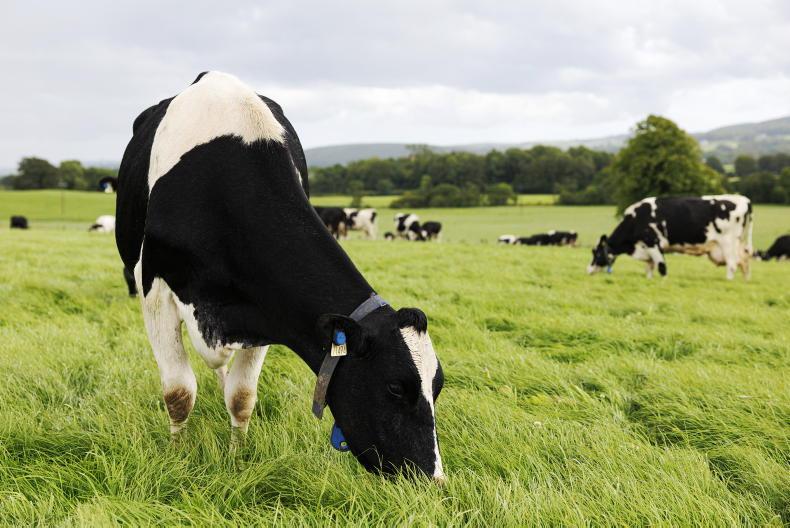
Confirmation from the New Zealand (NZ) government that it intends to change 2050 targets for methane is something that will have to eventually happen in NI if we are to retain a viable ruminant livestock sector.
Under current legislation in NZ, biogenic methane from ruminants needs to be cut in 2050 by 24% to 47% when compared with 2017 levels. This is now to change to a reduction of 14% to 24%.
The move has been welcomed by farmer organisations who argue it is based on science.
On the other side are climate campaigners who believe the NZ government has caved in to the farm lobby.
Similarities
There are mainly similarities between NI and NZ. In NZ, around half of all carbon emissions are from agriculture and within that, most is biogenic methane.
In NI, agriculture currently accounts for over 30% of total emissions, but that figure is increasing each year as other sectors are able to decarbonise faster than farming. Of the agriculture emissions in NI, three-quarters is methane, mainly from ruminants.
The problem with methane is that it is very difficult to cut, outside of simply reducing livestock numbers. One solution is feed additives such as bovaer (3NOP), but there has been significant consumer resistance.
However, it is also important to point out that while methane is a potent greenhouse gas (GHG), it breaks down in the atmosphere after 10 to 12 years, so is very different to carbon dioxide released by burning fossil fuel. Where ruminant numbers are stable, it should have minimal impact on global warming.
Impact
Those arguments were made in the run-up to implementation of NI Climate Change Act in 2022 and did have an impact – there was a late clause added that methane in NI does not have to be “more than 46% lower” than a 1990 baseline by 2050.
The problem, however, is that NI still has to get total GHG emissions to net zero, so if ruminant livestock are retained in full, some other sector needs to sequester or capture a lot of carbon.
That is different to NZ, where all gases, expect biogenic methane, have to hit net zero by 2050 – it might only be a small difference in wording, but it makes a massive difference in practice.