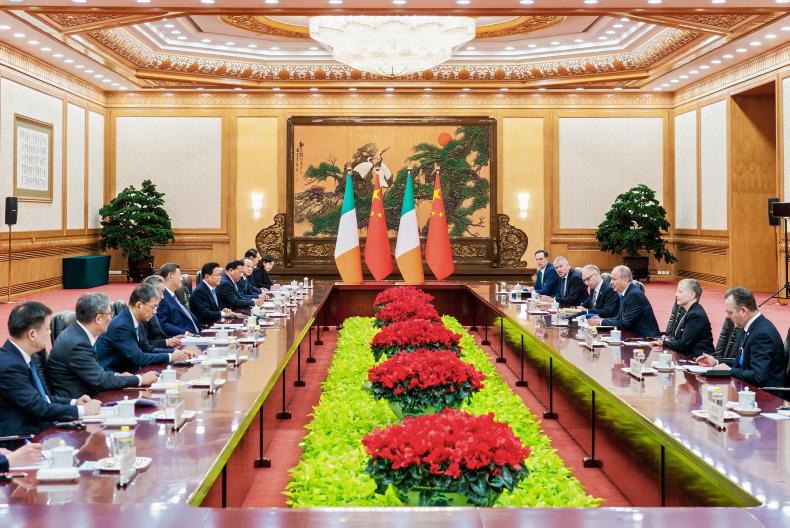
The news that China will reopen for Irish beef exports is welcome, but farmers will judge how important it is by results.
Given the stop-start nature of exports to China since it first opened in 2018, Irish beef has never had the opportunity to fully participate in the rapid growth phase of China’s beef imports as shown in figure 1.
When the market opened, there was expectation that it had the potential to quickly become one of Ireland’s top five export markets for beef.
It was never going to displace the UK as the main market, where 232,000 tonnes of Irish beef was sold in 2024.
However, top five was a realistic target, with Germany occupying fifth position in 2024 as a market for 24,000 tonnes of Irish beef.
As figure 2 shows, in 2020 before the first suspension in May that year, Ireland had exported 6,500 tonnes of beef to mainland China plus a further 9,500 tonnes to Hong Kong.
The BSE suspension didn’t apply to Hong Kong, and it was our second-largest market in Asia in 2024, taking 5,000 tonnes of Irish beef. Some Irish beef was also exported to mainland China over recent years between BSE suspensions, but meaningful volume business never got established.
Could it be different this time?
The short answer is yes, but this depends on two things. Firstly, if another BSE case occurs, even if it is atypical, Irish beef exports would be suspended again. If we can avoid that, then it is over to the market to decide if it wants Irish beef.
Looking at the trends for China’s beef imports over the past decade, we can see that the real boom in volume increase occurred between 2017 and 2022. That suggests that Ireland may have missed the boat in capturing a share of the Chinese market as it expanded rapidly.
Having secured access in 2018, Irish beef was well positioned to take advantage of the beef import boom. Most major Irish meat processors had secured approval, and the larger companies had dedicated staff and established a presence in the market ahead of its opening.
The Irish industry has the capability to do business there, and if it is commercially viable, China can still be a useful export market for Irish beef.
Quota introduction
All may not be lost if Ireland can avoid a further disruption to export approval.
China has recently announced that beef imports this year, next year and 2028 will be subject to a quota limit, with a 55% tariff applied on out of quota imports.
The quota is set at 2.688m tonnes in 2026, 2.742m tonnes in 2027 and 2.797m tonnes in 2028. It is allocated on a country-by-country basis, based on average annual supply over five years to 2024. This is where it gets interesting.
Brazil’s beef exports have been increasing rapidly over the past decade in parallel with the rapid increase in import demand from China, as shown in Figure 3.
They increased by a huge 20% in 2025 to 3.5m tonnes, of which 1.68m tonnes was exported to China according to ABIEC, the trade association for Brazil’s meat exporters.
China has allocated 1.1m tonnes of the 2.688m overall import quota to Brazil for 2026, which means that if Brazil supplies the same amount of China’s beef imports this year as they did last year, then 574,000 tonnes of this would be subject to a 55% tariff.
To put this in context, it is in excess of 100,000 tonnes more than Ireland’s estimated total export volume in 2025.
Possible quota impact
The likely effect of this is that Brazilian beef exporters will be looking to get as much as possible into China in the earlier part of the year when quota is still available.
Assuming supply from Brazil is similar this year, it means exporters will be faced with a choice when the quota is exhausted; either pay the 55% tariff or look for alternative markets.
By the latter part of this year, the Mercosur trade deal with the EU may be in place, and that would create an additional quota with a 7.5% tariff that Brazil could avail of.
If they choose to pay the 55% tariff then Irish beef, which can avail of the 174,000 tonne ‘other countries’ quota, would be competitively priced.
On the other hand, if Brazil’s exporters switch to alternative markets when the China quota is filled, that would create a gap in the market for imports which Irish exporters could step into.
Of course, this could also be filled by one of the other South American countries or New Zealand, who are allocated a higher quota in 2026 than the volume they supplied in 2025.
Australia are in a similar situation to Brazil, as they have been increasing exports to China over recent years.
MLA data shows that in 2025 they exported 273,000 tonnes of beef to China which is 67,000 tonnes more than the quota they have been allocated for 2026.
Irish opportunities and threats
A feeling has grown in recent years that Ireland has missed the boat in developing China as a substantial export market for Irish beef. That may still be the case, but as explained there are reasons why it could be different this time, if we can avoid further cases of BSE. For the first time there will be a barrier in 2026 for the world’s two largest beef exporters in doing business with China. That could open a window for Ireland.
Irish companies had invested time and personnel in China and will retain contacts in the market and many have continued to do business with Hong Kong.
For Dawn Meats, the New Zealand part of their business will be well acquainted with the market, and this could be what Niall Browne had in mind when he told the Irish Farmers Journal that the Dawn-Alliance deal could open doors for Irish farmers. While China may be an opportunity for Irish beef in 2026, it may also have caused a threat.
If there is over 500,000 tonnes of Brazilian beef facing a 55% tariff in China and the Mercosur trade deal is in place, then at least some of it is likely to find its way to EU markets where it would be in competition with Irish beef.
The same applies with Australia in relation to the UK, where they have a free trade deal and zero tariffs on beef. If over 70,000 tonnes of Australian beef is facing a 55% tariff in China because their quota is exhausted, the UK could come into play and again increase competition for Irish beef in that market.
China could offer potential for Irish beef exports in 2026, but their new quota system has definitely increased the potential competition for Irish beef in the UK and EU market.
Irish beef secured access to China in 2018.Business has been stop start because of BSE caused suspensions.Reopening coincides with China introducing beef import quotas.Brazil and Australia would be over their 2026 quota based on 2025 volumes.Brazil’s beef exports have grown parallel to China’s import demand.Increased by 20% to 3.5m tonnes in 2025.Out of quota imports subject to 55% tariff.Could create opportunity for Irish beef but also a potential threat.Brazil may target more exports to EU as alternative market to China .Australia could increase beef exports to UK.
The news that China will reopen for Irish beef exports is welcome, but farmers will judge how important it is by results.
Given the stop-start nature of exports to China since it first opened in 2018, Irish beef has never had the opportunity to fully participate in the rapid growth phase of China’s beef imports as shown in figure 1.
When the market opened, there was expectation that it had the potential to quickly become one of Ireland’s top five export markets for beef.
It was never going to displace the UK as the main market, where 232,000 tonnes of Irish beef was sold in 2024.
However, top five was a realistic target, with Germany occupying fifth position in 2024 as a market for 24,000 tonnes of Irish beef.
As figure 2 shows, in 2020 before the first suspension in May that year, Ireland had exported 6,500 tonnes of beef to mainland China plus a further 9,500 tonnes to Hong Kong.
The BSE suspension didn’t apply to Hong Kong, and it was our second-largest market in Asia in 2024, taking 5,000 tonnes of Irish beef. Some Irish beef was also exported to mainland China over recent years between BSE suspensions, but meaningful volume business never got established.
Could it be different this time?
The short answer is yes, but this depends on two things. Firstly, if another BSE case occurs, even if it is atypical, Irish beef exports would be suspended again. If we can avoid that, then it is over to the market to decide if it wants Irish beef.
Looking at the trends for China’s beef imports over the past decade, we can see that the real boom in volume increase occurred between 2017 and 2022. That suggests that Ireland may have missed the boat in capturing a share of the Chinese market as it expanded rapidly.
Having secured access in 2018, Irish beef was well positioned to take advantage of the beef import boom. Most major Irish meat processors had secured approval, and the larger companies had dedicated staff and established a presence in the market ahead of its opening.
The Irish industry has the capability to do business there, and if it is commercially viable, China can still be a useful export market for Irish beef.
Quota introduction
All may not be lost if Ireland can avoid a further disruption to export approval.
China has recently announced that beef imports this year, next year and 2028 will be subject to a quota limit, with a 55% tariff applied on out of quota imports.
The quota is set at 2.688m tonnes in 2026, 2.742m tonnes in 2027 and 2.797m tonnes in 2028. It is allocated on a country-by-country basis, based on average annual supply over five years to 2024. This is where it gets interesting.
Brazil’s beef exports have been increasing rapidly over the past decade in parallel with the rapid increase in import demand from China, as shown in Figure 3.
They increased by a huge 20% in 2025 to 3.5m tonnes, of which 1.68m tonnes was exported to China according to ABIEC, the trade association for Brazil’s meat exporters.
China has allocated 1.1m tonnes of the 2.688m overall import quota to Brazil for 2026, which means that if Brazil supplies the same amount of China’s beef imports this year as they did last year, then 574,000 tonnes of this would be subject to a 55% tariff.
To put this in context, it is in excess of 100,000 tonnes more than Ireland’s estimated total export volume in 2025.
Possible quota impact
The likely effect of this is that Brazilian beef exporters will be looking to get as much as possible into China in the earlier part of the year when quota is still available.
Assuming supply from Brazil is similar this year, it means exporters will be faced with a choice when the quota is exhausted; either pay the 55% tariff or look for alternative markets.
By the latter part of this year, the Mercosur trade deal with the EU may be in place, and that would create an additional quota with a 7.5% tariff that Brazil could avail of.
If they choose to pay the 55% tariff then Irish beef, which can avail of the 174,000 tonne ‘other countries’ quota, would be competitively priced.
On the other hand, if Brazil’s exporters switch to alternative markets when the China quota is filled, that would create a gap in the market for imports which Irish exporters could step into.
Of course, this could also be filled by one of the other South American countries or New Zealand, who are allocated a higher quota in 2026 than the volume they supplied in 2025.
Australia are in a similar situation to Brazil, as they have been increasing exports to China over recent years.
MLA data shows that in 2025 they exported 273,000 tonnes of beef to China which is 67,000 tonnes more than the quota they have been allocated for 2026.
Irish opportunities and threats
A feeling has grown in recent years that Ireland has missed the boat in developing China as a substantial export market for Irish beef. That may still be the case, but as explained there are reasons why it could be different this time, if we can avoid further cases of BSE. For the first time there will be a barrier in 2026 for the world’s two largest beef exporters in doing business with China. That could open a window for Ireland.
Irish companies had invested time and personnel in China and will retain contacts in the market and many have continued to do business with Hong Kong.
For Dawn Meats, the New Zealand part of their business will be well acquainted with the market, and this could be what Niall Browne had in mind when he told the Irish Farmers Journal that the Dawn-Alliance deal could open doors for Irish farmers. While China may be an opportunity for Irish beef in 2026, it may also have caused a threat.
If there is over 500,000 tonnes of Brazilian beef facing a 55% tariff in China and the Mercosur trade deal is in place, then at least some of it is likely to find its way to EU markets where it would be in competition with Irish beef.
The same applies with Australia in relation to the UK, where they have a free trade deal and zero tariffs on beef. If over 70,000 tonnes of Australian beef is facing a 55% tariff in China because their quota is exhausted, the UK could come into play and again increase competition for Irish beef in that market.
China could offer potential for Irish beef exports in 2026, but their new quota system has definitely increased the potential competition for Irish beef in the UK and EU market.
Irish beef secured access to China in 2018.Business has been stop start because of BSE caused suspensions.Reopening coincides with China introducing beef import quotas.Brazil and Australia would be over their 2026 quota based on 2025 volumes.Brazil’s beef exports have grown parallel to China’s import demand.Increased by 20% to 3.5m tonnes in 2025.Out of quota imports subject to 55% tariff.Could create opportunity for Irish beef but also a potential threat.Brazil may target more exports to EU as alternative market to China .Australia could increase beef exports to UK.
SHARING OPTIONS