



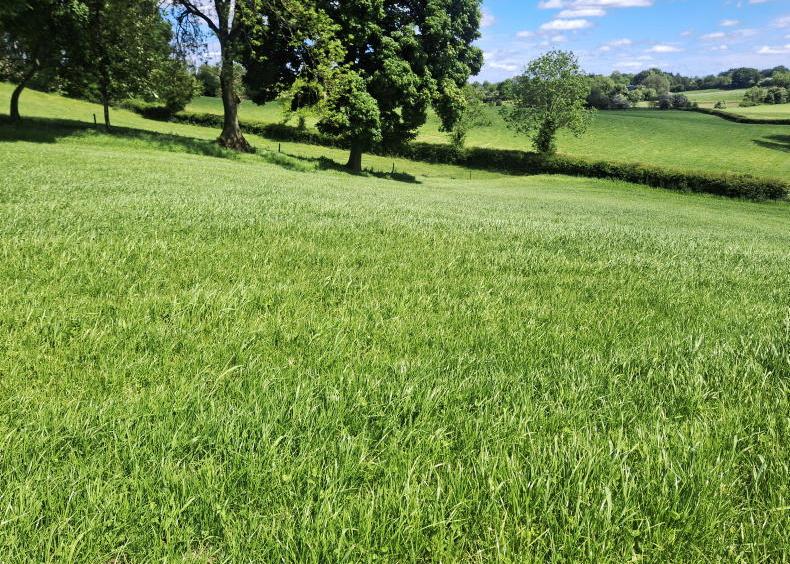
It has been a super year for grass growth in the west, but with rain returning in late August it is a reminder that careful planning must be done if cows are to be successfully grazed into the autumn.
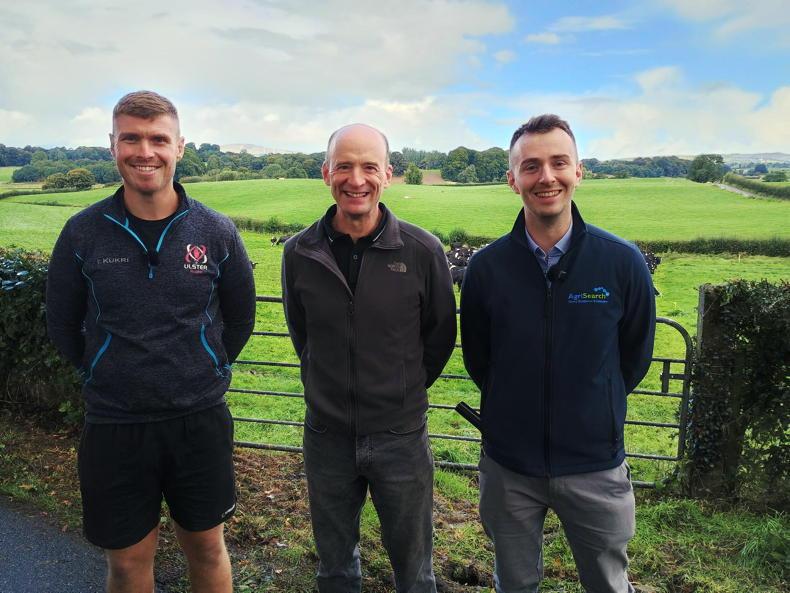
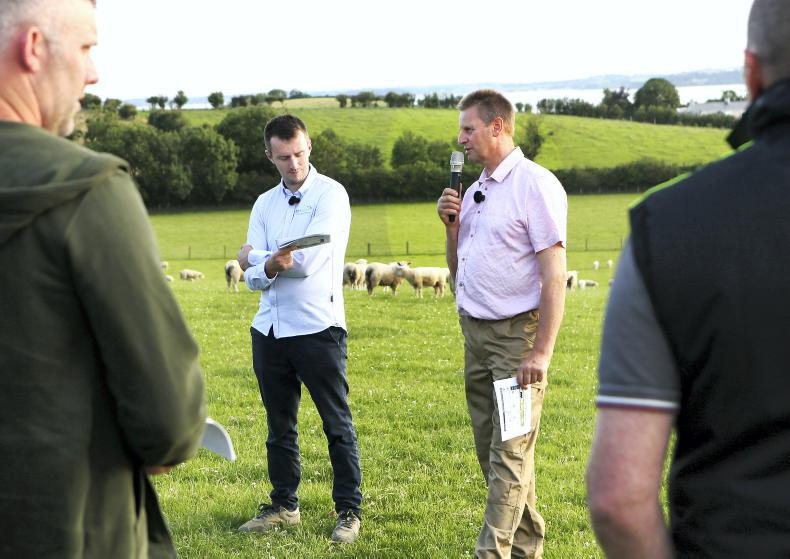
Hosting an AgriSearch GrassCheck event on farm last Thursday, Gareth Shortt from Omagh outlined how he is trying to build grass covers to hopefully graze into late November.
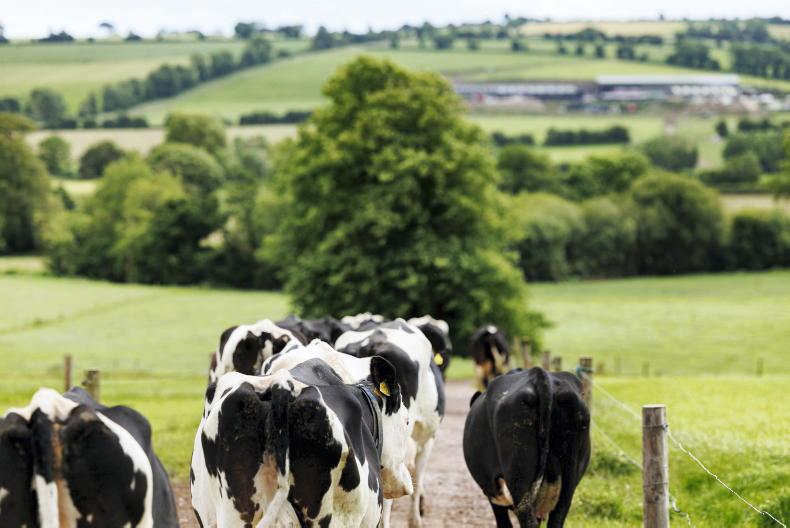
Gareth manages one of two farms just outside Omagh leased by Cormac Cunningham from Strathroy Dairy. Cappagh Farm is a 119ha spring-calving unit, with 211 mainly Friesian and Friesian crossbred cows grazed on a 70ha milking platform. Grass has been measured weekly since 2017.
During the summer, Gareth has been working on an 18- to 21-day rotation. However, that is currently being extended out to 30 days this month and to 35 to 40 days beyond that.
A number of actions are being taken to build grass covers, with Gareth continuing to apply nitrogen (N) after each grazing and intending to blanket-spread the grazing block with around 20kg N/ha (just over half a bag per acre) before the 15 September deadline.
Cows have also been scanned, with empty cows and other culls likely to be sold this month, which will take numbers back to around 186, and reduce demand for grass.
Buffer feeding
However, weekly grass measurement and input of data into an autumn grass planner, showed average farm cover at the end of August was at 2,243kg dry matter per hectare (DM/ha), behind a target of 2,400kg DM/ha.
That deficit was mainly due to a decision to take out 30 acres for silage in August, with dry conditions at the time meaning Gareth was unable to spread any slurry to help drive on regrowth.
“We probably took out slightly too much grass, but quality of grass going into cows would have been hit if I didn’t cut it,” said Gareth.
To get average farm cover back on track, he has increased meal fed from 2kg to 4kg/cow and offered silage at morning and evening milking. In total, 3kg per cow is being consumed.
That decision to start buffer-feeding has coincided with a return of rain and when combined, it has left cows unsettled, with milk yields down slightly to around 20l per cow.
Rather than buffer-feed, the other option might have been to graze on and house cows at night in October.
“We have done that before [housed at night], but the milk falls off them. I started buffer feeding last Wednesday – I hope come Monday [8 Sept] we will be OK to pull it out,” responded Gareth.
No two years are the same
While 2024 came with a super autumn, the cold and wet spring will not be easily forgotten and at once stage, Gareth had suggested cow numbers might need to be cut.
Overall, the farm only grew an average of 8.52t DM/ha in 2024, with that total already surpassed in 2025, with potentially another 2 to 3t DM still to come.
In 2024, cows were in and out during breeding, which “backfired a bit” said Gareth, resulting in 13% empty. This year, the empty rate is back below 10%, with 85% served within six weeks and calving due to start from 1 February.
Last year, total yields averaged 5,600l, with 465kg milk solids produced per cow from 1.4t meal. To date in 2025, 4,200l has been produced from 850kg concentrate.
“The final meal total – I would hope it would be below 1.2t. It has been a brilliant year for grass,” said Gareth. He is also well stocked with silage, having taken 300 bales of surplus off paddocks during the summer months to ensure top-quality grass is available for cows.
Top-class grazing infrastructure
One of the keys to managing grass later in the season is to have excellent farm infrastructure.
The farm is well set up with lanes and there are multiple entry points to paddocks. Strip wire is used to give 12-hour allocations of grass.
During the main grazing season, the aim is to go into covers of around 2,800kg DM/ha and graze down to 1,600kg. From September onwards, target pre-grazing cover increases to around 3,100kg DM/ha.
Soil pH, potassium and phosphorus are all at optimum levels, while the entire farm has been reseeded in the last 10 years.
Spring v autumn: there are merits in both
Before taking on the lease of Cappagh Farm in 2015, Cormac Cunningham had leased a different farm outside Omagh, with a spring milk herd managed by Co Tyrone native, Cathal McAleer.
Cormac also has an autumn-calving system on a unit close to Cappagh Farm, which has been leased since 2002. That farm produces around 8,500 to 9,000l/cow from 2t of meal.
As a result, he is well placed to give an opinion on the advantages and disadvantages of both systems.
He said that when milk prices are poor, the spring system is more robust, but when prices are good, the higher yields from the autumn herd drive profit.
Ultimately, the choice of system might come down to personal preference and what best suits the resources on farm. However, the key is not the system, but how well it is managed.
“I have learned – never take a snapshot of one year. Over a five- to 10-year period, when they are both managed well, both systems give a good return. The margins [when averaged out] are remarkably similar,” said Cormac.
Spill-over
He also maintained that the strong points of one system can spill over to the other. For example, the key to a spring system is grass measuring and it is now being done on the other farm.
“If you want to put cows out, you need to measure grass – it is no different to looking at the meal bin to see what feed is left,” said Cormac.
Block calving
Crucial to output from a spring system is having a tight calving block, but it also fits in well when you are totally reliant on paid labour. As a result, Cormac has been keen to tighten the calving period on the autumn unit as well.
“The staff are key to both systems. They like block-calving – some of them have worked on farms with year-round calving and they wouldn’t want to go back. Breeding and calving are critical months. Yes, there is a lot of work, but you get through it. After that, there is a lot of flexibility in the rota” said Cormac.
Staff
At present, on the spring-calving unit there is one full-time person (Gareth) along with part-time help and two relief milkers.
Cups go on the cows between 5 and 5.30am. Milking is normally finished by 7.15am, when staff go home for breakfast. They are back in the yard for 9am, have an hour for lunch, with cups on again at 3pm, to be finished up by 5pm.
During calving, the staff work every other weekend. After that, it is one weekend in four.
Breeding based on EBI figures
The two farms leased by Cormac Cunningham are among a number of Strathroy suppliers now paid on the basis of A+B-C.
When Cappagh Farm was taken on in 2015 it was stocked with Holstein cows, generally not suited to a spring-calving system. Friesian and Friesian crosses were introduced, with average cow size now around 500 to 515kg.
With milk paid on the basis of solids, there is a temptation to introduce more Jersey genetics into the mix, although Cormac points out it is possible to produce high solids milk from black and white genetics.
Both farms select bulls using the Irish Economic Breeding Index (EBI).
“It is not true that EBI is just for low input spring calving cows – you can select for plenty of milk, no problem. We are getting up to 9,000l on twice a day milking, with cows at grass,” said Cormac.
Farm is part of new carbon network
Cappagh Farm is one of 20 from across NI taking part in a new Dairy Carbon Network, being led by scientists at AFBI and involving over 50 farms across the UK.
The aim of the project is to help dairy farmers lower greenhouse gas emissions by deploying mitigation measures that are proven on farm. Each participant in the project was offered the opportunity to demonstrate two mitigations and in the case of Cappagh Farm, it is to introduce clover / legumes into swards and also to switch to protected urea.



SHARING OPTIONS