



Private vets and their farmer clients should not accept sickness, unnecessary treatment rates and poor performance on cattle farms, attendees at an AgriSearch beef conference on Tuesday were told.
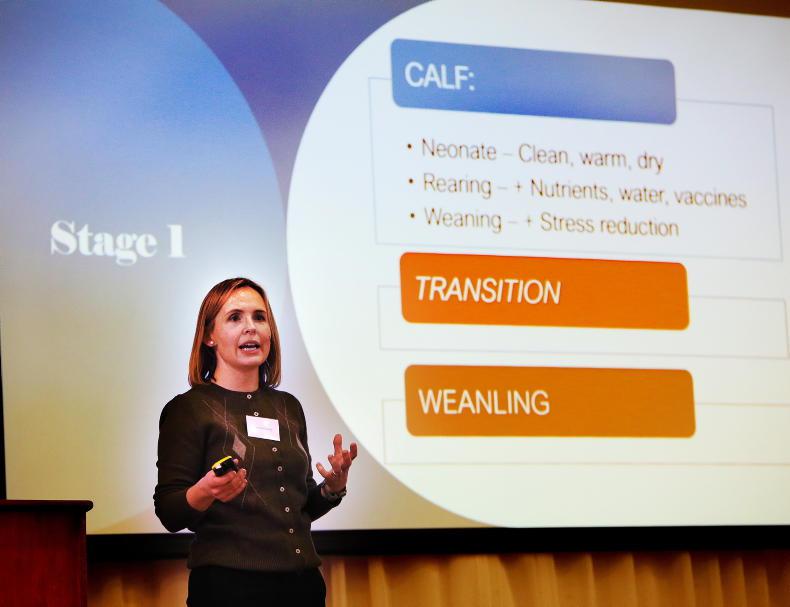
Speaking at the event, Kildare vet Mairead O’Grady, who previously worked for MSD Animal Health in NI, said among the clients she now works with, the use of vaccines to manage key issues such as scour, pneumonia and clostridial disease was “non-negotiable”.
“In young calves, you have to get the environment right – a really clean, warm and dry environment. Scour is the key disease we need to manage and when I say manage, I mean prevent, not treat,” she said.
On dairy farms, she warned that the biggest risk of antibodies not being passed on via colostrum, is when the calf is left to suckler the mother. That risk is lessened when the calf is bottle fed, but minimised when it is stomach tubed. “There are some really good artificial antibodies on the market as well. Taking control of putting antibodies into your calf is really important,” said O’Grady.
Pneumonia
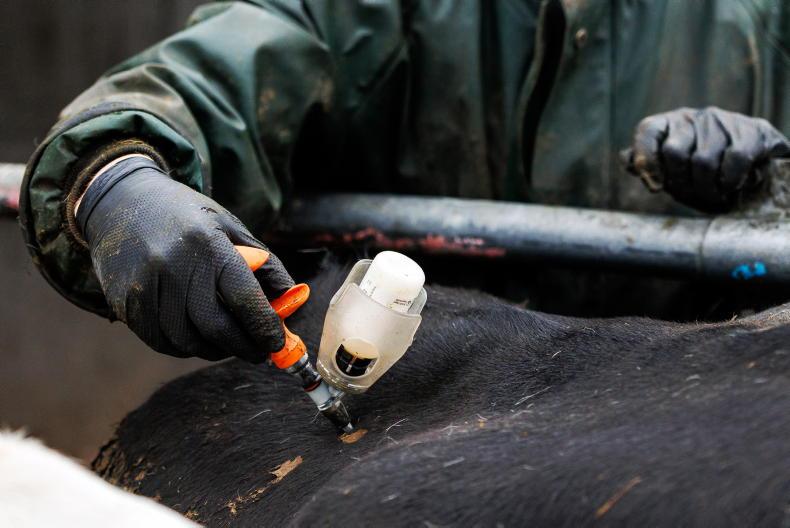
The next priority is to vaccinate calves for pneumonia. She said her approach has changed in the last couple of years and on many farms it is necessary to administer vaccines to young calves around two weeks of age.
As well as common products which cover the likes of RSV and PI3 she said mycoplasma has now emerged as a “significant player”, with recent analysis of bulk milk samples showing 90% of NI dairy herds had antibodies to mycoplasma.
As a result, she now considers a vaccine (Protivity from Zoetis) as one of the core products to use.
“We have reduced antibiotic usage, sickness and mortality on farms that have used it – there has been a significant return on investment,” she said.
It is also necessary to cover clostridial diseases, although she advised farmers to take advice from their vet as it is important not to overstimulate the immune system by administering various products at the same time.
In older cattle, IBR vaccines should always be used ahead of housing.
She also told farmers to watch out for any changes in faeces as it is a good indicator of stomach upsets due to the likes of mycotoxins or acidosis.
Faecal egg counts are useful early in the grazing season to assess for any stomach worms, while lungworm must be controlled as the season progresses. Depending on the weather, liver fluke can also be a problem issue. “There is no point feeding an animal with a significant parasite burden,” she said.




SHARING OPTIONS