The proper development of a dairy calf’s rumen is important to allow for timely and stress-free weaning, visitors to Malcolm Keys’ dairy heifer and beef unit near Clogher were told last week.
Speaking at the event organised by Thompsons Feeds, Gloucester vet Roger Blowey said that feed makes its way through a calf’s four stomachs in order of reticulum, rumen, omasum and abomasum.
When a calf is born, its reticulum and rumen have a combined capacity of around three litres, and the rumen has a smooth interior surface with no bacteria present, Blowey explained during a practical demo session.
By three months of age, this capacity has increased to 20-30 litres, and the rumen surface now has thousands of small projections called papillae. Bacteria are also now present in the rumen and are used to break down fibre in the diet into volatile fatty acids.
“Volatile fatty acids are then absorbed by the papillae. If the rumen is not developed properly then the calf won’t get the same value from food,” Blowey said.
In his presentation, James Black from Thompsons maintained that giving calves access to concentrates and a roughage source, such as straw or hay, is essential for rumen development.
“As soon as you get the rumen going, you can start to move the calf off milk and have it weaned by eight to 10 weeks of age,” he said.
Black added that he had no preference between hay or straw as a roughage source, although he did point out that straw quality is generally less variable than hay.
Black’s advice was to offer calves concentrates from three days of age in the form of either a blend or nut. Calves also need access to unrestricted clean water for rumen development, farmers were told.

A well-developed rumen is dark in colour, which indicates good blood flow, and has thousands of papillae for absorption of nutrients.
Routine
During his practical demo on calf anatomy, Blowey highlighted the importance of a regular feeding routine to maximise growth rates in young calves.
He explained that milk is digested in the abomasum and not the rumen. A channel at the top of the reticulum, known as the oesophageal groove, allows milk to bypass the first three stomachs and go straight into the abomasum.
For the oesophageal groove to work, a calf needs to know when it is about to be fed milk to allow time for the groove to close properly.
The noise of milk replacer being mixed or teat feeders being hung on gates are examples of routine procedures that make a calf prepared to drink milk.
Blowey said that when the oesophageal groove is closed, a calf is drinking milk properly and it will wag its tail, bump its head up and down and secrete saliva.
If a calf is not given time to prepare for drinking milk, Blowey said the oesophageal groove will not close properly meaning milk will go into the rumen.
Bacteria in the rumen will cause the milk to ferment and go sour, which can lead to bloat, scour, ulcers and reduced liveweight gain.
Farmers were also told that delayed or irregular milk feeding times can lead to calves drinking excess water, which will cause reduced milk intakes when feeding eventually takes place.
Stomach tubing
When stomach tubing, Blowey advised farmers to push the end of the tube up to the roof of the calf’s mouth so that it runs along the top and down the back of the mouth. This is because the air pipe (entrance to the lungs) is in front of the oesophagus (entrance to the reticulum).
Blowey pointed out that putting colostrum into a newborn calf’s rumen via a stomach tube does not cause scour or bloat because bacteria are not present there yet. However, he said that older calves should not be stomach tubed with milk, as the stomach tubing process means the milk ends up in the rumen rather than the abomasum, and in the rumen it will turn sour.

The folded structure seen here in the middle of the reticulum is the oesophageal groove.
Reticulum
During his demo session, Blowey showed farmers how the reticulum is a long structure that expands and contracts. With the reticulum being the first of four stomachs in a ruminant animal, it is the most likely place for a foreign object, such as a piece of wire, to get stuck.
Blowey said that this is dangerous because the reticulum squeezes shut when it contracts so a piece of wire can easily pierce the reticulum wall and cause infections, abscesses or harm the nearby heart.
He suggested that more farmers should consider putting magnetic boluses into cattle to attract metal objects in the reticulum and rumen. The boluses cost around £1.50 each and last for the lifetime of the animal. The magnets stay in the rumen and do not cause damage because the rumen does not close shut.
“I conducted a study of around 350 cull cows in abattoirs in England. Cows with magnets had zero abscesses and there were masses of metal on the boluses,” Blowey said.
Sick calves produce less milk as cows
Calves that are treated with antibiotics before weaning produce 493kg less milk in their first lactation compared with untreated calves, according to research from the USA.
Speaking at last week’s calf rearing event, Dr Sandra Godden from the University of Minnesota said that incidences of diseases in calves, such as pneumonia, will have short- and long-term impacts.
Reduced milk yields, increased risk of death or culling before calving, and lower liveweight gains were listed as long-term effects.
Godden said that supressed growth rates will lead to delayed breeding and calving. She quoted research which suggests that it costs £2.87 for every day that a heifer calves over 24 months of age.
Clean, dry bedding, adequate ventilation in calf sheds and good hygiene of feeding equipment and in housing were key steps highlighted by Godden to reduce disease incidence in young calves.
Host farm
Some of the calf rearing procedures adopted by host farmer Malcolm Keys were excellent examples of best practice outlined by Godden. Calves come onto the unit from the nearby dairy farm at three weeks old and are kept in straw-bedded group pens until six weeks of age. Calves have access to straw in racks, ad-lib concentrates and water.
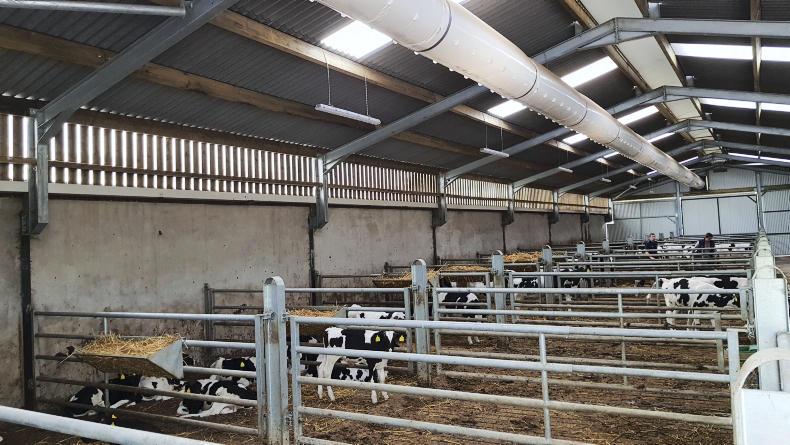
After this, calves move to the main calf-rearing shed which is straw-bedded at the back of each pen and slatted at the front. The shed is too wide to ventilate naturally, so a positive pressure tube has been installed to improve air movement.
Calves move across the calf shed as they get older in an all-in, all-out system, which limits disease spread. Pens are pressure-washed and disinfected after each batch.
“This shed is not just clean because we are here today, it’s like this every day,” James Black from Thompsons Feeds said.
Read more
Dairy management: jobs for the autumn
Good scan result but grass remains scarce
The proper development of a dairy calf’s rumen is important to allow for timely and stress-free weaning, visitors to Malcolm Keys’ dairy heifer and beef unit near Clogher were told last week.
Speaking at the event organised by Thompsons Feeds, Gloucester vet Roger Blowey said that feed makes its way through a calf’s four stomachs in order of reticulum, rumen, omasum and abomasum.
When a calf is born, its reticulum and rumen have a combined capacity of around three litres, and the rumen has a smooth interior surface with no bacteria present, Blowey explained during a practical demo session.
By three months of age, this capacity has increased to 20-30 litres, and the rumen surface now has thousands of small projections called papillae. Bacteria are also now present in the rumen and are used to break down fibre in the diet into volatile fatty acids.
“Volatile fatty acids are then absorbed by the papillae. If the rumen is not developed properly then the calf won’t get the same value from food,” Blowey said.
In his presentation, James Black from Thompsons maintained that giving calves access to concentrates and a roughage source, such as straw or hay, is essential for rumen development.
“As soon as you get the rumen going, you can start to move the calf off milk and have it weaned by eight to 10 weeks of age,” he said.
Black added that he had no preference between hay or straw as a roughage source, although he did point out that straw quality is generally less variable than hay.
Black’s advice was to offer calves concentrates from three days of age in the form of either a blend or nut. Calves also need access to unrestricted clean water for rumen development, farmers were told.
A well-developed rumen is dark in colour, which indicates good blood flow, and has thousands of papillae for absorption of nutrients.
Routine
During his practical demo on calf anatomy, Blowey highlighted the importance of a regular feeding routine to maximise growth rates in young calves.
He explained that milk is digested in the abomasum and not the rumen. A channel at the top of the reticulum, known as the oesophageal groove, allows milk to bypass the first three stomachs and go straight into the abomasum.
For the oesophageal groove to work, a calf needs to know when it is about to be fed milk to allow time for the groove to close properly.
The noise of milk replacer being mixed or teat feeders being hung on gates are examples of routine procedures that make a calf prepared to drink milk.
Blowey said that when the oesophageal groove is closed, a calf is drinking milk properly and it will wag its tail, bump its head up and down and secrete saliva.
If a calf is not given time to prepare for drinking milk, Blowey said the oesophageal groove will not close properly meaning milk will go into the rumen.
Bacteria in the rumen will cause the milk to ferment and go sour, which can lead to bloat, scour, ulcers and reduced liveweight gain.
Farmers were also told that delayed or irregular milk feeding times can lead to calves drinking excess water, which will cause reduced milk intakes when feeding eventually takes place.
Stomach tubing
When stomach tubing, Blowey advised farmers to push the end of the tube up to the roof of the calf’s mouth so that it runs along the top and down the back of the mouth. This is because the air pipe (entrance to the lungs) is in front of the oesophagus (entrance to the reticulum).
Blowey pointed out that putting colostrum into a newborn calf’s rumen via a stomach tube does not cause scour or bloat because bacteria are not present there yet. However, he said that older calves should not be stomach tubed with milk, as the stomach tubing process means the milk ends up in the rumen rather than the abomasum, and in the rumen it will turn sour.
The folded structure seen here in the middle of the reticulum is the oesophageal groove.
Reticulum
During his demo session, Blowey showed farmers how the reticulum is a long structure that expands and contracts. With the reticulum being the first of four stomachs in a ruminant animal, it is the most likely place for a foreign object, such as a piece of wire, to get stuck.
Blowey said that this is dangerous because the reticulum squeezes shut when it contracts so a piece of wire can easily pierce the reticulum wall and cause infections, abscesses or harm the nearby heart.
He suggested that more farmers should consider putting magnetic boluses into cattle to attract metal objects in the reticulum and rumen. The boluses cost around £1.50 each and last for the lifetime of the animal. The magnets stay in the rumen and do not cause damage because the rumen does not close shut.
“I conducted a study of around 350 cull cows in abattoirs in England. Cows with magnets had zero abscesses and there were masses of metal on the boluses,” Blowey said.
Sick calves produce less milk as cows
Calves that are treated with antibiotics before weaning produce 493kg less milk in their first lactation compared with untreated calves, according to research from the USA.
Speaking at last week’s calf rearing event, Dr Sandra Godden from the University of Minnesota said that incidences of diseases in calves, such as pneumonia, will have short- and long-term impacts.
Reduced milk yields, increased risk of death or culling before calving, and lower liveweight gains were listed as long-term effects.
Godden said that supressed growth rates will lead to delayed breeding and calving. She quoted research which suggests that it costs £2.87 for every day that a heifer calves over 24 months of age.
Clean, dry bedding, adequate ventilation in calf sheds and good hygiene of feeding equipment and in housing were key steps highlighted by Godden to reduce disease incidence in young calves.
Host farm
Some of the calf rearing procedures adopted by host farmer Malcolm Keys were excellent examples of best practice outlined by Godden. Calves come onto the unit from the nearby dairy farm at three weeks old and are kept in straw-bedded group pens until six weeks of age. Calves have access to straw in racks, ad-lib concentrates and water.
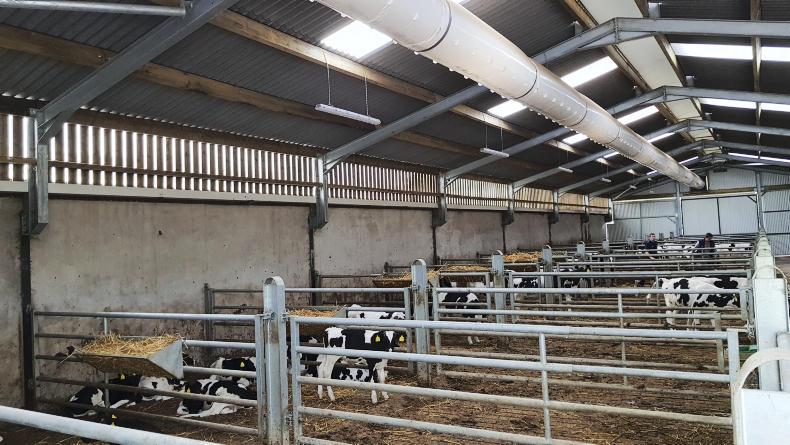
After this, calves move to the main calf-rearing shed which is straw-bedded at the back of each pen and slatted at the front. The shed is too wide to ventilate naturally, so a positive pressure tube has been installed to improve air movement.
Calves move across the calf shed as they get older in an all-in, all-out system, which limits disease spread. Pens are pressure-washed and disinfected after each batch.
“This shed is not just clean because we are here today, it’s like this every day,” James Black from Thompsons Feeds said.
Read more
Dairy management: jobs for the autumn
Good scan result but grass remains scarce









SHARING OPTIONS