



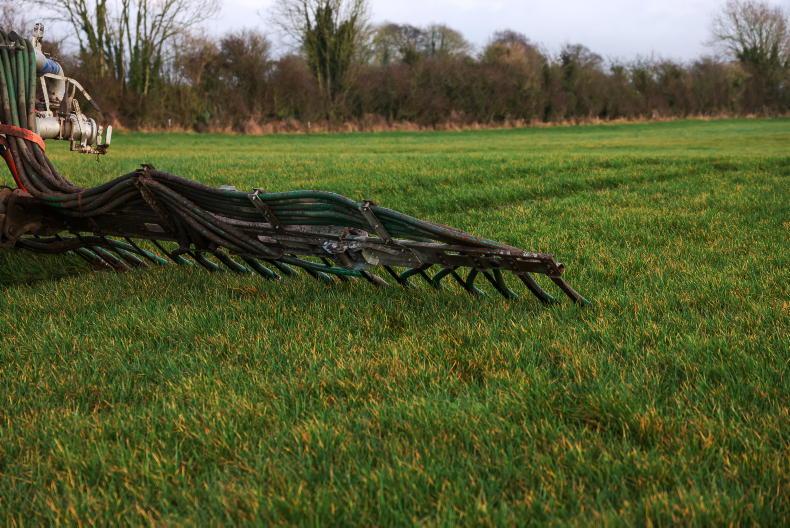
The closed period for spreading slurry and manures ends at midnight on Saturday 31 January.
Given the wet weather in the weeks running up to the ban coming into place from midnight on 15 October, there is probably added pressure on storage at present. That situation is not helped by heavy rainfall over the winter period and even where good infrastructure is in place, it is inevitable that some of this water ends up in tanks.
It means that some farmers will be keen to press on, despite the extremely wet ground conditions at present.
However, it is important that farmers and contractors apply caution. The rules require that slurry should only be spread where weather and ground conditions are suitable for the uptake of slurry nutrients – only on the very driest of land, could that be legitimately argued at present.
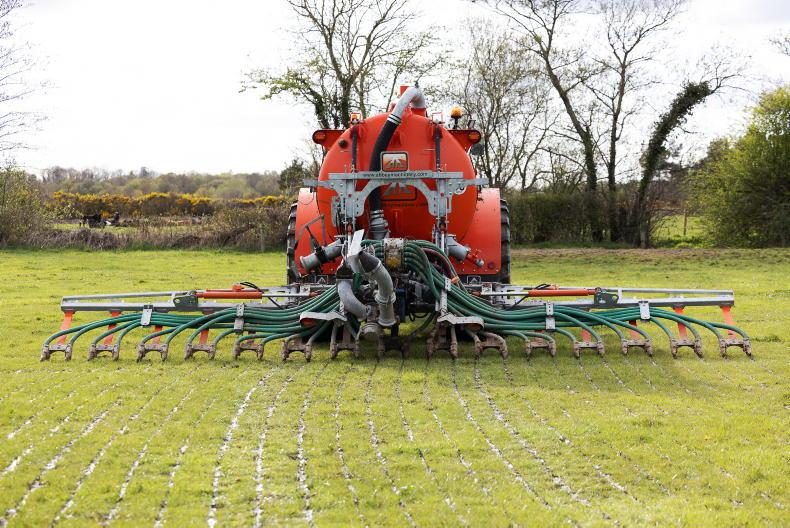
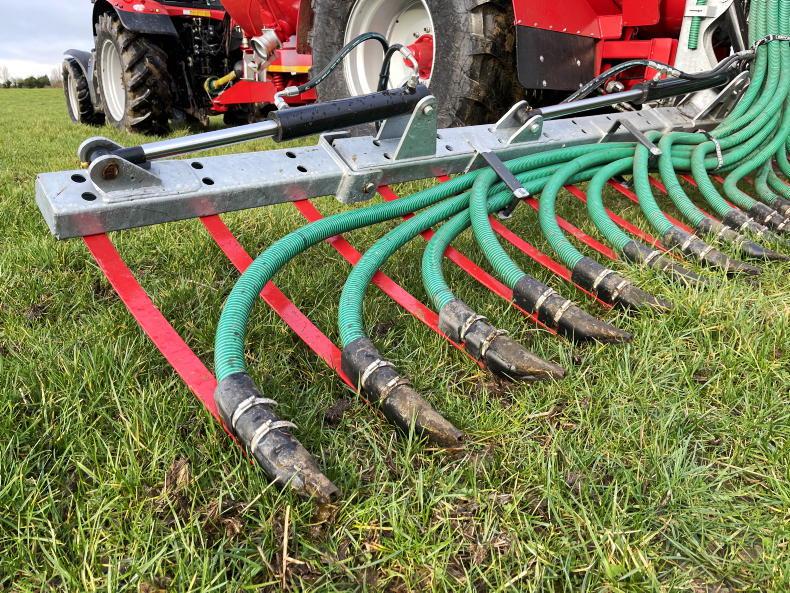
There are also other requirements to be met during February, with the buffer zone to lakes extended from 20m to 30m and for other waterways, from 10m to 15m. Where low emission slurry spreading equipment (LESSE) is used, this buffer zone is 5m in February.
In addition, the maximum amount of slurry that can be applied in a single application is limited to 30m3/ha (2,700 gallons per acre), compared to 50m3/ha (4,500 gallons per acre) at other times of the year. Just how the NI Environment Agency (NIEA) actually enforces that particular rule is probably a bit of a mystery and in any event, there won’t be hundreds of inspectors driving around the roads next week, watching what is going on in fields.
But in one regard, that isn’t the key issue now at play. Instead, this is about demonstrating to the general public that we are good custodians of the countryside.
The algal blooms seen in Lough Neagh in the last few years, has created a scenario where our non-farming neighbours are much more attentive to slurry spreading than in the past. Anyone who chooses to blatantly ignore the rules, is doing the entire farming community a disservice.




SHARING OPTIONS