



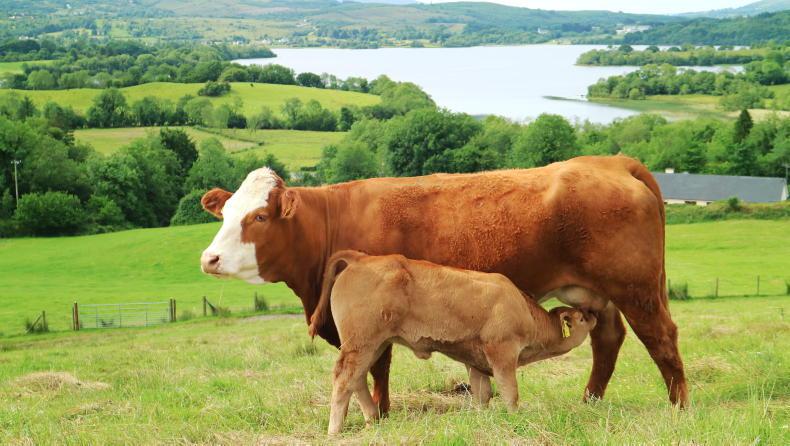
After a four-year period of relatively stable numbers in NI, the suckler herd dropped by over 10,000 head in the last year to total 236,082, the lowest it has been since 1988.
The figures published by DAERA as part of June 2023 census results, show that 241 farms stopped keeping suckler cows over the period, leaving 13,810 farms active in the sector.
Average herd size stands at 17.1 cows, compared to 17.5 in 2022. Just 802 herds have over 50 suckler cows, down from 874 herds last year.
Record dairy
While sucklers have seen a marked decline, the NI dairy herd edged up again and now stands at a new record high of 319,346 head.
However, the sector is also undergoing a gradual structural change, with 35 fewer dairy farms recorded in the June census, leaving the total at 3,150. Average herd size has crossed the 100-cow mark for the first time.
The DAERA results also show there were 6% more young dairy females on farms this year compared to 2022, although with costs running ahead of milk prices in the second half of 2023, it remains to be seen whether this translates into more cows-in-milk next year.
Across the entire cattle herd in NI, numbers are down 1% on the 2022 figure to stand at 1.67m head. The NI cattle herd has remained relatively stable over the last 25 years, fluctuating between 1.5m and 1.77m head.
Sheep
There has also been a small reduction in the total sheep flock with breeding ewe numbers dropping 2% to stand at 973,718 head. However, the 2023 figure is still the second highest total since 2006.
Pigs and poultry
A sustained period of high feed prices and negative margins resulted in an 8% reduction in total pig numbers recorded in June 2023. However, the figures also show there were 50% more gilts in pig when compared to previous years, suggesting the sector could quickly recover in numbers.
A similar scenario has already played out in the poultry sector, with the June results showing a big increase, especially in broilers, leaving total poultry numbers at 25.58m, the second highest figure ever recorded in NI.
In June 2023 there were 15.6m broilers on farms, compared to 11.9m in 2022. In that year, as well as the impact of avian flu, Moy Park suspended processing at its Ballymena site, which led to fewer broilers being processed in NI.
While broiler numbers in 2023 are similar to those prior to 2022, the overall increase has been mainly driven by more egg units.
There were 5.79m laying hens on farms in June 2023, compared to 5.29m in 2022 and 4.3m in June 2021.
Crops
After a two-year period of growth, the total NI area in cereals was down nearly 3% in June 2023, to stand at 31,803ha.
The potato area continues to trend down, with 3,258ha planted in 2023, while the vegetable area dropped 18% to just 822ha.
However, more livestock farmers are looking at growing alternative forage crops, with 4,440ha of arable crops (up 13%) and 2,262ha planted in forage maize (up 22%) in June 2023.
Farm numbers
Across all of NI, there are 26,131 farms and a total farmed area of 1.042m ha, which works out at an average farm size of 39.88ha (or 98.5 acres). However, just 6,194 farms are farming more than 50ha.




SHARING OPTIONS