



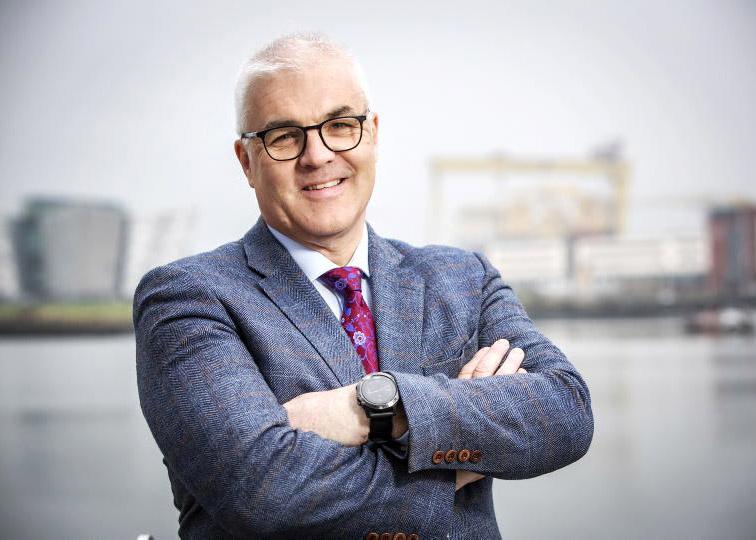
Irish anaerobic digestion developer Carbon AMS has challenged the Government over continued delays to Ireland’s Renewable Heat Obligation (RHO), asking “where is the urgency?”.
The comments come after the Climate Change Advisory Council warned that slow progress is undermining investor confidence in the development of indigenous biomethane production.
The intervention comes as the outlook for meeting Ireland’s 2030 biomethane target has deteriorated significantly.
Under the National Biomethane Strategy, the Government has committed to producing 5.7 TWh of indigenous biomethane by 2030. However, even with additional measures, the latest Environmental Protection Agency projections estimate that production will reach just 1.75 TWh by 2030.
That would amount to less than one-third of the State’s 5.7 TWh target, leaving a projected shortfall of 3.95 TWh.The council said it is “extremely concerned that without immediate and sustained action biomethane targets will be impossible to meet”.
Carbon AMS said the findings reinforce the need to progress the RHO, which is intended to create a demand-side incentive for renewable heat and support investment in domestic biomethane production.
The obligation would require suppliers of fossil fuels used for heating, to demonstrate that a proportion of the energy they supply comes from renewable sources.
RHO timetable slips
Carbon AMS has pointed to a series of Government commitments on the RHO dating back almost four years.
On 3 November 2022, the Government announced that an obligation on the heat sector would be introduced by 2024.
The National Biomethane Strategy, published on 28 May 2024, again provided for introduction of the RHO in 2024 and identified it, alongside capital grants and industry investment, as part of the framework for achieving 5.7 TWh of indigenous biomethane production by 2030.
On 18 July 2025, Government approved the General Scheme and priority drafting of the RHO Bill 2025, with the legislation intended to provide the basis for administration of the scheme in 2026.
The proposed framework included a multiplier intended to encourage obligated parties to procure biomethane from indigenous producers.
However on March 2026, the European Commission issued a Detailed Opinion under the EU technical regulations notification process, finding that the proposed domestic-production multiplier was incompatible with EU single-market rules.
The Climate Change Advisory Council stressed that this did not amount to a finding that the RHO itself was unlawful, but described it as a significant legal and policy setback.
The multiplier has subsequently been removed. In June, at Biomethane Day Ireland, Carbon AMS said the minister reaffirmed the RHO as one of his Department’s highest legislative priorities.
The bill remained unpublished in September, with priority drafting continuing. The council said the RHO, originally expected to start in 2026, is now not expected until 2027.
“The council is deeply concerned that the pace of action is not sufficient to build investor confidence and to deliver domestic production capacity at the scale required to meet 2030 targets,” it said.
Limited biomethane production
Ireland is starting from a low base in attempting to reach the 5.7 TWh target.
The SEAI National Energy Balance reported that just 39.3 GWh of indigenously produced biomethane was injected into the gas grid between 2022 and 2024, equivalent to 0.7% of the 2030 target.
While two new plants were connected to the grid this year, the council said high capital costs, a lack of information and uncertainty surrounding Government supports, including the RHO, are still barriers to AD development
The author is currently involved in a family/community proposal for an anaerobic digestion facility in Co Donegal.
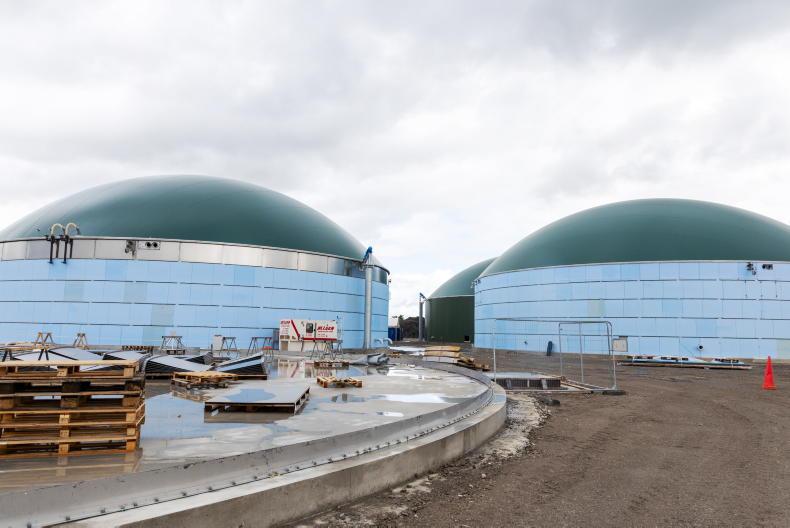
Carbon AMS is currently completing its Duleek biomethane facility in Meath, with first biomethane supply required for the fourth quarter of 2026.
The agricultural AD facility will use feedstocks supplied by local farmers, with biomethane produced under an €80m, 15-year supply agreement with Alexion, AstraZeneca Rare Disease.
Carbon AMS CEO Richard Kennedy said the council’s latest intervention reinforced concerns being raised by the AD industry over the pace of the RHO.
“The Climate Change Advisory Council said exactly what the industry has been saying – delays to the Renewable Heat Obligation are holding back the market certainty needed for investment. This is no longer a debate about whether the RHO matters. The question is why the legislation is still not published.”
He added: “Last year we were told the bill would be the basis for running the scheme in 2026. In June the target became publication in July. July came and went and it is now September. It’s time to show some urgency and get the bill published, because Ireland is falling further behind the rest of Europe.”
Kennedy said biomethane should also be viewed in the context of Ireland’s energy security.
“The Council has also made clear why this matters. Biomethane can strengthen energy security, reduce emissions and diversify farm incomes. Ireland has farmers ready to supply, projects ready to move and a national target to meet. What the industry needs now is certainty.”
He added: “We import almost four-fifths of our energy, we are the only country in Europe with no gas storage and prices here are set by markets we don’t control.
“Across Europe, countries are building indigenous biomethane production at scale. Every other country in Europe is locking down its own energy supply. Where is the urgency in Ireland?”



SHARING OPTIONS