



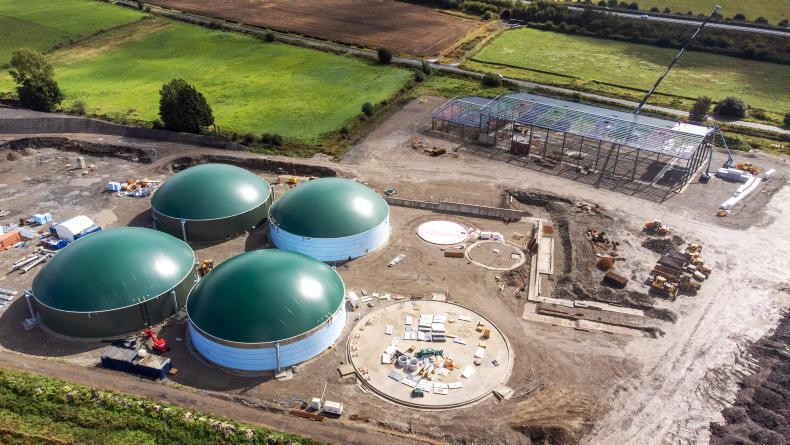
Teagasc has called for greater recognition of the practical and economic challenges involved in developing Ireland’s biomethane sector in its feedback submission on Gas Networks Ireland’s (GNI) price control 6 (PC6) business plan.
GNI’s PC6 business plan is a five-year spending and performance plan which explains what Ireland’s gas network needs, how much it will cost and how it will be paid for.
While the plan references the targets set out in the national biomethane strategy and the policy measures designed to support them, Teagasc stresses that significant challenges remain in delivering the required anaerobic digestion (AD) plants and securing sufficient feedstock to operate them.
New biomethane facility
GNI opened a new €32m central grid injection (CGI) facility in Mitchelstown, Co Cork, on 2 October.
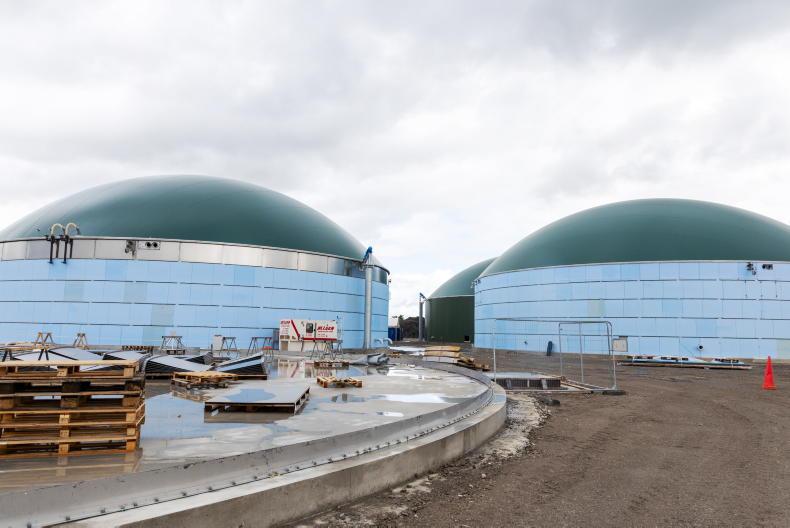
The facility has the capacity to receive renewable gas produced from farm and food waste and it creates a new route for biomethane producers to supply renewable gas into Ireland's national gas network, even when located too far away to connect directly by pipeline.
Biomethane produced at independent AD facilities can be transported by trailer to Mitchelstown, where it can be prepared to the required standards and injected into the national gas network.
According to GNI, the facility has the potential to inject enough biomethane to meet 12% of Ireland’s 2030 target.
The facility could also deliver an estimated 130,000 tonnes of CO2 emissions savings each year, GNI said.
However, the Renewable Gas Forum Ireland (RGFI) warned that urgent policy and market action is required to ensure sufficient biomethane production to utilise this infrastructure and deliver Ireland’s 2030 ambition.
“The infrastructure now being delivered – both by Gas Networks Ireland and by developers – must be matched by the market support mechanisms, policy certainty and implementation timeline required to unlock investment,” RGFI CEO Nick Bennett commented.
“Despite private capital being available and demand emerging from energy users, many additional projects remain on hold awaiting the necessary Government action.”
Greater investment
Teagasc’s submission also highlights the need for greater investment in biomethane production and injection infrastructure, alongside a broader public awareness campaign to inform debate around the development of AD plants across the country.
With research indicating that significant financial incentives are needed to make biomethane production commercially viable, Teagasc emphasised the important role GNI can play in providing clear cost estimates and defining the requirements for safe, cost-effective on-site injection points.
Teagasc’s feedback underlines the need to align Ireland’s biomethane targets with the infrastructure, feedstock supply and economic supports necessary to deliver a viable renewable gas sector.



SHARING OPTIONS