



Developing an anaerobic digestion (AD) plant in Ireland is no straightforward task. While many assume that securing planning permission is the biggest hurdle, it is arguably only the beginning of the journey.
Like any major industrial development, AD plants must comply with a complex web of regulations and compliance requirements, all of which influence their design, construction and day-to-day operation. Ultimately, these requirements have a significant impact on both the cost and profitability of a plant.
This was a strong theme at the recent Biomethane Day Ireland conference in Dublin.
Planning inconsistencies
Noel Gavigan, Technical Executive with the Irish Bioenergy Association spoke at the conference and outlined the extensive regulatory framework already governing biomethane development, including planning, EPA licensing, animal by-product regulations, Renewable Energy Directive (RED III) sustainability requirements, health and safety and gas quality standards.
However, he said that planning and regulatory processes continue to slow project delivery. Gavigan said Ireland currently has around 30 biomethane projects in pre-planning, planning or construction, but developers are experiencing inconsistent planning outcomes across the country.
He highlighted Section 34D(b) completeness checks under the Planning and Development Act as a particular challenge, saying there is no definitive list of documentation required by planning authorities, resulting in applications being deemed incomplete and returned to developers.
EPA license
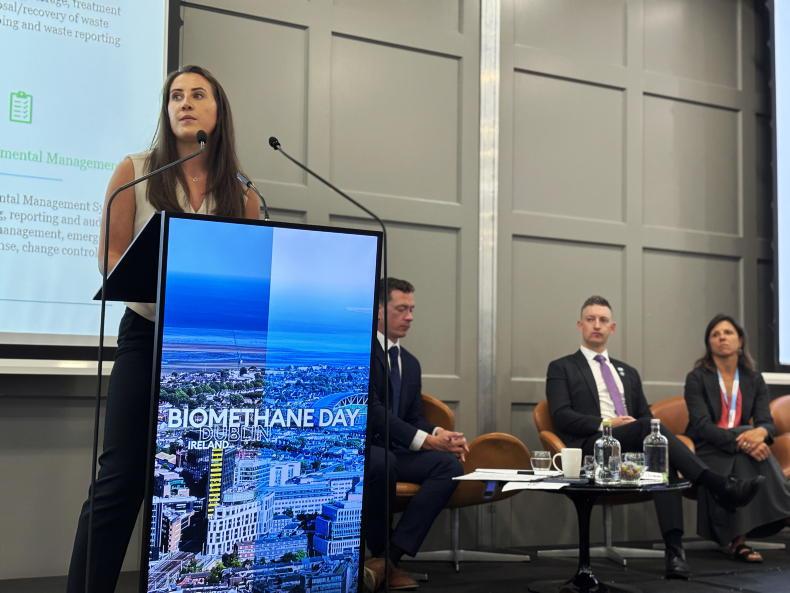
Íde Hennessy, environmental compliance officer with Nephin Renewable Gas, demonstrated that environmental compliance begins well before an application reaches the Environmental Protection Agency (EPA). Using the company’s Ballinrobe AD project as a case study, she outlined the steps the company took to secure its Industrial Emissions (IE) licence and highlighted the importance of early engagement with regulators.
Hennessy explained that because each of the company’s facilities are designed to process up to 90,000 tonnes of feedstock annually, every site requires its own IE licence. She outlined that rather than waiting until planning permission had been secured, the company began discussions with the EPA during the design stage.
Pre-application meetings allowed regulators to comment on the proposed layout and identify potential issues before the licence application was lodged.
Hennessy said the design team incorporated this feedback before submitting both the planning and licensing applications. Once planning permission is secured, the formal EPA licensing application can begin.
The second half of her presentation examined RED III sustainability certification. Hennessy explained that developers must demonstrate greenhouse gas savings through detailed carbon accounting covering feedstock production, fertiliser use, transport, plant operation, upgrading and grid injection.
She stressed that certification requires comprehensive record-keeping across the entire supply chain and should be considered from the outset of project development rather than after construction has been completed.
Water quality
Anthony Coleman, Director of Services with the River Basin Management Service, spoke about the potential impact of AD plants on water quality. Coleman argued that the industry’s long-term success will depend on demonstrating measurable environmental benefits beyond renewable energy production.
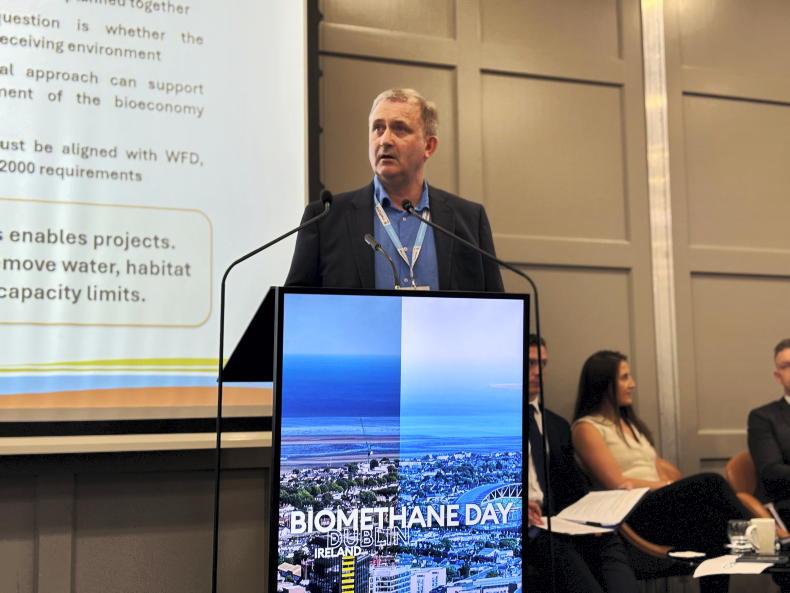
Coleman outlined that just over half of Ireland’s monitored water bodies currently achieve “good” or “high” ecological status, leaving many catchments with little capacity to absorb additional nutrient pressures.
As a result, biomethane developments will increasingly be assessed within the context of existing environmental baselines rather than in isolation he explained.
He encouraged developers to think beyond the boundaries of the AD plant itself and consider the complete nutrient cycle, from feedstock sourcing and transport through to digestate storage and land application.
A key question, he said, is whether nutrients are being recycled within the same catchment or imported from elsewhere, potentially increasing phosphorus and nitrogen pressures in already sensitive river basins.
Coleman was equally clear that digestate should not automatically be regarded as an environmentally benign product.
While recognising its value as an organic fertiliser and circular economy resource, he said digestate requires appropriate testing, certification and quality standards before being widely promoted.
Drawing lessons from Northern Ireland, Coleman said that rapid expansion of AD without adequate nutrient tracking had contributed to water quality problems in some catchments.
Ireland, he said, has an opportunity to avoid repeating those mistakes by embedding nutrient accounting into project design from the outset.
Gas quality
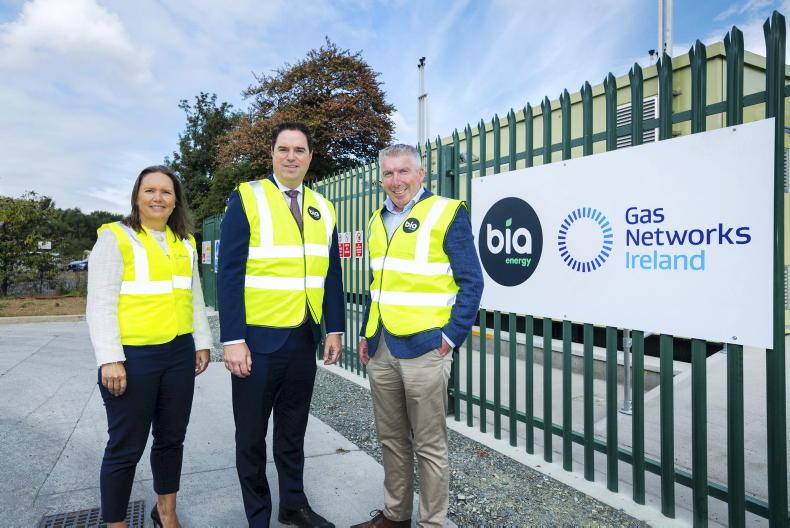
Paul O’Brien, Head of Health, Safety and Quality at Gas Networks Ireland (GNI), described biomethane grid connection as a highly regulated process, requiring developers to demonstrate that gas quality, pressure and operational controls meet the standards necessary for injection into the network.
Before biomethane can be injected into the national gas grid, it must comply with GNI’s stringent gas quality specifications.
Bringing it all together
Mark Stockdale of AL Goodbody focused on the commercial agreements needed to bring biomethane projects from development through to operation.
While planning permission and environmental licences are essential, he told delegates that developers also need a secure “route to market” for the gas they produce if projects are to attract finance.
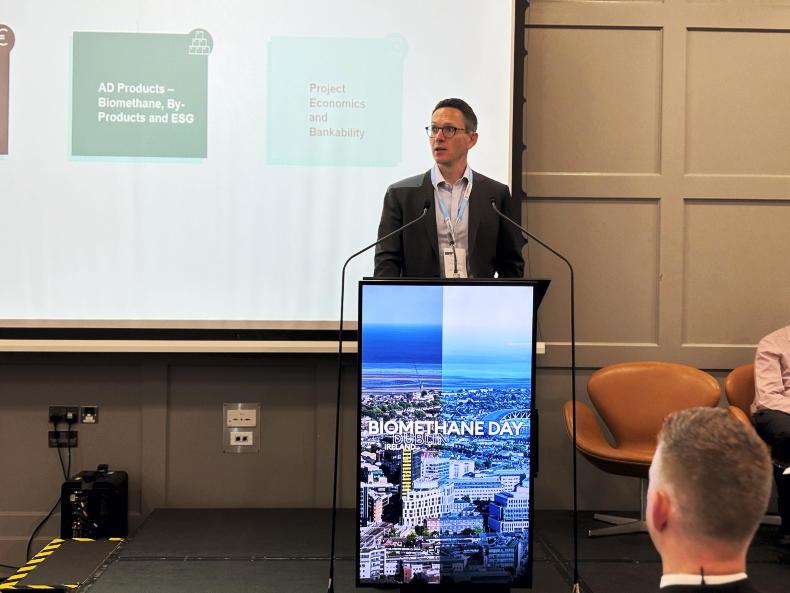
Stockdale explained that an AD project involves legal work throughout its lifecycle, including land agreements, planning, environmental permitting, construction contracts, financing, grid connection and operational agreements.
However, he said the route-to-market contract is particularly significant because it provides the revenue certainty lenders look for when assessing projects.
Stockdale pointed to growing interest from large industrial energy users seeking renewable gas supplies to help decarbonise their operations, describing corporate biomethane offtake as an emerging market in Ireland.
He said that the contractual structures being developed are intended to provide sufficient certainty for both investors and energy users while supporting the growth of Ireland’s biomethane sector.
Stockdale identified a number of key contractual issues that require careful negotiation.
These included the tenor of agreements and whether contracts should run for five, 10 or 15 years, to balance developer revenue certainty against offtaker cost certainty.
The author Stephen Robb is currently involved in a family/community proposal for an anaerobic digestion facility in Co Donegal.


SHARING OPTIONS