



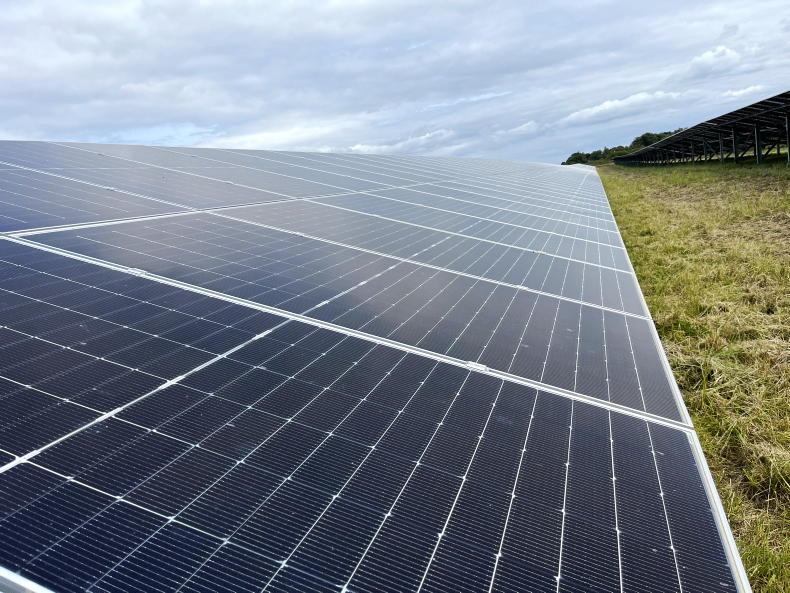
The High Court has dismissed a challenge to planning permission for a 442-acre solar farm in east Cork after a residents’ group raised concerns over its scale, visual impact, archaeology and flood risk.
Mr Justice Humphreys rejected the judicial review brought by the Leamlara Preservation Group and its chair Califf Delaney against An Coimisiún Pleanála’s decision to approve the Ballysallagh Solar Farm.
The decision means the 10-year planning permission for the 179-hectare development remains in place.
Ballysallagh Solar Farm Ltd was originally refused permission by Cork County Council in September last year. The council cited concerns over the visual impact of the development in the rural landscape, potential effects on archaeological and cultural heritage, and surface-water runoff.
A total of 140 submissions were made by local residents and businesses during the council planning process. An Coimisiún Pleanála overturned the refusal in February, granting permission subject to 21 conditions.
The Leamlara group then brought its case to the High Court, arguing that there had been failures in the environmental assessment process, including the consideration of potential effects on bats.
Process
Mr Justice Humphreys found that the group had not proved legal errors in the commission’s decision. He said the applicants had not made a developed case during the planning process on many of the issues later raised in court.
The judge also found that the commission had considered bat impacts. The inspector had taken account of the nocturnal nature of bats, the planned enhancement of hedgerows and tree lines and a proposal for 30 bat roost boxes, including at least three maternity roost boxes.
In his written judgment, Mr Justice Humphreys said he would have refused to quash the permission even if an error had been established, due to the applicants’ failure to raise the arguments during the process and the “critical importance of renewable energy as underpinned by EU law”.
The solar farm is to be connected to the national grid through a separately approved 220kV substation and 10.2km underground cable route to the Knockraha substation.
The court proposed making no order on costs, subject to submissions from the parties. The case is due back before the court on 5 October.





SHARING OPTIONS