



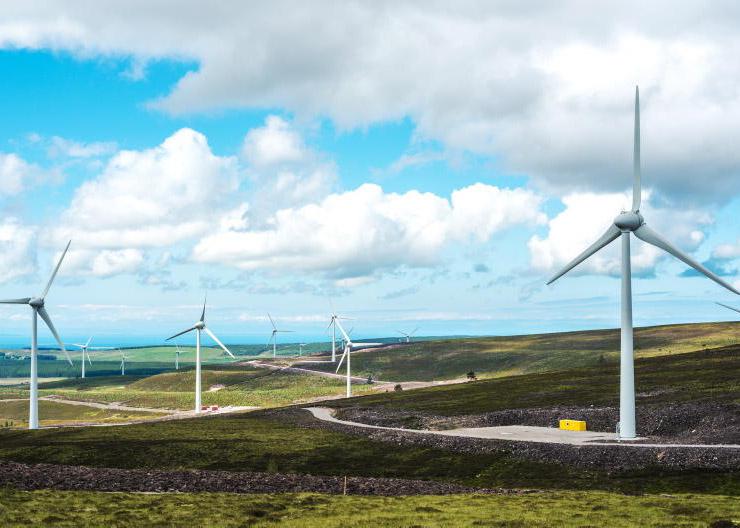
People still do not equate a wind turbine with switching on the lights. Those were the words of Marie Donnelly, chair of the Climate Change Advisory Council, speaking at the closing session of day one of the Wind Energy Ireland Conference in Dublin last week.
Her remarks came as the conference repeatedly returned to a central challenge facing the sector, securing public acceptance for wind turbines and energy infrastructure more broadly.
Donnelly emphasised the importance of clearly communicating the benefits of wind energy, rather than focusing solely on the technical details of individual projects.
This remains a live issue for the industry.
As Ireland works to strengthen energy security and decarbonise its electricity system, the development of both onshore and offshore wind farms is set to accelerate.
While the sector believes that opposition to wind energy has declined significantly in recent years, resistance from organised and motivated groups of concerned locals persists.
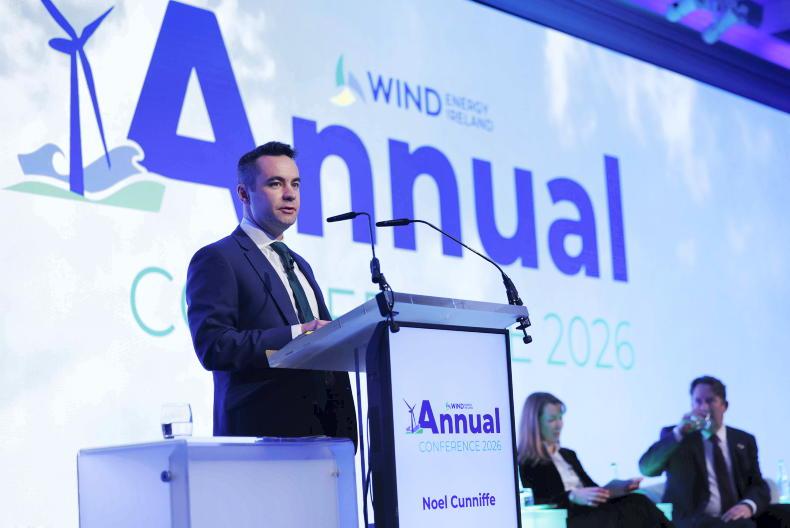
We attended the conference to explore these issues, beginning with a conversation with Noel Cunniffe, CEO of Wind Energy Ireland.
Cunniffe explained that the sector has faced very slow progress through the planning system, with projects delayed and delivery levels remaining low over the past two to three years. However, he argued that momentum is now once again building.
Stronger planning throughput in the second half of 2024 and into 2025 is expected to translate into increased construction activity from 2026. Cunniffe explained that around 450 megawatts (MW) are currently under construction, the highest level seen since 2019.
He explained that this activity represents only a fraction of the wider development pipeline. 2026 could potentially be a record-breaking year for wind energy as a further 1,246MW of wind farms are ready for the next auction or seeking a corporate power purchase agreement, and a further 2,112MW is now in the planning system.
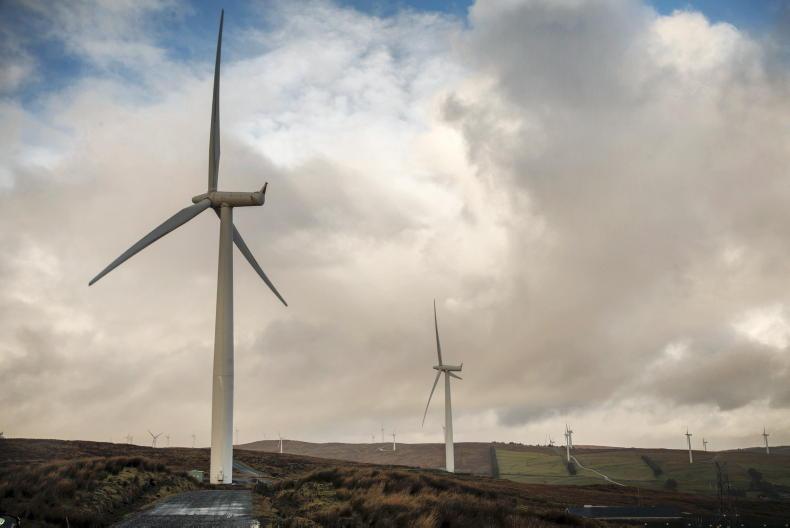
Currently, around 5,000MW of onshore wind capacity is installed in the Republic of Ireland.
This sentiment was echoed at ground level at the conference. We spoke to Paul Gallagher, head of EDF Power Solutions Ireland, who explained that there is a sense that the processes are speeding up.
While he described planning as a wider infrastructure problem beyond renewables, he said decision-making timeframes from An Coimisiún Pleanála have begun to shorten.
Planning was unsurprisingly a big topic of conversation of the day. Cunniffe explained that one of the biggest problems in recent years has been how county development plans designated areas for renewable energy.
He explained that some plans were developed to rule out significant areas of the county from renewable energy development.
That approach, he argued, conflicted with the direction of national policy and climate commitments, particularly as electricity demand continues to rise.
This view was shared by Minister for Climate, Environment and Energy Darragh O’Brien who said we cannot have local development plans, essentially sterilising areas for renewables.
He said that the new regional renewable electricity capacity allocations will ensure national renewable policy is reflected regionally.
Cunniffe said that climate law has changed and local development plan policy can no longer automatically override national or European objectives.
Cunniffe said the consultation on new wind energy guidelines is expected in 2026, and hoped that they will be in place before year end.
John McGarry, director of LP3, explained that, as things stand, turbines need to be four times the tip height of the turbine from any property.

He said that this requirement can make finding turbine sites extremely challenging, as it can wipe out huge volumes of areas from consideration.
Along with access and wind speeds, he said these factors rapidly narrow the viable search area.
Along with planning, grid capacity was also cited as the biggest challenge facing the industry.
Putting it simply, McGarry explained that “grid is king” when it comes to determining the location and viability of wind farms.
Last year, an investment of €18 billion in the national grid was announced.
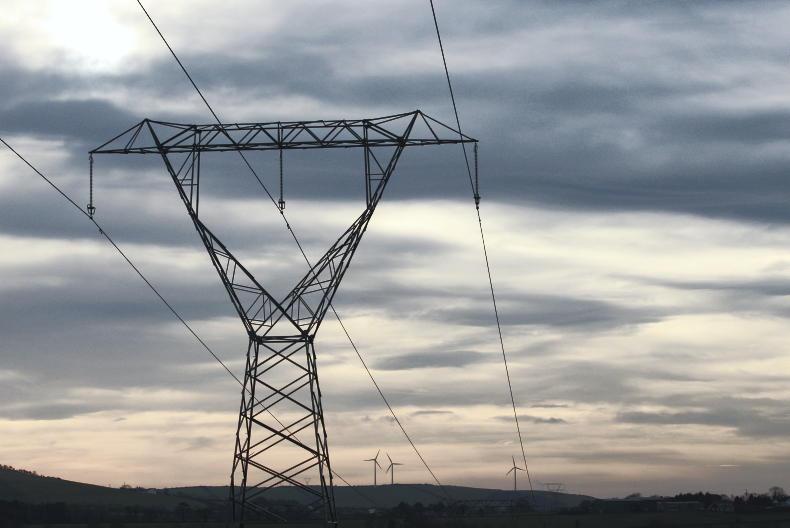
Rory Mullan, a grid consultant with Mullan Grid Consulting, set out the rationale for the push now underway. He argued that the transition to a high renewable system and electrification has used up much of the headroom in the existing grid.
To reach higher renewable targets and support electrification, where demand could double in a short space of time, he said Ireland will need a lot more grid infrastructure, alongside smart technologies such as storage.
Mullan explained that the original power system was not designed for distributed renewable generation.
It was built around “a small number of large power stations,” with lines into regions intended to just feed the load, not to transport large volumes of new generation.
The implication, he said, is that parts of the system are not completely fit for purpose and require larger and new infrastructure.
He described the coming investment as broad-based, including upgrading existing overhead lines, building new substations, adding underground cables and connecting new generation to the grid.
Cunniffe explained that Wind Energy Ireland’s newly launched five-year strategy puts “engagement with communities” at its core.
He stressed that local people know their location better than anybody, and that thorough engagement is absolutely vital so communities feel empowered and can influence projects.
In his account, it would be extremely rare for a project to enter planning exactly as originally conceived, because community feedback often drives changes.
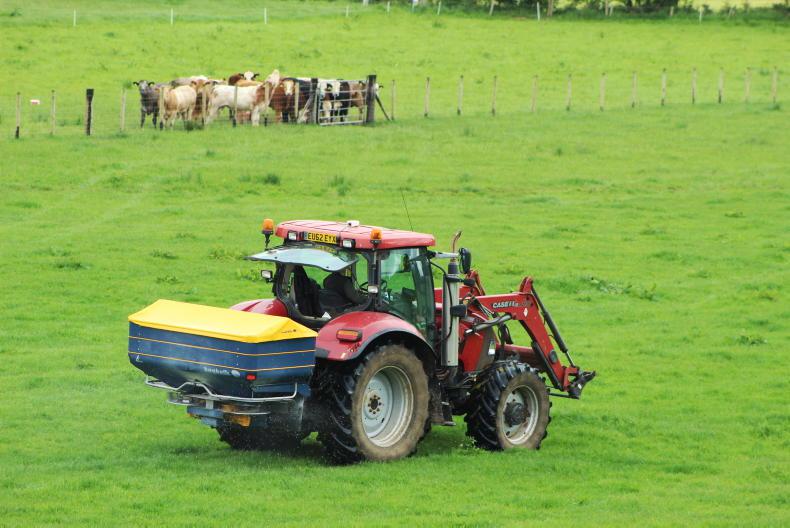
As wind and energy infrastructure continues to roll out, the key question is, what does it mean for farmers?
Every part of this expansion requires land, and farmers will increasingly be asked to lease, host or sell portions of their ground to accommodate it.
McGarry stressed that wind farms comprise far more than turbines alone.
They include substations, access tracks, cabling and set-down areas, each of which may involve different landowners and contractual arrangements.
In a typical multi-turbine development, he said there could be 10 landowners involved in a six-turbine project, meaning not every participant hosts a turbine and payments vary depending on what each landowner contributes.
For land hosting a turbine, annual rent typically ranges between €30,000 and €40,000, with lease terms commonly lasting 30 to 40 years.
He also pointed to a shift in market practice, with rent increasingly paid from the start of construction to reflect the disruption farmers experience during an 18-month build period, when leases may require land to be vacated temporarily.
Even for off-shore, which I didn’t touch on in this article, many of the same pieces of key supporting infrastructure will be needed on-shore.
Listen
Click here to listen to the full podcast report with Noel Cunniffe, Wind Energy Ireland, John McGarry, LP3, Rory Mullan, MullanGrid Consulting and Paul Gallagher, EDF Power Solutions Ireland.



SHARING OPTIONS