There are multiple technical solutions to the problems facing agriculture today. However, many of these solutions are too costly to be practical and are often abandoned.
Omagh entrepreneur Sean Dobbs recognised this issue early on and took a different approach. Rather than starting with a high-tech solution and then trying to justify the cost, he worked backwards. He first identified the price point that would make sense for the poultry industry to solve a particular problem, and then designed a solution to fit within that budget.
After forming Forged Innovation in 2019, Sean designed, built and commercialised an innovative, small-scale pyrolysis machine that processes chicken manure on-site. The system not only generates all the heat needed for poultry houses but also produces nutrient-rich biochar and captures ammonia from the litter.
The Irish Farmers Journal got an exclusive preview of the machine, which is currently installed on a poultry farm in Northern Ireland.
The system
Northern Ireland faces significant challenges due to the volume of organic manure produced by its livestock and poultry sectors.
Sean explained that nutrients are a valuable resource, and Northern Ireland’s real problem lies in nutrient management. His system essentially offers a new way to manage manure while also generating renewable heat and capturing ammonia.
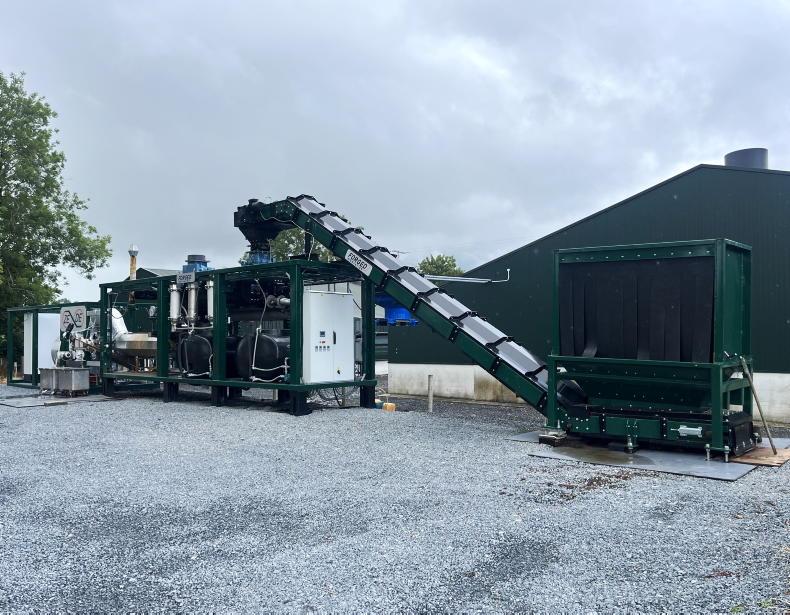
The Zero Emission Decentralised Energy system, ZEDE for short, converts chicken manure from poultry houses into heat and biochar. It does this through a process called pyrolysis, which involves heating organic matter in the absence of oxygen.
This is a two-stage process. The chicken manure is loaded into a hopper using a specialised bucket which Sean designed specifically for the system, and is then automatically fed into the ZEDE system. In the first stage, the chicken manure is heated and dried, releasing vapour that is rich in ammonia. This vapour is then collected in a storage tank, capturing that ammonia.
In the second stage, the dried manure undergoes pyrolysis at temperatures between 600°C and 800°C. Approximately 42% of the poultry manure processed by the system is converted into biochar. Biochar is a carbon-rich, charcoal-like material that has gained significant attention in recent years. It contains 50-55% carbon, along with much of the phosphorus and potassium in a stable form, Sean explained. The pyrolysis system also produces substantial volumes of heat, which is used to heat hot water to heat the poultry houses.
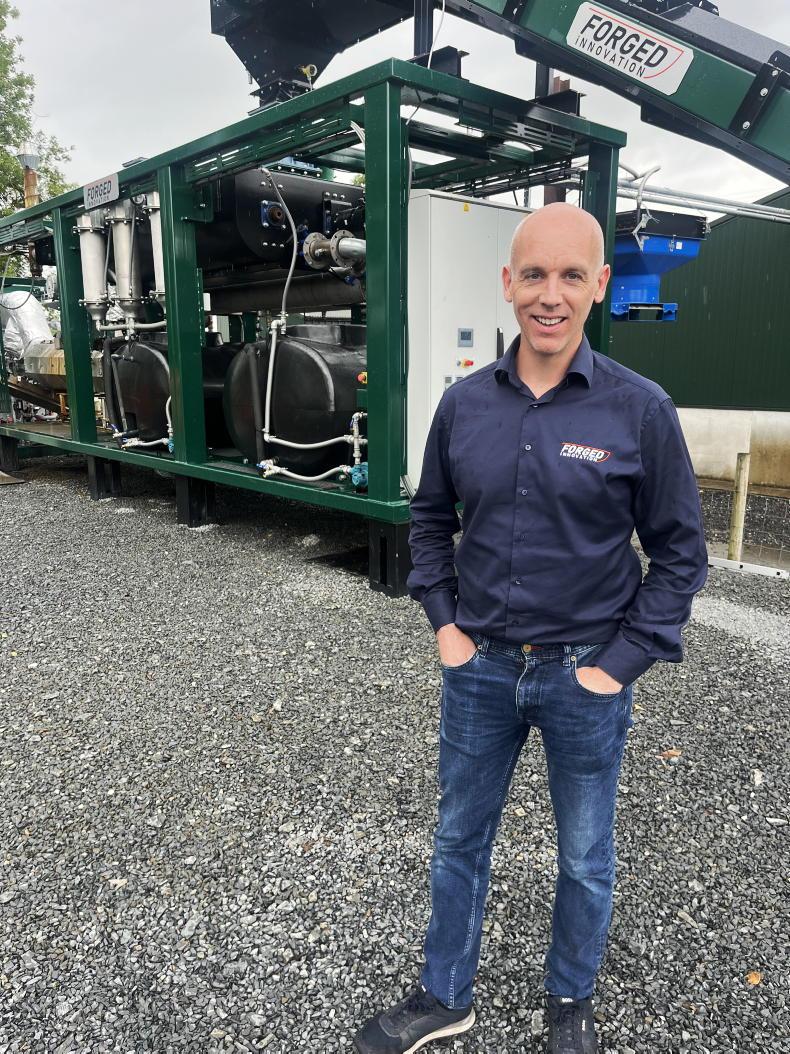
Sean Dobbs, inventor of the Zero Emission Decentralised Energy system.
Commercial operation
The ZEDE system installed on the farm in Northern Ireland, produces 280kWh of heat and is fed with 2.3 to 3 tonnes of chicken manure per day. This system generates approximately 1.2 tonnes of biochar daily.
The ZEDE is capable of generating hot water at around 85°C, more than enough to maintain poultry houses at temperatures between 32°C and 36°C, displacing LPG.
The ZEDE system is initially started using a small amount of LPG. After approximately 20 minutes of operation, LPG usage drops to 25%.
Within an hour, the system becomes fully self-sustaining, requiring no further LPG.
Biochar and ammonia
Biochar is a carbon-based fertiliser with a honeycomb-like structure. It can soak up and store nutrients, and release them slowly when spread on the land, Sean explained.
Sean’s system is designed to capture the poultry manure ammonia released during the heating process. “Typically, when you put litter into a pyrolysis system, the nitrogen is destroyed, it volatilises and burns off,” Sean explains.
“But our system is different. We’re able to preserve it by capturing the vapour and turning it into liquid.”
The ammonia-rich liquid is used to quench the biochar as it exits the system at around 250°C.
This process allows the ammonia to be absorbed directly into the biochar. If used as a fertiliser, the ammonia will be readily available for the plant he explained.
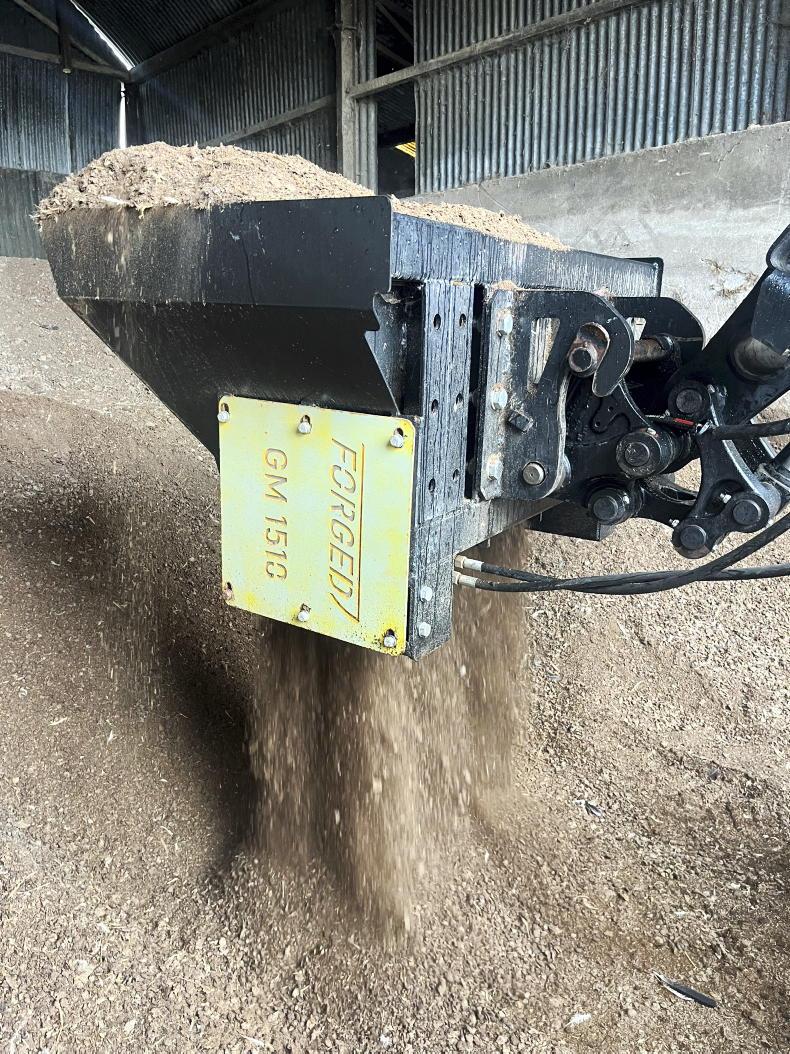
Sean Dodds ZEDE system polutry manure.
Work backwards
With a background in engineering, Sean held leadership roles in several companies, where he evaluated R&D projects. He had previously worked on two gasification and pyrolysis projects, both of which ultimately proved unviable due to high costs.
When he went out on his own, he set out to design a new product that would overcome the limitations of earlier systems. Although not from a farming background, Sean was drawn to the poultry sector because of its genuine need for heat, and the readily available, free fuel source, chicken litter, which brought its own challenges.
After identifying the problems, he worked out the financials around how much a system would cost for a farmer, and worked back from there.
“At what price point will this be of value to the farmer? That’s where you start. From that, you work backwards because that target becomes your build cost,” he explained. “If I can’t build it for that money, then I don’t have a commercially attractive solution.”
After developing two prototypes and receiving support from the UK’s Small Business Research Initiative, in less than three years from his first prototype, Sean successfully launched a large-scale commercial pilot project.
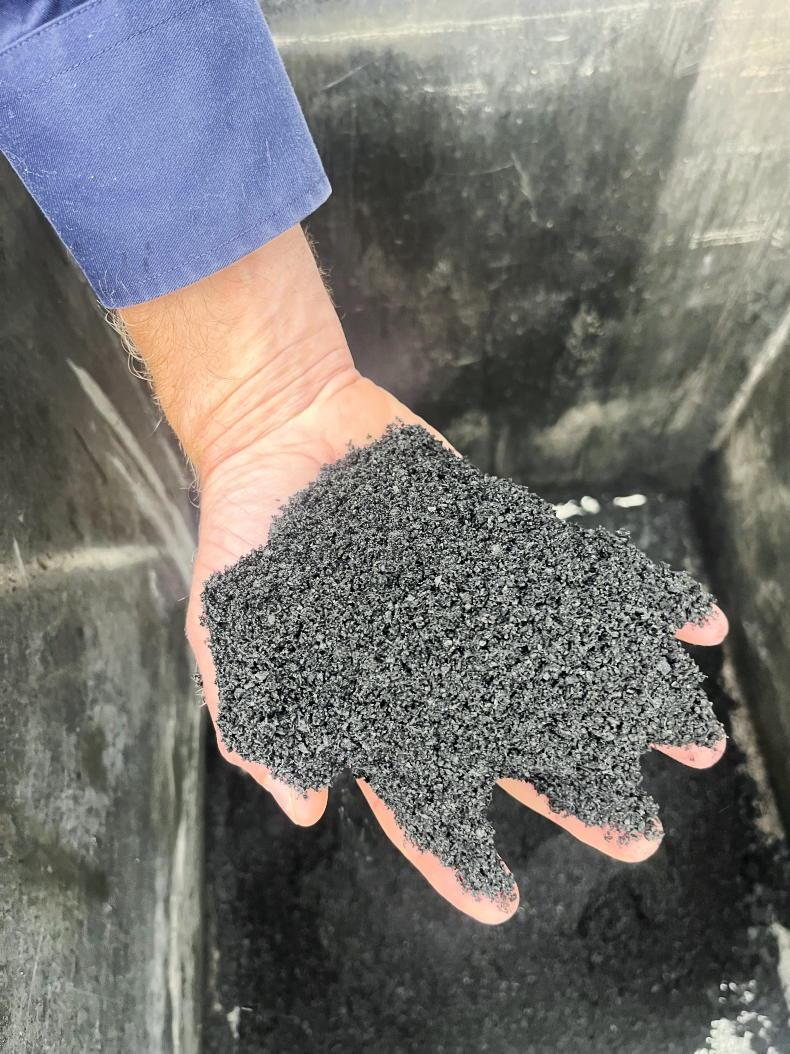
The system turns poultry manure to biochar.
Emissions
If the ZEDE system were installed on every poultry farm in the UK, it could result in a 16% reduction in national ammonia emissions, according to Sean. And that figure is based solely on capturing ammonia from broiler litter.
However, Sean believes there’s a much bigger opportunity in addressing ammonia emissions. Upon initial installation, one of the houses on the farm in Northern Ireland was heated using the ZEDE system, while another was heated with LPG as a control. He said that early data suggest that the house heated with ZEDE has lower ammonia emissions than the LPG-heated house.
“Moisture in the litter is one of the key catalysts for ammonia generation. If we can maintain drier litter, we can reduce ammonia production right from the start. Preventing ammonia from forming in the first place is far more effective than trying to deal with it after the fact” he explained.
He said that, as the heat produced by ZEDE doesn’t come with a fuel cost, unlike gas, farmers are more likely to maintain a consistent and steady temperature in their poultry houses. This leads to dryer litter conditions and, ultimately, lower ammonia emissions.
The first commercial ZEDE model is now in operation and he is also monitoring nitrous oxide, sulfur oxides and particulate matter from the ZEDE system itself.
Once validated, all in all, Sean believes the ZEDE system could reduce ammonia emissions from poultry houses by 30–50%, though this is still being verified.
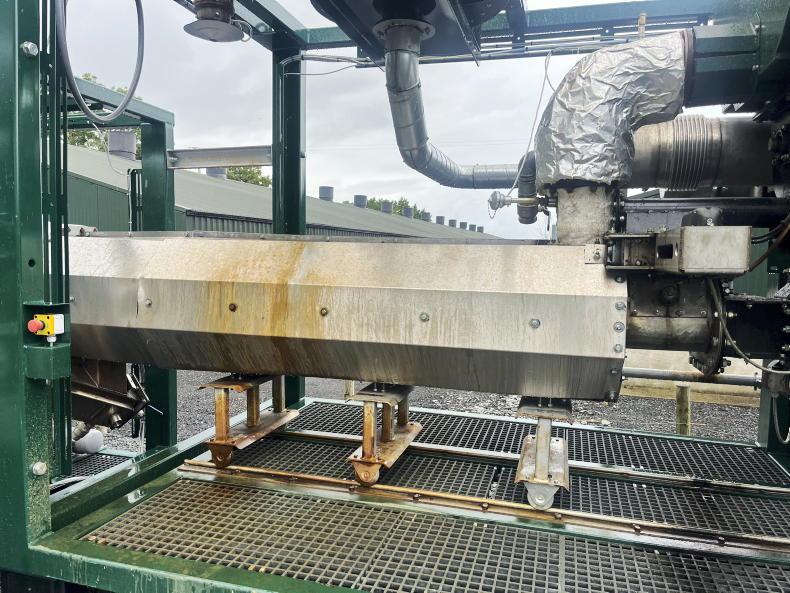
The dried manure undergoes pyrolysis at temperatures between 600°C and 800°C.
Next steps
He is aiming to have all of the emissions data validated by the end of the year, with the ultimate plan to roll out the ZEDE system commercially. The process is currently patent-pending, and Sean intends to manufacture the units locally. While not divulging how much he expected the system to be, he said the system would pay for itself in around five years.
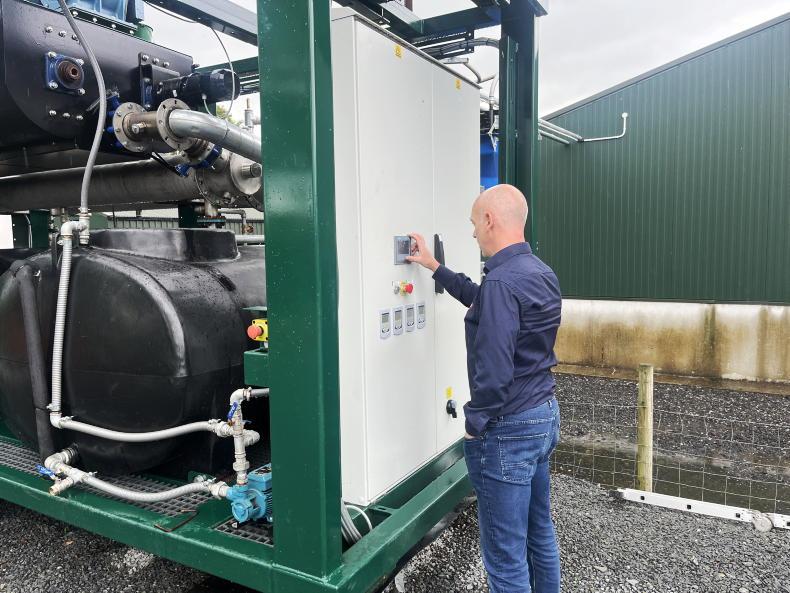
Sean Dobbs at the ZEDE system.
In brief
Sean Dobbs has developed a new system which uses poultry manure to produce heat and biochar and capture ammonia. The Zero Emission Decentralised Energy (ZEDE) system is in operation in Northern Ireland and took three years to develop. It has the potential to significantly reduce ammonia emissions and fossil fuel use on poultry farms. He aims to roll the system out from next year. 
This is a two-stage process.
There are multiple technical solutions to the problems facing agriculture today. However, many of these solutions are too costly to be practical and are often abandoned.
Omagh entrepreneur Sean Dobbs recognised this issue early on and took a different approach. Rather than starting with a high-tech solution and then trying to justify the cost, he worked backwards. He first identified the price point that would make sense for the poultry industry to solve a particular problem, and then designed a solution to fit within that budget.
After forming Forged Innovation in 2019, Sean designed, built and commercialised an innovative, small-scale pyrolysis machine that processes chicken manure on-site. The system not only generates all the heat needed for poultry houses but also produces nutrient-rich biochar and captures ammonia from the litter.
The Irish Farmers Journal got an exclusive preview of the machine, which is currently installed on a poultry farm in Northern Ireland.
The system
Northern Ireland faces significant challenges due to the volume of organic manure produced by its livestock and poultry sectors.
Sean explained that nutrients are a valuable resource, and Northern Ireland’s real problem lies in nutrient management. His system essentially offers a new way to manage manure while also generating renewable heat and capturing ammonia.
The Zero Emission Decentralised Energy system, ZEDE for short, converts chicken manure from poultry houses into heat and biochar. It does this through a process called pyrolysis, which involves heating organic matter in the absence of oxygen.
This is a two-stage process. The chicken manure is loaded into a hopper using a specialised bucket which Sean designed specifically for the system, and is then automatically fed into the ZEDE system. In the first stage, the chicken manure is heated and dried, releasing vapour that is rich in ammonia. This vapour is then collected in a storage tank, capturing that ammonia.
In the second stage, the dried manure undergoes pyrolysis at temperatures between 600°C and 800°C. Approximately 42% of the poultry manure processed by the system is converted into biochar. Biochar is a carbon-rich, charcoal-like material that has gained significant attention in recent years. It contains 50-55% carbon, along with much of the phosphorus and potassium in a stable form, Sean explained. The pyrolysis system also produces substantial volumes of heat, which is used to heat hot water to heat the poultry houses.

Sean Dobbs, inventor of the Zero Emission Decentralised Energy system.
Commercial operation
The ZEDE system installed on the farm in Northern Ireland, produces 280kWh of heat and is fed with 2.3 to 3 tonnes of chicken manure per day. This system generates approximately 1.2 tonnes of biochar daily.
The ZEDE is capable of generating hot water at around 85°C, more than enough to maintain poultry houses at temperatures between 32°C and 36°C, displacing LPG.
The ZEDE system is initially started using a small amount of LPG. After approximately 20 minutes of operation, LPG usage drops to 25%.
Within an hour, the system becomes fully self-sustaining, requiring no further LPG.
Biochar and ammonia
Biochar is a carbon-based fertiliser with a honeycomb-like structure. It can soak up and store nutrients, and release them slowly when spread on the land, Sean explained.
Sean’s system is designed to capture the poultry manure ammonia released during the heating process. “Typically, when you put litter into a pyrolysis system, the nitrogen is destroyed, it volatilises and burns off,” Sean explains.
“But our system is different. We’re able to preserve it by capturing the vapour and turning it into liquid.”
The ammonia-rich liquid is used to quench the biochar as it exits the system at around 250°C.
This process allows the ammonia to be absorbed directly into the biochar. If used as a fertiliser, the ammonia will be readily available for the plant he explained.

Sean Dodds ZEDE system polutry manure.
Work backwards
With a background in engineering, Sean held leadership roles in several companies, where he evaluated R&D projects. He had previously worked on two gasification and pyrolysis projects, both of which ultimately proved unviable due to high costs.
When he went out on his own, he set out to design a new product that would overcome the limitations of earlier systems. Although not from a farming background, Sean was drawn to the poultry sector because of its genuine need for heat, and the readily available, free fuel source, chicken litter, which brought its own challenges.
After identifying the problems, he worked out the financials around how much a system would cost for a farmer, and worked back from there.
“At what price point will this be of value to the farmer? That’s where you start. From that, you work backwards because that target becomes your build cost,” he explained. “If I can’t build it for that money, then I don’t have a commercially attractive solution.”
After developing two prototypes and receiving support from the UK’s Small Business Research Initiative, in less than three years from his first prototype, Sean successfully launched a large-scale commercial pilot project.

The system turns poultry manure to biochar.
Emissions
If the ZEDE system were installed on every poultry farm in the UK, it could result in a 16% reduction in national ammonia emissions, according to Sean. And that figure is based solely on capturing ammonia from broiler litter.
However, Sean believes there’s a much bigger opportunity in addressing ammonia emissions. Upon initial installation, one of the houses on the farm in Northern Ireland was heated using the ZEDE system, while another was heated with LPG as a control. He said that early data suggest that the house heated with ZEDE has lower ammonia emissions than the LPG-heated house.
“Moisture in the litter is one of the key catalysts for ammonia generation. If we can maintain drier litter, we can reduce ammonia production right from the start. Preventing ammonia from forming in the first place is far more effective than trying to deal with it after the fact” he explained.
He said that, as the heat produced by ZEDE doesn’t come with a fuel cost, unlike gas, farmers are more likely to maintain a consistent and steady temperature in their poultry houses. This leads to dryer litter conditions and, ultimately, lower ammonia emissions.
The first commercial ZEDE model is now in operation and he is also monitoring nitrous oxide, sulfur oxides and particulate matter from the ZEDE system itself.
Once validated, all in all, Sean believes the ZEDE system could reduce ammonia emissions from poultry houses by 30–50%, though this is still being verified.

The dried manure undergoes pyrolysis at temperatures between 600°C and 800°C.
Next steps
He is aiming to have all of the emissions data validated by the end of the year, with the ultimate plan to roll out the ZEDE system commercially. The process is currently patent-pending, and Sean intends to manufacture the units locally. While not divulging how much he expected the system to be, he said the system would pay for itself in around five years.

Sean Dobbs at the ZEDE system.
In brief
Sean Dobbs has developed a new system which uses poultry manure to produce heat and biochar and capture ammonia. The Zero Emission Decentralised Energy (ZEDE) system is in operation in Northern Ireland and took three years to develop. It has the potential to significantly reduce ammonia emissions and fossil fuel use on poultry farms. He aims to roll the system out from next year. 
This is a two-stage process.
SHARING OPTIONS