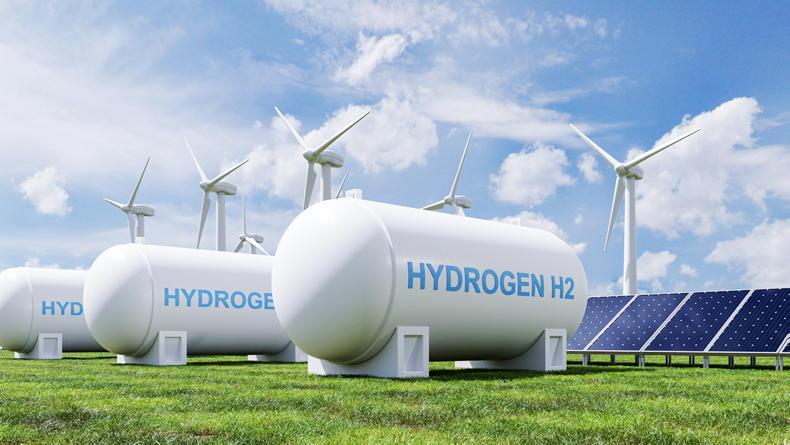
Hydrogen, the most abundant element in the universe, is poised to play a big role in Ireland’s energy system over the coming decades.
Despite the hype, however, there remain considerable uncertainties around the fuel, including its production costs, end markets and required infrastructure.
A new National Hydrogen Strategy, recently published by the Government, aims to set a clear roadmap for this emerging industry.
This marks the first major renewable hydrogen policy statement in Ireland, and attempts to provide a long-term vision for hydrogen’s role in the economy, thereby reducing commercial risk and encouraging private sector investment.
What is
hydrogen?
Hydrogen is a small molecule, commonly found in compounds like water and hydrocarbon fossil fuels.
To produce hydrogen, these compounds must be broken down, which requires energy, such as electricity or heat.
The source of hydrogen, the energy used to produce it and the by-products produced during the process determine the ‘carbon intensity’ of the hydrogen.
Currently, most of the hydrogen produced globally is classed as ‘grey’ or ‘blue’ hydrogen, made from fossil natural gas. Environmentally, this type of hydrogen is unsustainable.
However, ‘green’ hydrogen can be produced by splitting water molecules using renewable energy, producing a gaseous hydrogen as well as oxygen.
This process is done through equipment called electrolysers.
Green, or renewable hydrogen, doesn’t emit carbon dioxide when used and can replace fossil fuels in sectors that are difficult to decarbonise.
With our abundant offshore renewable electricity resources, Ireland is expected to become a significant producer of green hydrogen in the future, drawing interest from all over the world.
Ireland’s plans
Ireland aims to prioritise the production and expansion of renewable hydrogen as part of its energy strategy. By 2030, hydrogen will be produced through grid-connected electrolysis, using surplus renewable electricity, according to the strategy.
To provide investor certainty and facilitate sector growth, Ireland plans to develop two gigawatts of offshore wind for renewable hydrogen production by 2030.
The deployment of renewable hydrogen will mainly focus on sectors that are difficult to decarbonise, such as heavy-duty transport, industrial heat and flexible power generation. Sectors such as aviation and maritime will take longer to develop.
Estimates suggest that by 2050, Ireland’s domestic hydrogen energy demand could range from 4.6 to 39 terawatt hours (TWh), and when considering non-domestic energy needs like international aviation and shipping, this range could increase to 19.8 to 74.6 TWh.
However, such a wide range reflects significant uncertainties, due to the emerging nature of the market.
Furthermore, with offshore wind resource, Ireland has the potential to become a significant net exporter of renewable hydrogen.
Challenges with hydrogen
Using hydrogen as a fuel source does have its challenges though. Most hydrogen production currently relies on natural gas, which contributes to greenhouse gas emissions; cleaner methods are less efficient and considerably more expensive.
Storing and transporting hydrogen is also a complex issue, due to its low-energy density and propensity to leak.

Hydrogen as a fuel source has its challenges, however.
The lack of a substantial hydrogen fuelling infrastructure around Ireland, coupled with the high costs of setting up such infrastructure, is another significant hurdle.
Furthermore, hydrogen fuel cells, typically using platinum, are more expensive than traditional combustion engines or electric vehicles. While hydrogen’s energy conversion process is less efficient than direct battery usage.
Cost
The cost of renewable hydrogen production is largely influenced by the price of renewable electricity and the capital costs of electrolysers, which at the moment are high.
However, as utility-scale solutions emerge, supply chains ramp up and larger-scale products become available, we will see a considerable reduction in the production costs of renewable hydrogen.
It’s predicted that by 2030, electrolyser costs will halve and that by 2050, they could even drop to one-third of their current cost.
With the continued decline in renewable energy costs, the cost of renewable hydrogen is expected to similarly fall, potentially making it economical by 2030.
With our abundant offshore wind resource, Ireland has the potential to become a significant net exporter of renewable hydrogen
The abundant renewable energy resources in Ireland will also increase the overall competitiveness of Irish-produced renewable hydrogen.
The Hydrogen Council, which is made up of 150 multinational companies in the hydrogen value chain, forecasts that renewable hydrogen costs could fall to as low as $0.90 to $1.60/kg by 2050.
This equates to approximately €2.50 to €4.50c/kWh – a cost comparable to market prices of fossil fuels, such as natural gas.
What is happening on the ground?
Despite the challenges and uncertainty, Ireland’s hydrogen sector is heating up, with multiple projects in development.
Mayo-based Mercury Renewables recently announced plans for their new €200m Firlough project, encompassing a wind farm and a green hydrogen facility, aiming to produce 4.5m kg of green hydrogen annually.
The project is expected to create up to 150 jobs and contribute €500,000 yearly to local initiatives, pending assessment from An Bord Pleanála.
Bord na Móna has secured permission for a 2MW hydrogen electrolysis plant in Mount Lucas, Co Offaly. The plant will generate over 200,000kg of green hydrogen annually, replacing over half a million litres of diesel.
The project supports Ireland’s 2030 green hydrogen energy target and forms part of Bord na Móna’s renewable energy expansion plans.
Mayo-based Mercury Renewables recently announced plans for their new €200m Firlough project, encompassing a wind farm and a green hydrogen facility
Elsewhere, EI-H2 recently announced plans for a €120m 50MW green hydrogen plant in Aghada, Cork, removing 63,000 tonnes of carbon emissions yearly and creating over 85 jobs.
Mayo County Council has also given the green light to a new green hydrogen production facility and a 114MW gas-fired power plant near Bellacorick. The €150m plant is expected to be operational by 2026.
In 2020, Energia selected Long Mountain wind farm in Antrim, Northern Ireland as the location for a green hydrogen pilot project and has since supplied hydrogen to buses in Belfast. The buses were built by Wrightbus in Ballymena, Antrim.
Hydrogen, the most abundant element in the universe, is poised to play a big role in Ireland’s energy system over the coming decades.
Despite the hype, however, there remain considerable uncertainties around the fuel, including its production costs, end markets and required infrastructure.
A new National Hydrogen Strategy, recently published by the Government, aims to set a clear roadmap for this emerging industry.
This marks the first major renewable hydrogen policy statement in Ireland, and attempts to provide a long-term vision for hydrogen’s role in the economy, thereby reducing commercial risk and encouraging private sector investment.
What is
hydrogen?
Hydrogen is a small molecule, commonly found in compounds like water and hydrocarbon fossil fuels.
To produce hydrogen, these compounds must be broken down, which requires energy, such as electricity or heat.
The source of hydrogen, the energy used to produce it and the by-products produced during the process determine the ‘carbon intensity’ of the hydrogen.
Currently, most of the hydrogen produced globally is classed as ‘grey’ or ‘blue’ hydrogen, made from fossil natural gas. Environmentally, this type of hydrogen is unsustainable.
However, ‘green’ hydrogen can be produced by splitting water molecules using renewable energy, producing a gaseous hydrogen as well as oxygen.
This process is done through equipment called electrolysers.
Green, or renewable hydrogen, doesn’t emit carbon dioxide when used and can replace fossil fuels in sectors that are difficult to decarbonise.
With our abundant offshore renewable electricity resources, Ireland is expected to become a significant producer of green hydrogen in the future, drawing interest from all over the world.
Ireland’s plans
Ireland aims to prioritise the production and expansion of renewable hydrogen as part of its energy strategy. By 2030, hydrogen will be produced through grid-connected electrolysis, using surplus renewable electricity, according to the strategy.
To provide investor certainty and facilitate sector growth, Ireland plans to develop two gigawatts of offshore wind for renewable hydrogen production by 2030.
The deployment of renewable hydrogen will mainly focus on sectors that are difficult to decarbonise, such as heavy-duty transport, industrial heat and flexible power generation. Sectors such as aviation and maritime will take longer to develop.
Estimates suggest that by 2050, Ireland’s domestic hydrogen energy demand could range from 4.6 to 39 terawatt hours (TWh), and when considering non-domestic energy needs like international aviation and shipping, this range could increase to 19.8 to 74.6 TWh.
However, such a wide range reflects significant uncertainties, due to the emerging nature of the market.
Furthermore, with offshore wind resource, Ireland has the potential to become a significant net exporter of renewable hydrogen.
Challenges with hydrogen
Using hydrogen as a fuel source does have its challenges though. Most hydrogen production currently relies on natural gas, which contributes to greenhouse gas emissions; cleaner methods are less efficient and considerably more expensive.
Storing and transporting hydrogen is also a complex issue, due to its low-energy density and propensity to leak.
Hydrogen as a fuel source has its challenges, however.
The lack of a substantial hydrogen fuelling infrastructure around Ireland, coupled with the high costs of setting up such infrastructure, is another significant hurdle.
Furthermore, hydrogen fuel cells, typically using platinum, are more expensive than traditional combustion engines or electric vehicles. While hydrogen’s energy conversion process is less efficient than direct battery usage.
Cost
The cost of renewable hydrogen production is largely influenced by the price of renewable electricity and the capital costs of electrolysers, which at the moment are high.
However, as utility-scale solutions emerge, supply chains ramp up and larger-scale products become available, we will see a considerable reduction in the production costs of renewable hydrogen.
It’s predicted that by 2030, electrolyser costs will halve and that by 2050, they could even drop to one-third of their current cost.
With the continued decline in renewable energy costs, the cost of renewable hydrogen is expected to similarly fall, potentially making it economical by 2030.
With our abundant offshore wind resource, Ireland has the potential to become a significant net exporter of renewable hydrogen
The abundant renewable energy resources in Ireland will also increase the overall competitiveness of Irish-produced renewable hydrogen.
The Hydrogen Council, which is made up of 150 multinational companies in the hydrogen value chain, forecasts that renewable hydrogen costs could fall to as low as $0.90 to $1.60/kg by 2050.
This equates to approximately €2.50 to €4.50c/kWh – a cost comparable to market prices of fossil fuels, such as natural gas.
What is happening on the ground?
Despite the challenges and uncertainty, Ireland’s hydrogen sector is heating up, with multiple projects in development.
Mayo-based Mercury Renewables recently announced plans for their new €200m Firlough project, encompassing a wind farm and a green hydrogen facility, aiming to produce 4.5m kg of green hydrogen annually.
The project is expected to create up to 150 jobs and contribute €500,000 yearly to local initiatives, pending assessment from An Bord Pleanála.
Bord na Móna has secured permission for a 2MW hydrogen electrolysis plant in Mount Lucas, Co Offaly. The plant will generate over 200,000kg of green hydrogen annually, replacing over half a million litres of diesel.
The project supports Ireland’s 2030 green hydrogen energy target and forms part of Bord na Móna’s renewable energy expansion plans.
Mayo-based Mercury Renewables recently announced plans for their new €200m Firlough project, encompassing a wind farm and a green hydrogen facility
Elsewhere, EI-H2 recently announced plans for a €120m 50MW green hydrogen plant in Aghada, Cork, removing 63,000 tonnes of carbon emissions yearly and creating over 85 jobs.
Mayo County Council has also given the green light to a new green hydrogen production facility and a 114MW gas-fired power plant near Bellacorick. The €150m plant is expected to be operational by 2026.
In 2020, Energia selected Long Mountain wind farm in Antrim, Northern Ireland as the location for a green hydrogen pilot project and has since supplied hydrogen to buses in Belfast. The buses were built by Wrightbus in Ballymena, Antrim.






SHARING OPTIONS