



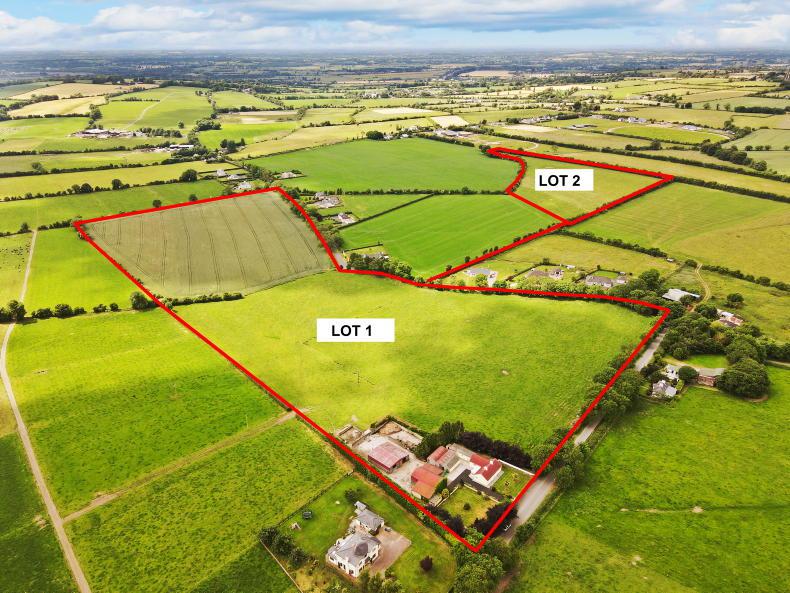
The past few decades have seen demand for farmland outstripping supply, helping to keep the market buoyant. If anything, demand looks set to be even higher in the next few years, with new competition for land.
The two main drivers are higher forestry planting targets to combat climate change and tightening of stocking rates under the Nitrates Directive.
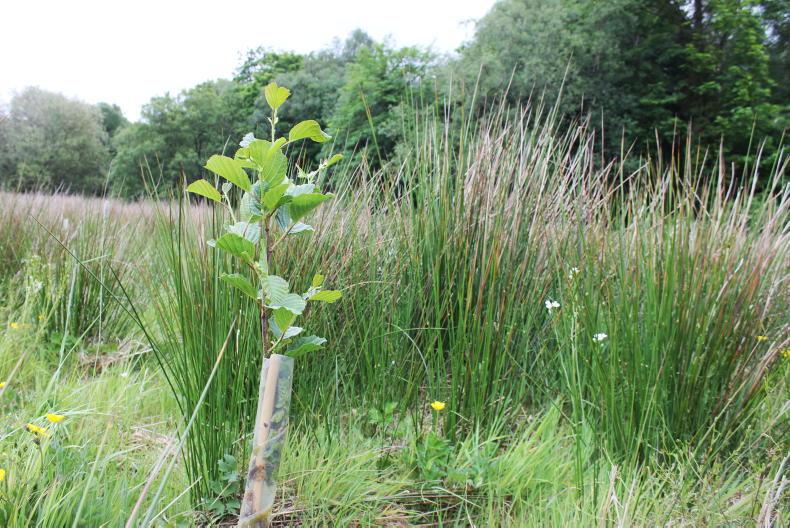
Last year, the Government announced a new forestry strategy as part of the country’s climate action plan, to run from 2023 to 2030. The strategy commits to significantly higher forestry planting targets. It targets a forestry cover of 18% by 2050. Achieving this will require an additional 450,000ha (1,125,000ac) over and above current forest cover.
Currently, about 2,000ha of new forestry are planted each year. The new target will require that to be lifted to average over 20,000ha (50,000ac) per annum. It is enormously ambitious.
Because annual planting totals have been falling steadily in recent years, an enhanced forestry planting programme with higher premiums has also been announced, to run from 2023 to 2027.
Due to open shortly, the €1.3bn scheme will restore the 20-year term for premium payments. Its shortening to 15 years was a significant disincentive to farmer planting over the past decade. Premiums for non-farm planting will continue to run for 15 years.
Minister of State with responsibility for forestry Pippa Hackett claimed this will be the most farmer-friendly forestry programme to date. Most planting will be done by farmers, she said, and this will be on their own land. However, planting at this level will undoubtedly boost demand for suitable land.
After news of the new scheme emerged last year, auctioneers soon reported demand for planting land increased, as did prices.
Factors that will influence the outcome include the details of what tree species mixes will qualify, the exact premium rates they will receive, setback distances, etc.
The scheme promises an average 30% increase in premiums, with the increases focused on native woodland, agroforestry and continuous cover forestry. Minister Hackett has warned that the days of State funding for monocultural, Sitka spruce forestry are numbered – despite it currently being the most commercially viable type of forestry.
Coillte is set to purchase more land for planting over the next five years. Together with UK fund Gresham House, it plans to plant new forestry on 3,500ha (8,750ac). This, Coillte points out, is less than 1% of the State’s overall longer-term target of an additional 450,000ha. The partnership will also acquire 8,500ha of existing forests.
Coillte and Gresham House are now in a binding, contractual relationship. Coillte is not presently considering any other private investment agreements for forestry planting, it says.
Destocking cows
The second driver of demand for farmland in 2023 and beyond will be tighter stocking limits under the Nitrates Directive. A study carried out last year by the IFA found that half of the 6,800 dairy farmers who availed of a Nitrates Derogation in 2022 will need to either access more land or reduce cow numbers, to comply with the new measures.
The specific measure affecting derogation dairy farmers is the reduction in stocking rate allowed from 250kg/ha of organic nitrogen to 220kg/ha.
The affected farmers would need to acquire 28,000ha of additional land or else reduce cow numbers by 52,000 head. That would reduce output by 100,000 litres of milk per farm. This measure will start to apply from 2023.
We can expect extra demand from dairy farmers for land in 2023, to either buy or lease. Dairy farmers will tend to favour good-quality land, as it comes available.
Other land use
The new focus on climate change has led to a small but noticeable increase in individuals and organisations purchasing land for rewilding, growing native woodland and similar uses. This trend is likely to continue and grow.
So far, most of the buyers have mainly been individuals who will not be dependent on this land for income. However, a number of land holdings have also been bought by owners of business which could be classified as “carbon-intensive”, ie high users of fossil fuel energy.
That trend is likely to grow. The idea of carbon offsetting is questioned by some but nonetheless could well become a bigger feature of land use here.
Finally, with bank interest rates still very low by historic standards, rental houses fast losing the favour of small investors and inflation eating up savings, farmland looks set to remain in demand from investors. This will be particularly so given the land can be leased out with tax relief for the rental income.


SHARING OPTIONS