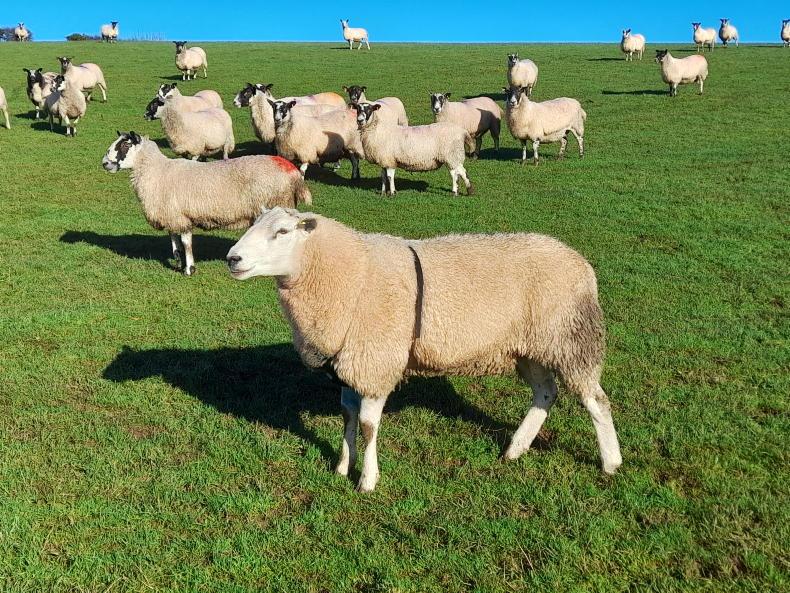
I suppose if I wanted to come across as terribly serious and professional about my farming activities, I would announce that the success of next year’s lambing started back in September – when the breeding flock were put to flushing ground in preparation for mating.
While that is partially true, an equal truth would be that it is all too easy to slip into a repetitive style of farming where we simply do the same thing year after year.
That accusation could undoubtedly be applicable in my case, because once I manage to perfect a system that works reasonably well, I tend to press the repeat button for as long as possible.
A recent meeting for the new CAFRE Business Sustainability Groups for sheep farmers, saw us planning meetings and venues for the months ahead, and yet part of me recognises that the likelihood of me changing any of my current methods is highly unlikely.
In fact, while I will attend these development group discussions and listen attentively (while nodding thoughtfully) I’m probably more interested in the social aspect of the evening.
In our last Business Development Group (BDG) setup, there were about 25 participants, and I would love to know exactly how many people comprehensively changed their sheep system as a result of anything they heard or saw at one of these meetings. Perhaps I’m wrong, but it strikes me that there are multiple ways of successfully running a sheep enterprise, and no two systems are exactly the same.
It’s probably a great example of horses for courses, and every flock owner has managed to fine tune whatever method works best for them. I wonder if this is unique to sheep farming.
Stale
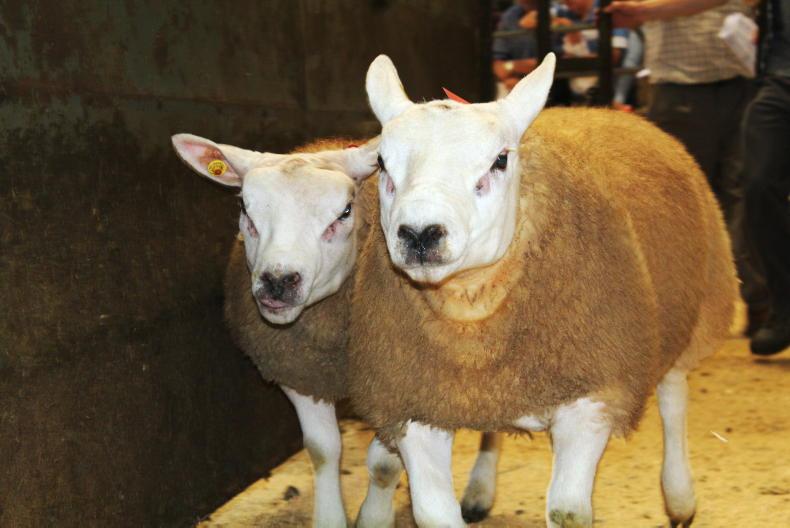
That said, I felt my breeding policy (which I am completely happy with) has become a bit stale. For nearly 20 years, I have been buying mule hoggets, crossing them with Texel rams, then retaining females out of them, so that half the flock are Texel x mules.
A Charollais ram is then used on the half Texels, more or less to keep things incredibly simple.
But I felt it was time for a bit of new blood and decided to try something different. However, far from stepping out in confidence, I hadn’t a clue what I really wanted.
Figures
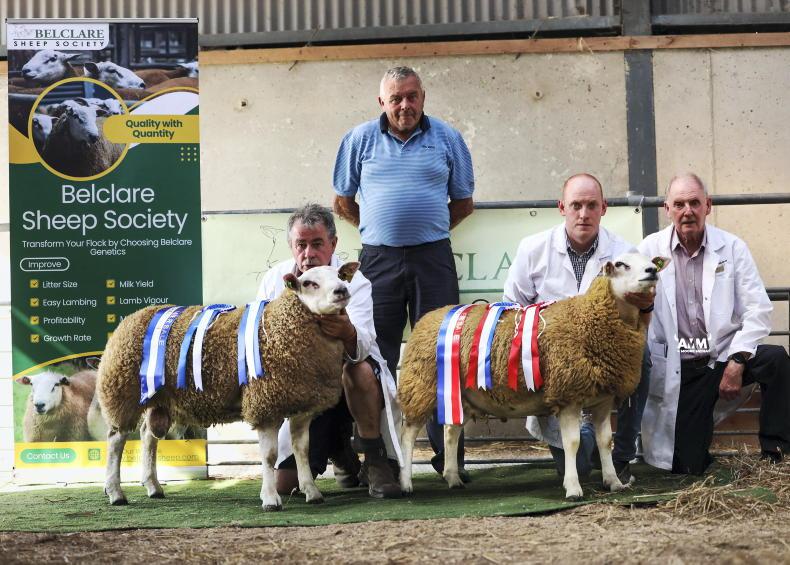
With uncertainty and confusion reigning supreme, I took a notion and bought a Belclare shearling. More than that, I purchased one with very strong performance figures for the breed, despite most of my flock having no background checks in their history.
Once again, this is indicative of someone who gets confused when handed two shovels and told to take his pick.
Part of me wants to gallop down the recorded figures route, and part of me thinks it doesn’t make a button of difference.
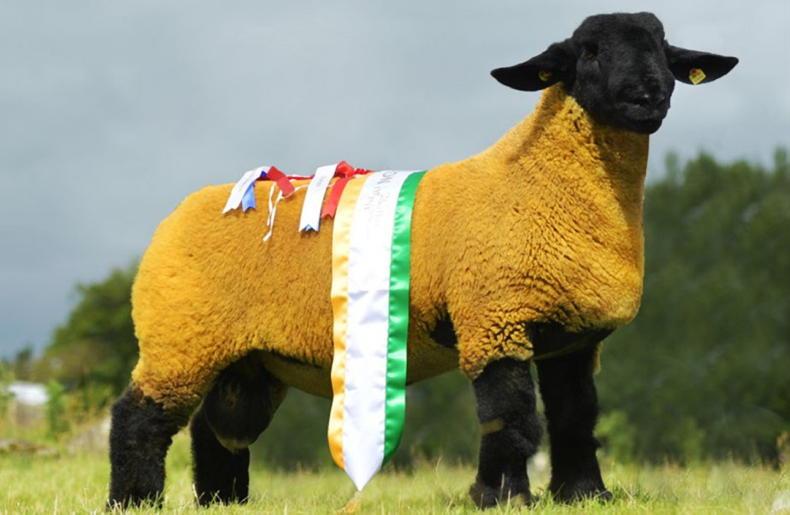
Another part of me likes to buy a ram with strong visible attributes, yet I am far from convinced that those rippling muscles translate into a better class of finished lamb.
However, if someone would breed rams that were immune to foot problems I would buy them instantly, even if they were the shape of a camel.
Overall, after a lifetime working with sheep, I can honestly say that the older I get, the less certain I am about anything. Isn’t that a terrible admission?
Females
For the record, the masterplan is to use the Belclare on Texel x Mules, with a view to keeping females out of him.
There seem to be well documented stories of improvements on the maternal side and higher lambing percentages.
Given that I have, in the past, complained loudly about multiple births, you may be wondering what took me down this highly prolific road.
Well, I’ve been wondering about that too. Triplets are a pain in the neck at lambing time, so I can only assume there is going to be a lot more hassle and bother once these half Belclares filter through into the breeding flock. Oh dear. Susan is going to be busy.