



On the twelfth of July I stopped breeding my spring calving cows for another year.
I have seen a few cows back in heat since but hopefully there will not be too many.
The week after I stopped breeding, we had another TB test and thankfully we are now clear. We have been closed since last November and it has been a long slog to get to this point.
In recent years, any issues we have had usually started with an animal in the factory showing suspect lesions and that has left me nearly afraid to send cattle to slaughter. Hopefully we will get a good run without TB now.
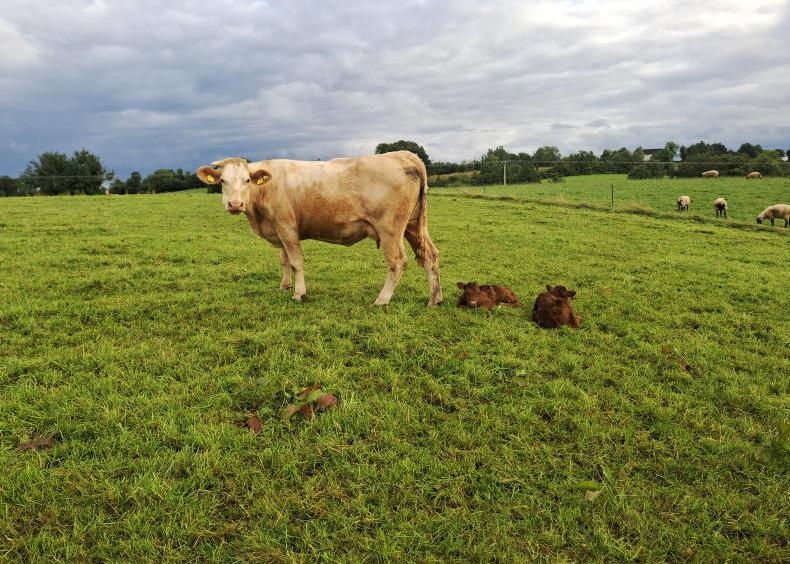
Just a week after the TB test we started calving our autumn herd. Since the first calf dropped, they have been coming thick and fast and after 10 days we are already halfway through.
I expect the second half will be a little slower, although I seem to be able to keep my autumn calving cows pretty tight, which is extremely useful - there is a short sharp burst of calving and then it’s over and we can move on.
Calving ease
I actively try to choose easy calving bulls, and this is particularly important for my autumn calving cows. So far, they have been calving unaided and if anything, the calves are quite small, which is just what I want.
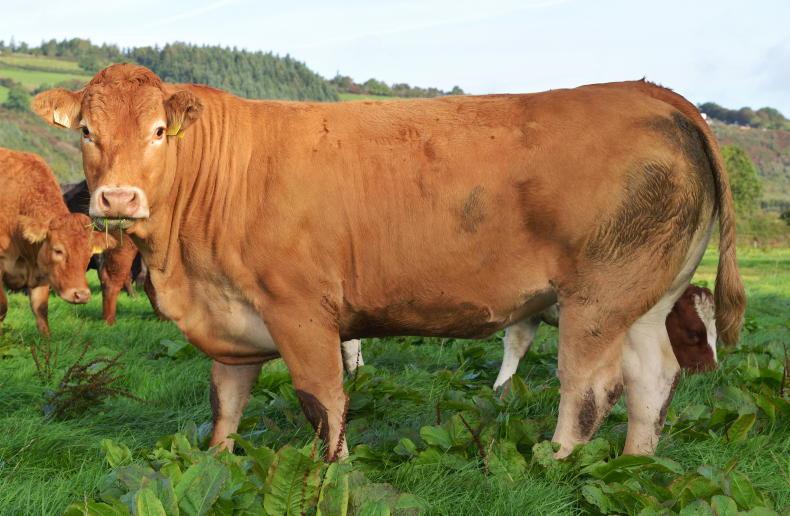
The only issue to date is a cow with photosensitisation (sunburn) and it is mainly visible on her nose and teats. I have had to put her into the house, but I hope this will not be a long-term issue, and she will get back outside in a week or two.
During calving, I tend to just leave the cows to their own devices as much as possible. They are used to clean out paddocks after lambs. This does mean that there are times when they are far away from the house and well out of view.
I know other farmers tend to try and keep cows on the point of calving close to the yard, but this does not suit my system.
I normally check them just before dark and then again around seven in the morning, although if I am suspicious of something happening at night, then I will be in the field at daylight.
I used to go out with a torch during the night but as I have got older, I have found that option to be less and less attractive.
But if I have chosen the right bull, then they should calve themselves unless there is a problem.
If the cows are in the house, there is always the temptation to go in too quick and try to help them out.
Once the calves are a day or two old, I take them out of the batch and tag the calf and give the cow a hi-mag bolus.
I move them into another field with better grass and then when I have ten or fifteen outfits, I leave them in that batch and move to another field to create a new group.
I find this gives them a better chance to mother up and they are easier to keep an eye on. It is also better to get freshly calved cows away from those yet to give birth as it is a lot easier to check springing cows if there are no calves running around the field.
Once I get them well settled, the calves are dehorned and the cows are dosed, with cows and calves separated into those with bulls or heifers. The calves are also given a pneumonia vaccine pre-housing.
This system might not be ideal for everyone, but it works fairly well here. There are times when they are calving too quickly, although it’s not a massive issue.
However, as in any type of farming, a problem is usually never too far away.



SHARING OPTIONS