



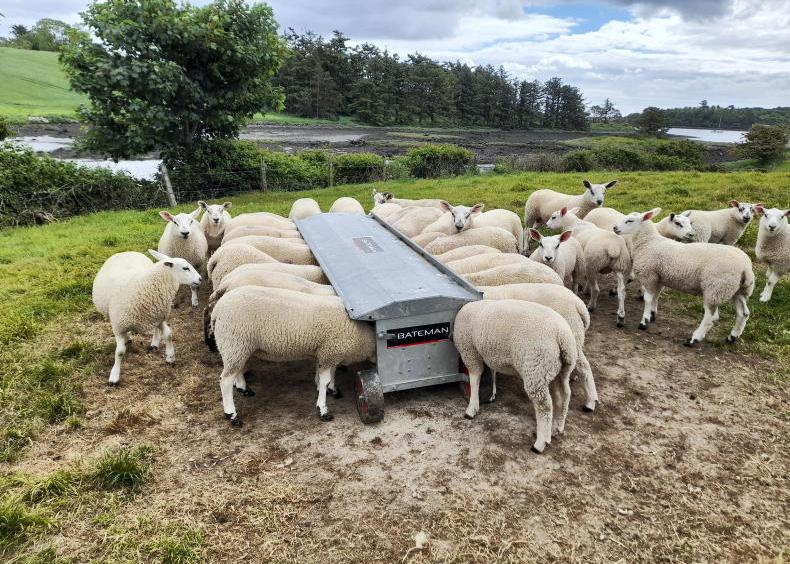
In a break with tradition on this farm, I have made the decision to creep feed almost half the lambs.
When you’ve been reared on a diet that regards unnecessary concentrate feeding as the road to ruin, then it can be an uncomfortable transition after decades of counting every kg.
When I first started benchmarking my sheep enterprise, I had a target of close to 50kg of meal fed per ewe put to the ram. I suspect this year I’ll comfortably treble that figure.
Obviously, of course, I have legitimate and balanced reasons for this slight change in management direction.
Firstly, there are extra cattle on farm this season mostly due to an inaccurate prediction by me regarding the finishing date for a batch of bullocks. And when Derek is lying in bed during unpleasant March weather, anxiously planning the grazing season ahead, he can’t ever imagine grass growing freely ahead of livestock.
These nighttime travails then expand into something resembling a bad dream and suddenly, if I don’t take action, there won’t be a single lamb sold by the end of the summer.
Prolific
Over the years, I seem to be producing a more prolific flock and therefore I have more vulnerable lambs.
These include pet lambs, trebles, and ewe lambs with twins.
This year is no different and a big crop of lambs means I am feeding around 100 of these types anyway.
Meal feeding doesn’t necessarily turn them into fatstock candidates, but it translates into significant numbers of half decent lambs instead of a field of rats.
It surely isn’t an enormous step to simply up that figure a bit and include a flock of healthy doubles just to see how it works out?
Economics
The financial side of things also plays a huge part in the equation because by my reckoning the ratio between meal cost and lamb price has rarely looked more attractive?
Or to put it another way, if a fat lamb was making £85, I wouldn’t entertain the notion of lashing meal down the throats of fit and healthy lambs.
Therefore, I picked the first 50 sets of doubles, kept them in a single flock and purchased another creep feeder. It helped that they weren’t grazing clean swards and so I convinced myself they would need a bit of assistance to keep liveweight gains on target.
Pride
There is another factor in the whole creep feeding debate, and it probably concerns pride and vanity (mine that is).
When I take a trailer load of lambs to the collecting yard there are often a couple of hundred other sheep already there.
I’ll typically enquire whose lambs those real belters are, or who those wee muscly boys belong to.
Invariably the answer comes back, “Oh that’s so and so. They’re well stuffed on creep feed”. I then roll my eyes and make some disparaging remark regarding some shepherds’ inability to produce good stock off NI’s finest asset – green grass. But as I drive down the lane a big part of me is as jealous as a cat that those lambs weren’t mine.
Outcome
It’s a bit early to draw any conclusion, but a glance across this experimental flock would suggest that the meal certainly has given them a bloom that wouldn’t normally be there.
Closer inspection around the feeder shows two lines of broad backs that handle well. A cynic might say well they’d need to, wouldn’t they?
I suspect the outcome will largely depend on lamb price and selling date.
It may alter the date profile of numbers sold and this in turn may have a knock-on effect on grass supply later in the year.
No matter what the result, I have a sneaking suspicion it will not make any difference to the overall financial performance of the farm.
A bigger effect on management policy for this farm will be future fertiliser prices, and that will be largely dictated by where in the world Donald decides to start another war.




SHARING OPTIONS