The focus on Fairfax Bridge Farm has already turned to breeding, despite the fact there are still a few cows remaining to calve.
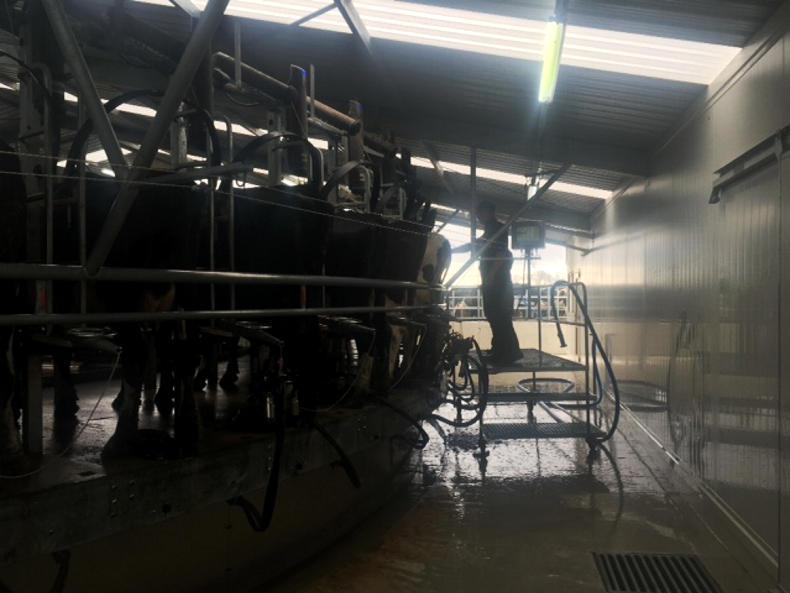
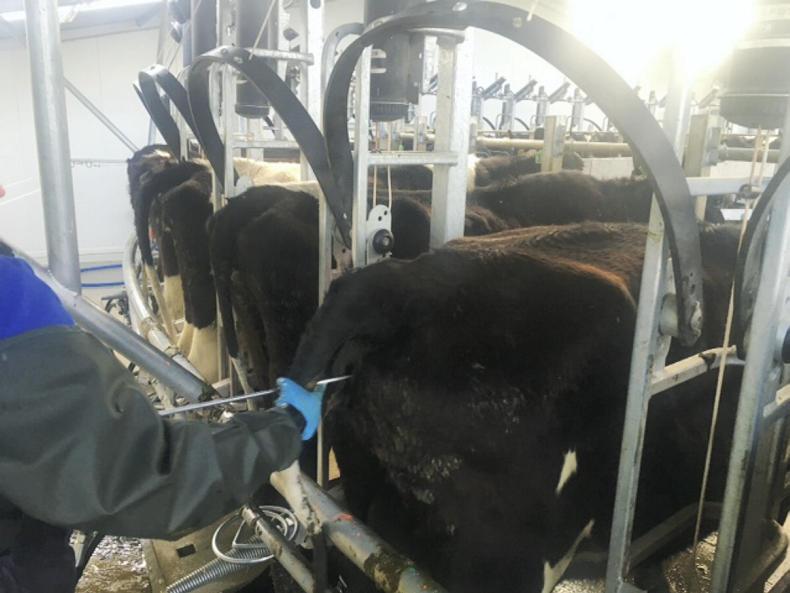
Having grazed off all the frost-burnt covers on the border dyke section of the farm, it was arranged that a dairy score technician would come on Wednesday to condition score the herd during the afternoon milking. With a rotary milking parlour, this task was relatively straightforward as the technician used the veterinary platform for observing the cows.
Overall, the condition of the cows is excellent, with only four requiring to go on once-a-day milking. A mob of 230 cows was drafted out of the main herd, with these cows being mainly first- and second-lactation cows in below-target condition.

This mob will continue to be milked twice a day, on a diet of grass and 2kg barley with 1-2kg/DM/ maize being fed as a buffer, with the aim of improving BSC in the run up to breeding (start date 25 Oct). The remaining herd of 379 presently will be run separately, grazing 12-hour allocations and also being fed 2kg barley.
Getting things right
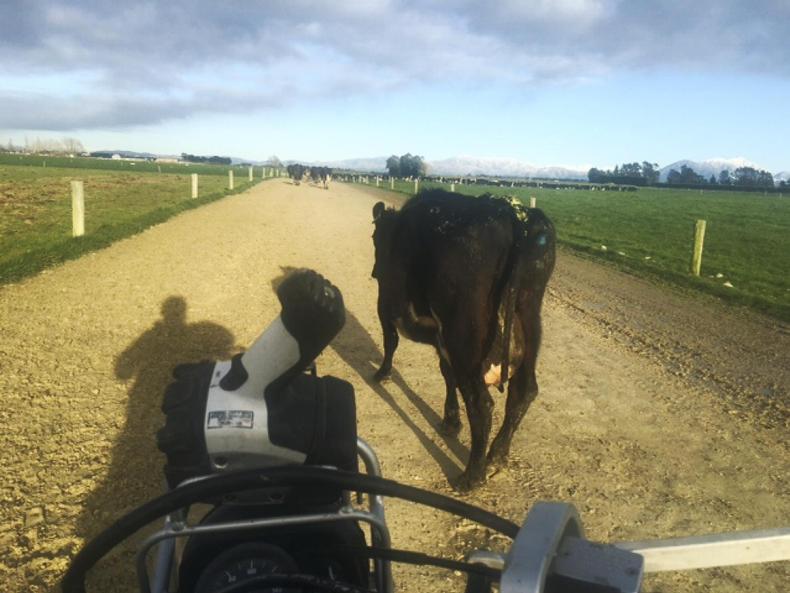
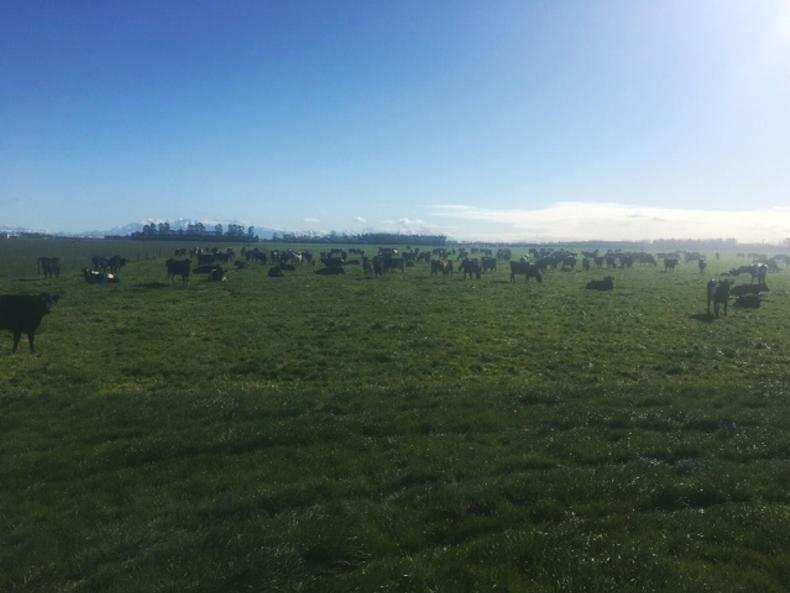
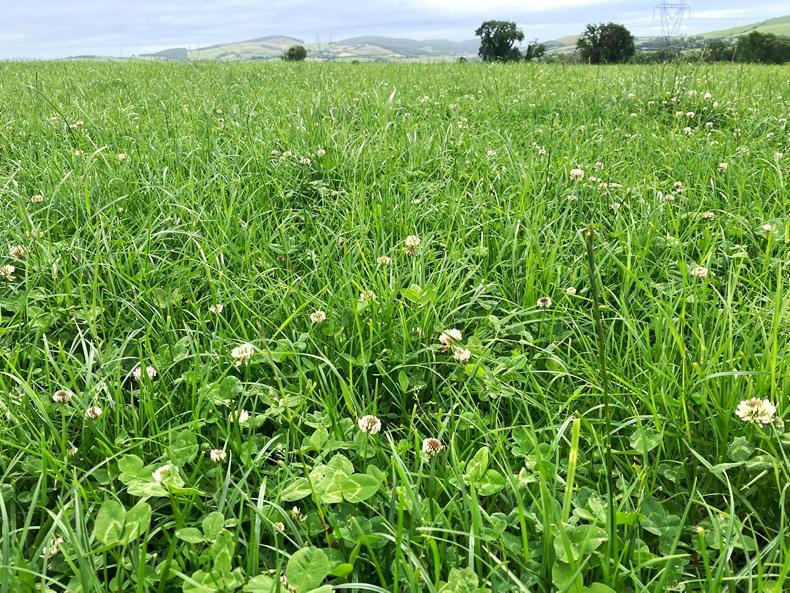
The priority on this farm is to always feed the cow well. By reducing herd sizes and supplementing the cows that need extra nutrition, this can be achieved while still maximising grass utilisation. To be fair, grazing conditions that I’ve witnessed so far are near perfect, with firm, free-draining soils, minimal rain and high DM grass (~21-22%), we are easily hitting residuals of 4cm – contrasting conditions to the variable weather and soil conditions we are challenged with in Ireland year in, year out.
During Thursday evening milking, we metrichecked all cows more than 28 days calved to assess uterine health. Out of 244 checked, only six required further treatment, which was administered in the form of an intra uterine antibiotic the following day. These cows will be rechecked again in two weeks’ time.
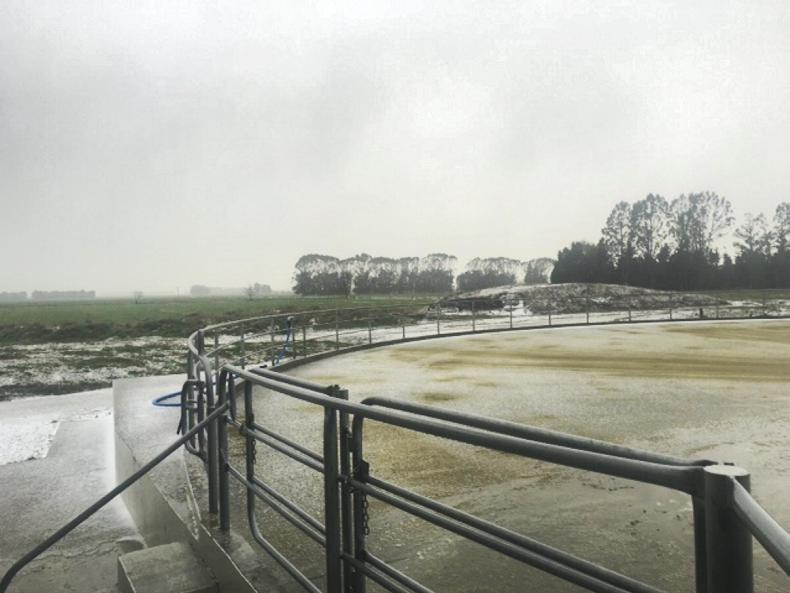
It was also planned on Thursday morning to visit the contract rearer farm to administer BVD booster shots to the yearling heifers, along with drenching – but the weather put a halt to that. Between thunder, lightning, rain, hail, snow and gale force winds, it was the harshest weather I’ve witnessed yet.

Exposed to the elements
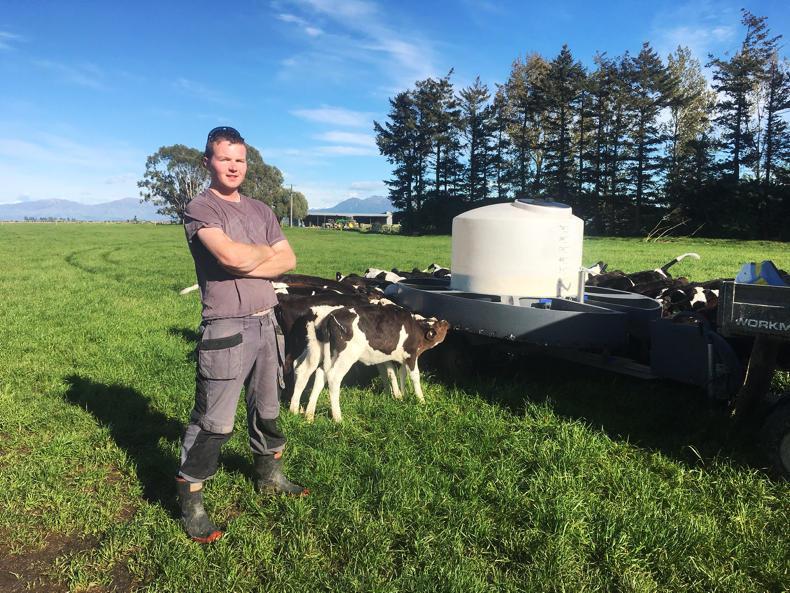
For the first time since arrival, I really appreciated all the shelter belts and infrastructure we have on our farms back home, as the plains of Canterbury were fully exposed to the elements, with both man and beast feeling the full effects. After milking on Thursday morning, we moved all mobs to the few sheltered paddocks on the farm, with no protests from the stock as they raced towards the lines of trees.
Despite the bad weather of Thursday, milk yields remain on the increase, with the latest collection indicating cows are yielding 2.13kg/MS (24.6 litres, 3.81% protein, 4.83% fat) with SCC of 72K. To date, we’ve had 25 cases of mastitis, with one cow having to be culled as a result. Out of 630 that have calved, we are very happy with this figure and our SCC results are indicating udder health is satisfactory also.
Read more
Read all of Michael Tobin’s blogs here.
The focus on Fairfax Bridge Farm has already turned to breeding, despite the fact there are still a few cows remaining to calve.
Having grazed off all the frost-burnt covers on the border dyke section of the farm, it was arranged that a dairy score technician would come on Wednesday to condition score the herd during the afternoon milking. With a rotary milking parlour, this task was relatively straightforward as the technician used the veterinary platform for observing the cows.
Overall, the condition of the cows is excellent, with only four requiring to go on once-a-day milking. A mob of 230 cows was drafted out of the main herd, with these cows being mainly first- and second-lactation cows in below-target condition.
This mob will continue to be milked twice a day, on a diet of grass and 2kg barley with 1-2kg/DM/ maize being fed as a buffer, with the aim of improving BSC in the run up to breeding (start date 25 Oct). The remaining herd of 379 presently will be run separately, grazing 12-hour allocations and also being fed 2kg barley.
Getting things right
The priority on this farm is to always feed the cow well. By reducing herd sizes and supplementing the cows that need extra nutrition, this can be achieved while still maximising grass utilisation. To be fair, grazing conditions that I’ve witnessed so far are near perfect, with firm, free-draining soils, minimal rain and high DM grass (~21-22%), we are easily hitting residuals of 4cm – contrasting conditions to the variable weather and soil conditions we are challenged with in Ireland year in, year out.
During Thursday evening milking, we metrichecked all cows more than 28 days calved to assess uterine health. Out of 244 checked, only six required further treatment, which was administered in the form of an intra uterine antibiotic the following day. These cows will be rechecked again in two weeks’ time.
It was also planned on Thursday morning to visit the contract rearer farm to administer BVD booster shots to the yearling heifers, along with drenching – but the weather put a halt to that. Between thunder, lightning, rain, hail, snow and gale force winds, it was the harshest weather I’ve witnessed yet.
Exposed to the elements
For the first time since arrival, I really appreciated all the shelter belts and infrastructure we have on our farms back home, as the plains of Canterbury were fully exposed to the elements, with both man and beast feeling the full effects. After milking on Thursday morning, we moved all mobs to the few sheltered paddocks on the farm, with no protests from the stock as they raced towards the lines of trees.
Despite the bad weather of Thursday, milk yields remain on the increase, with the latest collection indicating cows are yielding 2.13kg/MS (24.6 litres, 3.81% protein, 4.83% fat) with SCC of 72K. To date, we’ve had 25 cases of mastitis, with one cow having to be culled as a result. Out of 630 that have calved, we are very happy with this figure and our SCC results are indicating udder health is satisfactory also.
Read more
Read all of Michael Tobin’s blogs here.







SHARING OPTIONS