


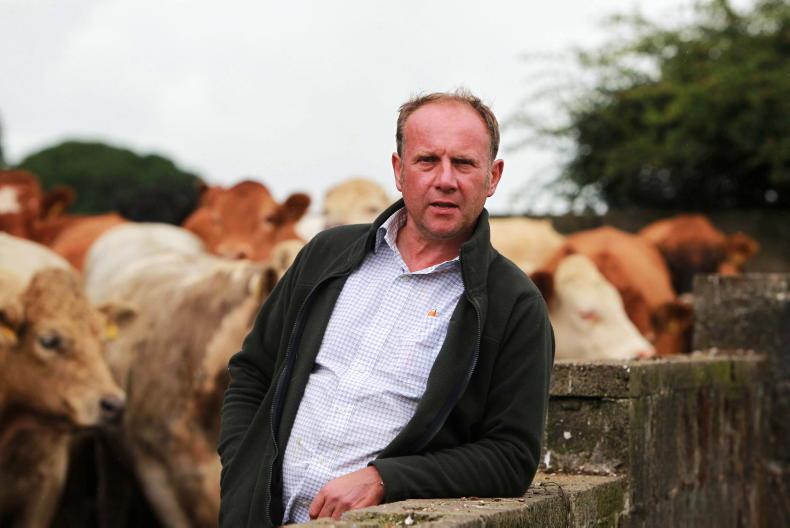
It appears inevitable that South American beef will have access into the EU under the Mercosur deal. Once again agriculture is the sacrificial cow to allow EU goods and services access into the Mercosur group of countries that are Argentina, Brazil, Paraguay and Uruguay.
In the grand scheme of things the quota of 99,000t of Mercosur beef is small, but it has opened the door to almost tariff-free access – and that in itself is not good news for a beef exporter like Ireland.
However, it is not for the first time that Ireland will have to compete against cheaper Argentinian beef and therein lies an interesting little story, which I shall tell you now.
In the 1860s, James Nelson was a farmer and butcher in Kells, Co Meath. The beef trade was lucrative after the Great Famine and most of the farms in Meath and surrounding counties were taken out of tillage and into grassland.
Between 1846 and 1874, annual live exports to England rose from 202,000 head to 558,000 head.
There was huge money to be made from cattle and the costs were low towards tillage crops.
Besides, grain prices had collapsed due to imports after the repeal of the protectionist Corn Laws. It’s all sounding a bit familiar, isn’t it?
Great Britain was, at that time, an industrial superpower and its armed forces were the biggest in the world. The British market for beef was insatiable.
The enterprising James Nelson and Sons began exporting cattle into Birkenhead and within a few years had opened butcher shops in Liverpool, and soon all over England. Word had come to Nelson, from Irish farmers who had emigrated to Argentina, of huge quantities of cheap Pampas beef.
Refrigerated shipping was in its infancy and Argentinian beef previously could only be shipped in a salted, non-fresh form. Son William was sent to South America in 1886 and he chartered 2,000t refrigerated steamers to ship beef into England.
Legend has it that the OXO brand name came from the marking on crated beef on the Buenos Aires quays, showing whether it was in or out for export. But Nelson saw the market potential for fresh, refrigerated beef. He diverged into shipping and commissioned his own refrigerated ships which, in passenger form, carried emigrants out to South America and frozen beef on the return trip.
And thus, the Nelson Line was born, bringing great wealth to the family and an introduction into the English aristocracy, with Sir William Nelson being knighted in 1912.
The First World War was their heyday, with huge quantities of beef required to feed the Allied troops in France and Belgium. But at a cost; six of their ships were torpedoed and lost in the North Atlantic.
Grandson James became the second Baronet and he returned to his Co Meath roots and bought a fine flat farm in Kildalkey to train horses – which he did with success, winning the 1934 Irish Grand National at Fairyhouse.
Sir James cleared hedges to create a six-furlong flat and straight gallops (1,200m) which was also used by his pilot wife, Lady Nelson, as an airstrip. But that’s another story.
So will the Pampas of Kildalkey return to grass again? If it is a case that beef prices are to remain high (hmm, not so sure about that) and corn prices low then yes, of course it’s a possibility. We can only take €200 for wheat for so long. But Clonbarron’s long and flat acres – Nelson’s former farm – hasn’t seen a plough since 1985.
Me? I’m not keen on running after suckler cows myself, but if I had a gaucho to look after them, it would suit the finest.


SHARING OPTIONS