


Weather continues to dominate my weekly activity with a never ending supply of poorly timed showers. Setting out for the field this morning to dig a few loads of carrots, I was confident we would have a rain free Sunday in the field according to forecasts. Cue a heavy shower on the hour, every hour in the field. It would be easier if it just rained heavy and moved on.
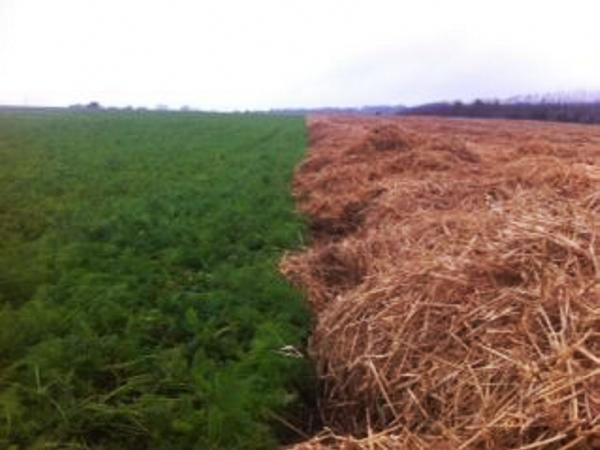
We are getting near the end of our un-strawed carrots and getting ready to start lifting straw and harvesting the winter protected carrots. We lay a layer of polythene black plastic over the bed, followed by 15t/acre of wheaten straw for protection. This straw is reincorporated into the soil after harvest giving a massive boost to soil organic matter levels.
The process of strawing carrots is questionable in its year to year viability but the potential of total crop loss and an inability to supply is not an option. Carrots, unlike potatoes, are harvested right through the winter to ensure a fresh supply for retailers and the consumer, and thus need protection over winter.
In Holland it is common to autumn harvest carrots, similar to potatoes, and store the carrots in a humidity store which regulates the temperature and the moisture levels. However, this hasn’t caught on in Ireland as the carrot quality from stored carrots is not a good as winter lifted.
As winter growers, we straw only a portion of our crop, essentially hedging against frost damage rather than blanket protecting the entire crop at an enormous cost. With roughly 50% of our crop lifted before Christmas, we cover approximately half of the remaining 50% to ensure a portion of the crop is safe. This strategy moves our risk around. Add to this growing carrots in Carlow and Waterford and we further reduce our risk due to the two areas' differing climates and soil types. With a high input crop such as carrots, being risk averse is essential to survive.




SHARING OPTIONS