



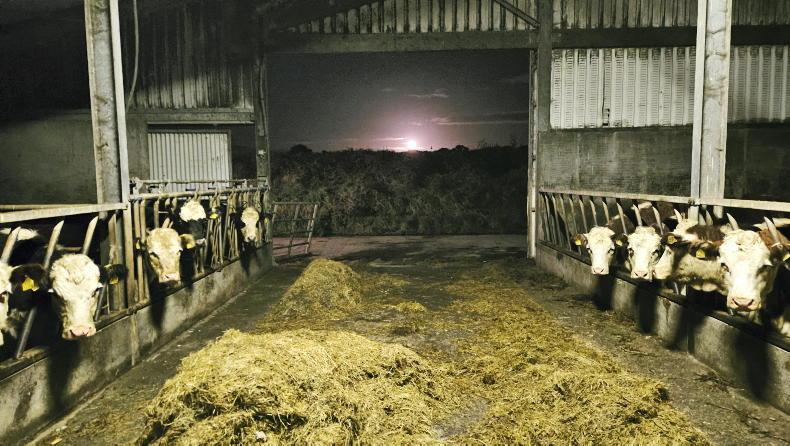
Resembling a tired pub owner trying to entice the last bunch of revellers to leave the premises, the rain is doing its best to call last orders on the 2025 grazing season. Over the last week, rain of all forms – in particular the relentless downpours on Sunday and Monday nights – has contributed to sheds filling up. If you’re tight on slurry storage, the likes of those showers are a good reminder to fix gutters and divert water away from tanks.
It’s not just heavy rain either. We had three or four days last week where the mist descended and made its way into anywhere it could. I was beginning to lose track of what day it was as the sun struggled to break through and it wasn’t until Friday when blue sky was visible again. A positive from it is that precipitation combined with temperatures in double figures is driving grass growth in paddocks that are closed.
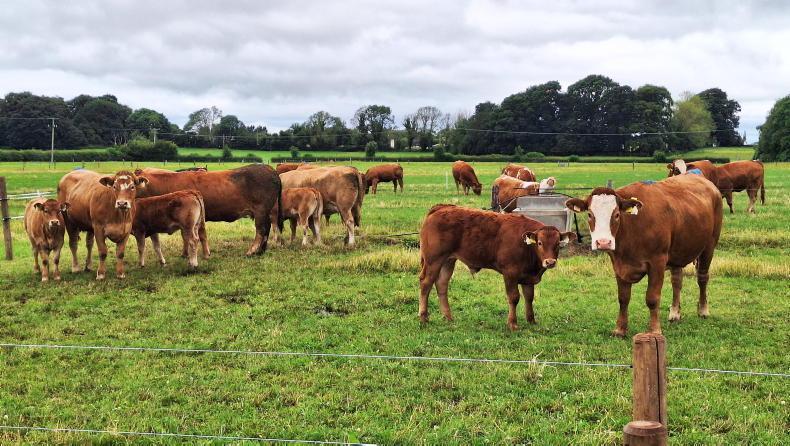
Weaning began for the last group of bull calves at the weekend. The only group of pairs out at home, they consist of all this year’s group of pedigrees and the youngest trio of bulls. Born in late April, judging by eye the three of them had done well, but the weighing scales gave me a pleasant surprise as they exceeded expectations.
When you want calving to be over, they’re an inconvenience, but those late-April-born calves always seem to get a good run and these three have done that in spades. With space at a premium in the shed I used the weaning nose paddles on them and sent them back out to the field.
I’ve found the paddles very effective when it comes to weaning at grass but, in my experience, calves have more opportunity to lose them when used indoors. Once that group is weaned, I’ll be in a position to move all the bulls to the other yard and that will free up space at home.
The dairy-beef calves remain out and the education with them continues. I’d hoped to get away with not worm dosing them again until they were housed but that plan went by the wayside at the weekend.
Numbers out are a fraction of what they were and it’s that time of year where the annual shed puzzle is under way. Extra space is required for weaning and for the finishing stock, so the main shed is in a state of flux at the moment.
A bit of thinking now also saves a lot of work when the 2026 grazing gets underway. All the different permutations are being worked out on who goes to what yard and what shed. For example, the probable replacement heifers will go near the village for breeding next year so they’re housed at that yard. The possibles and the definitely-nots will be held at home. With later calving they can get to grass early and be moved to the out-farm in spring and the pick of them will get a shot at joining the replacement group. That will minimise the moves in spring.
Trying to keep it easy for the contractor with slurry helps too. The larger tanks are where the better ground is so those sheds are prioritised first and sheds with smaller tanks are left until the end. Rather than having a few cattle in every shed and running and racing, I try to keep as much of the workload as possible in one place, for as long as I can.



SHARING OPTIONS