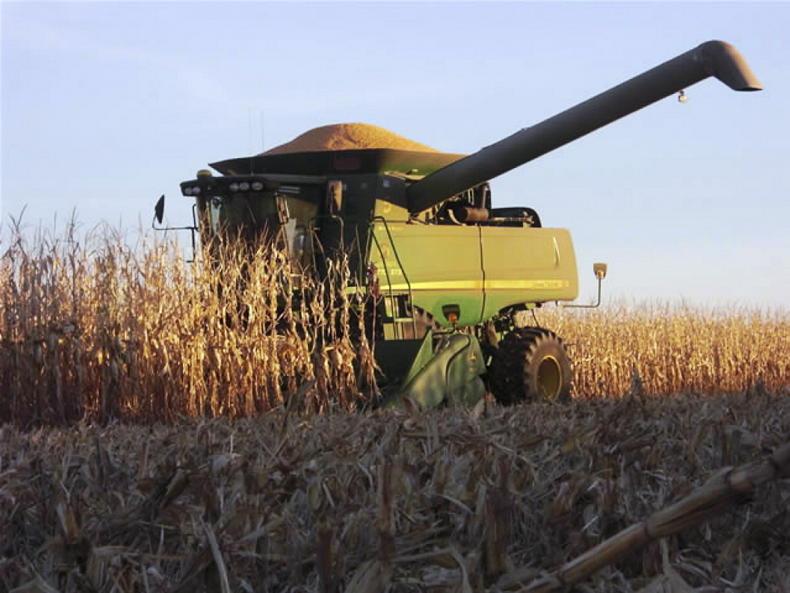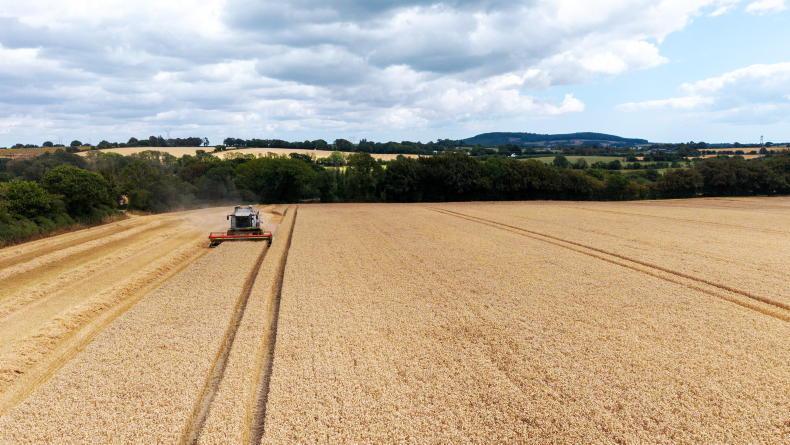
I didn’t go into this year’s wheat harvest expecting barn-busting yields. The wet winter and spring had taken its toll on the crops and they didn’t tiller properly, and in some cases were too patchy as well. I knew I wouldn’t be in the elusive upper echelons of wheat yields this year (maybe I never am) and, in a sense, was happy with that. My hope is always that you achieve the yield you deserve. Good looking crops deserve a good yield and light crops don’t.
However, the view from the combine cab was better than that, with loads of beautiful- looking wheat flowing into the tank at low moistures. Trailers were weighing well and there was hope. For a while, it was indeed redolent of the harvest of 1995, of which I spoke before. There would be little moisture correction this year.
First to fall to the knife was the variety LG Rebellion, which is a late-driller and early-ripener.
I like this variety. It has good agronomic properties, if perhaps a little weak on septoria, but good on yellow rust, which is increasingly becoming a problem. It looked good from the cab too and while the drill rows were obvious, there were no bare patches.
The variety LG Rebellion was in a field of 44ac, so for this to be a crop worth talking about, I’d need to fill 10 loads of the 20t Broughan trailers to achieve that.
That takes a bit of gathering and I kept a running tally in my head of the full trailers, which are of course weighed into the yard. In my mental arithmetic, it was close to target.
But I wouldn’t have that information until the end of the day. The headland was over 20% moisture, so was tipped into the drying pile.
We no longer dry to 14.5% moisture. Anything under 19% goes straight into the store where it is ventilated with a large fan. Once monitored for temperature, it’ll be fine for a few months and then sold for Maxammon moist grain treatment. Drying to the industry standard is too expensive and time-consuming and it’s not something that I’d go back to. Drier man Jason (and a hundred other tasks as well) and the trusty old Alvan Blanch drier get it a bit handier and the oil bill is well reduced. But it costs to keep the grain conditioned.
Next up for shaving were the varieties Graham, Scope, Fitzroy and Kubik. Graham was consistent as Graham is but not hugely exciting and Scope disappointed. Fitzroy was a bloody disgrace as it followed potatoes and was traditionally sown in good conditions with no weak patches. Yet it only managed a sub 4t yield, so never again.
I think the variety Kubik has loads of potential because a thin and patchy crop – a consequence of the soil lying wet – yielded a shade under 4t/acre. It was more than I deserved and was happy to take that. Rebellion is the insurgent newcomer and harvest star. I must stress that this is only my varietal experience. Yours could be quite different.
However, it’s overall averages that count and you can largely ignore the peaks and the troughs.
The overall weighed average for the wheat was 4.008t/acre which I was happy with until I read about the high flyers in last week’s Irish Farmers Journal.
Incidentally, our rolling five-year average yield is the very same at just 4t/acre (harvests 2023 and 2024 were poor). All of which makes 2026 an average wheat harvest, but possibly one to remember for the good weather. Unless, of course, these hot summers are the new norm and I’ll take that.