



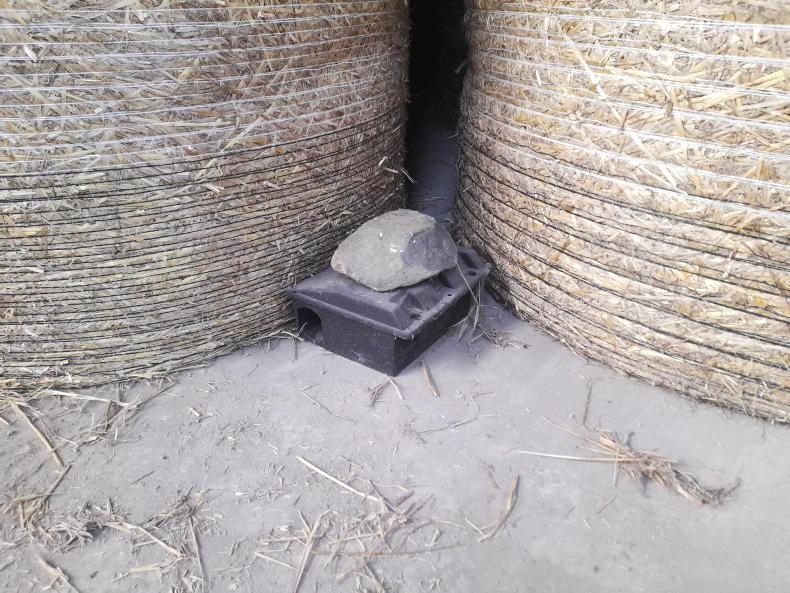
Back around lambing time, I marched into the local agricultural store and asked for a bucket of rodenticide sachets.
“Sorry” I was told, “we are no longer allowed to sell rat and mouse poison unless you have done the course”.
My protestations that I was farm-quality assured –and therefore eligible – was of course outdated, and I had no option but to put my name on a waiting list to get the appropriate qualification.
In early October, I attended a one-day training session, and I can now claim to be fully compliant and highly knowledgeable on the subjects of rats and mice.
Learning experience
Despite regarding this course as a mere box-ticking exercise (there was plenty of eye rolling and general histrionics on my part as I assumed it would be a waste of time), I actually enjoyed the exercise.
More importantly, I definitely learned bits and pieces, gained some detailed insight into rodent behaviour and may even have discovered that some of my current techniques are not at all recommended.
Firstly, there is obviously some fairly boring stuff that we are all supposed to adhere to: risk assessments, safety-data sheets, product labels, biocidal product regulations. And then we had to learn about the various Acts. We read about the Wildlife and Countryside Act, the Wild Mammals Act, Animal Welfare Act, Food Safety Act, and the Environmental Protection Act.
Nitty gritty
But after that we got down to the nitty gritty about rats and mice and, more importantly, the best way to kill them.
At this point I began to perk up, and things got a whole lot more entertaining. Here are a few points that I did not previously know:
Rodents chew through wires and pipes not because they have planned the best way to ruin your day. No, it’s because if they didn’t constantly gnaw on something, their teeth would eventually get so long that they’d grow right around and puncture their own skulls. That’s the truth.
Secondly, if you happen to use a live trap to catch rats and mice, then you must, by law, provide them with food and water while they are caught and before they are dispatched.
Furthermore, drowning is not permitted as a means of disposal. No, the exact wording is that a ‘concussive blow to the head’ is the best method to employ. I’m not sure how you get Mr Rat to stand still in the cage while you wallop him over the head. but those are the rules.
Cannibals
Some rats are cannibalistic.
Now, my ears really twitched when I heard this snippet because I remember being told stories when I was a youngster, about rats killing one another.
A long-deceased farm worker took great delight in relaying a sadistic-sounding story: if you put two rats in a barrel until they are starving, then one rat would attack the other and eat it.
At that point, the victor was released, whereupon it would then attack and kill every other rat in the yard.
Funnily enough, it’s not a method I ever felt the urge to try.
Wildlife
On a more concerning note, I was a bit uncomfortable when it came to the bits about accidental poisoning of wildlife. The typical stuff we use around farmyards is a second-generation anticoagulant, and an alarming percentage of dead barn owls, kestrels, and buzzards are found to contain those poisons due to eating prey that had previously consumed the poison.
And despite hedgehogs not being able to enter bait boxes, they also succumb to these anticoagulants. If you’re wondering how, here’s the answer.
Slugs are completely immune to rat poison, and love to gorge on it.
So, they slither into the bait boxes (nice, dark place to spend the night), and hedgehogs are partial to a good feed of mollusc. Hey presto, and you’ve a lovely wee hedgehog stone dead.
I came home from the course and relayed some of those facts to my wife.
Susan, of course, asked me what I was going to do differently now, particularly regarding the potential killing of untargeted species of wildlife.
I thought hard about it and mentioned placing bait in more strictly controlled areas, and for a limited time also (35 days is the recommended length). I also reckon I could rely on our two cats to up their game a bit since they do catch mice on a near daily basis.
Overall, I think my strategy will reflect the acquired knowledge gained at this necessary and useful one-day course. For a while, anyway.







SHARING OPTIONS