



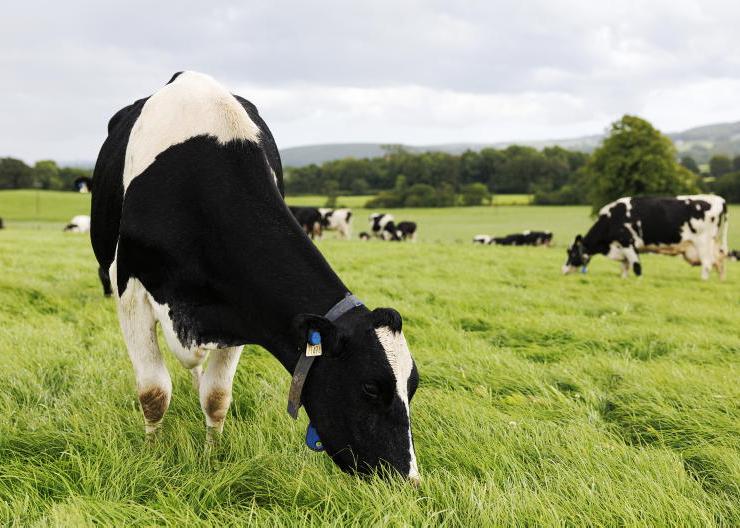
Milk supplies for the first half of the year are running close to the record levels recorded in 2025, but the ongoing heatwave is beginning to impact output.
Lakeland Dairies said milk supplies to the co-op remain broadly in line with 2025 levels on a year-to-date basis.
June deliveries were just 1% lower than those recorded in June 2025, while weekly intake figures are running around 2% down on the corresponding week in 2025.
It is a similar story at Tirlán. Milk supplies are up 1.8% to the end of June 2026 on a year-to-date basis compared to 2025, a spokesperson for the co-op said. “Milk supplies are broadly flat for June 2026 compared to June 2025.”
Dairygold is up 0.5% on a year-to-date basis when compared to 2025. However, June milk deliveries to the southern co-op were 1.75% lower than the volumes supplied in June 2025.
A Dairygold spokesperson said this was due to the “very mixed weather conditions experienced across both halves of the month, when grassland management was a challenge”.
The heatwave is also hitting current milk supplies relative to last year.
“The current extended spell of high temperatures is impacting weekly milk supply, which is running between -1% to -2% on a week-on-week basis,” the Dairygold spokesperson said. Meanwhile, milk supplies to Kinisla have struggled to recover from the slow start to the year.
“Volumes to Kinisla are down 4.5% year-to-date and 4% week-on-week versus 2025,” a spokesperson for the processor said.
Staying with milk supplies, the continuing heat blast has slashed output right across Europe. The Agricultural and Horticultural Development Board (AHDB) in Britain has estimated that the recent heatwaves have cost UK dairy farmers around 13 million litres in lost output.
The continent has been even harder hit. Milk yields in some parts of France are running 7% below 2025 on week-on-week basis, while German output is 3.6% back on last year.



SHARING OPTIONS