



Organic farmer Jan van den Broek has a mission: to help people reconnect with the origin of their food.
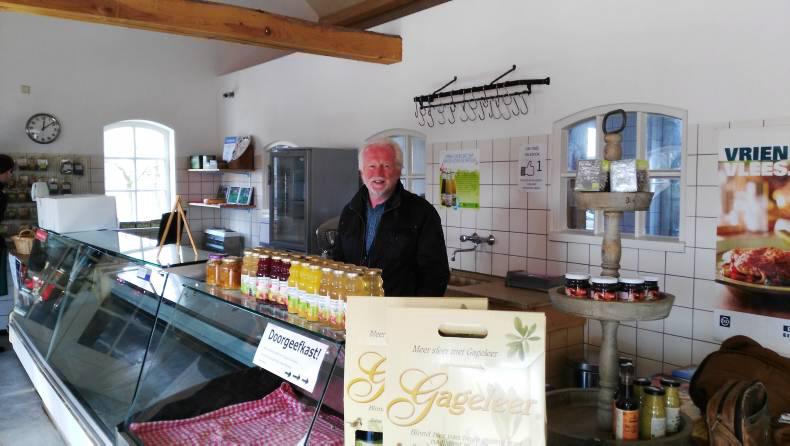
Jan is currently realising his mission, along with his wife and children, in the form of a beef, vegetable and fruit farm located in southern Holland, where everything they produce is sold in the family’s farm shop.
The farm enterprise is a source of great pride to the couple, who took over from Jan’s father in the mid-1980s. And they have much cause to be proud, as the farm’s popularity in this region is immense, with 11,000 paying visitors coming to the farm in 2015.
Boerderij ‘t Schop, as the farm is known, was built over a century ago by the great grandfather van den Broek, who kept a few dairy cows, pigs and chickens. The farm remained a dairy enterprise throughout the generations until Jan took it over.
Irish Angus in the herd
Dairy quotas were applied across Europe in 1984, at which time Jan and his father decided to switch out of dairy into beef. The family started out with the French breed Blonde d’Aquitaine, but have since added Irish Angus beef to their herd. At the moment, the farm has about 80 beef cattle.
Jan says the family invested in Angus due to the hardiness of this breed, which is left to graze all year round on the 120ha natural grazing area.
We experience a huge gap between the soil and the plate
On the van den Broek farm, the Angus bull mates with the cows in July, meaning calving takes place throughout April and May.
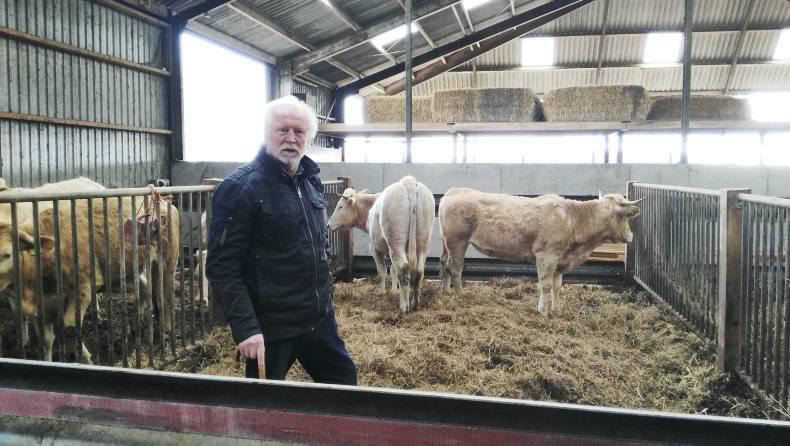
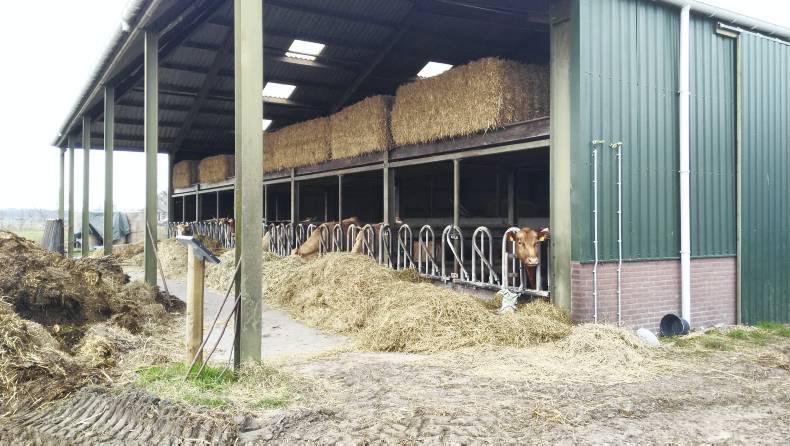
When the Irish Farmers Journal visited the farm this month, the cows were still housed, munching on organic fodder, with plenty of roaming space. Jan says they will be let out to graze in mid-April when the next batch of calves are born.
The cattle are slaughtered by a local butcher, who lives approximately 20km away from the van den Broek farm, but all the organic meat is sold either in the farm shop or in other farm shops in the surrounding area, meaning the family has much more control over the final price they get paid for their beef.
Listen to an interview with Jan van den Broek below
Origin of food
The farm is also home to 0.75 acres of vegetable and fruit gardens, all of which are also sold in the farm shop.
According to Jan, being able to sell the vegetables he grows in his own shop is the only sustainable economic model for his farm.
“We could not produce on this small scale if we did not sell the vegetables ourselves,” he says.
He also elaborates on his mission to make people confront the origin of their food.
“We experience a huge gap between the soil and the plate,” says Jan. “People don’t know what they eat and it’s not some theoretical thing, it is real. Most young people, and not just those in big cities, don’t understand where their food comes from. So we try to teach them about this connection.”
Jan thinks organic farming is the way of the future, and says it is not just a technical thing but a way of thinking.
It’s not just about what mineral is lacking in the soil or about animal welfare. It’s all of this together with a clear focus on sustainability
“You must have a fully holistic approach in organic farming,” he says. “It’s not just about what mineral is lacking in the soil or about animal welfare. It’s all of this together with a clear focus on sustainability.”
The van den Broek farm was awarded the EKO Certificate for Organic Farming in 2000, an award which indicates not only that the farm is certified organic but also that it pays extra attention to sustainability.
This extra attention comes in the form of the cooking classes that are run in the farm shop. This involves participants picking the vegetables and cooking them before sitting down to eat, meaning they fully live the “farm to fork” experience.
The couple also participate in social farming schemes, like those run in Ireland, whereby they welcome people who have been ill to come and work with nature on the farm to improve their mental and physical health.
Organic farming in the Netherlands
Jan and his wife do not receive extra subsidies from the government for farming organically in the Netherlands but, like all organic farmers in the country, they are automatically eligible for the greening payment on top of their basic payment under the CAP 2014-2020.
The organic sector declined in the Netherlands between 2007 and 2009, when the area under organic farming dropped by 2,125ha. Simultaneously, the number of organic holdings dropped from around 1,160 to 1,110.
However, according to the Dutch Department of Agriculture, the sector began to improve in 2014, with the number of organic businesses rising to 1,650 and agricultural land area use rising to more than 55,000ha.
Also, sales of Dutch organic products have risen strongly. Export sales in the Dutch organic sector amounted to €928m in 2014 – up 11% compared to 2013.
Neighbouring countries remain the most important markets for Dutch exports of organic products, with Germany being by far the most important export market, with a share of over 40%.
However, Jan says the Netherlands could still do more when it comes to organic farming.
“Still only about 2% of land is farmed organically in the country,” he says. “We can do better than that. The future of the soil and farming relies on it.”
Largest organic farm in Ireland opens its gates to the public


SHARING OPTIONS