


Trading off the public health measures against their economic cost has become a theme in COVID-19 policy debates over the last few weeks.
Most of the developed world is in lockdown, the world economy has been put to sleep in the interest of saving lives and avoiding meltdown in the hospitals. This comes at huge economic cost and, especially in the US, there are pressures to end the public health measures as soon as possible in order to resume normal economic functioning. But it is not clear that such a simple choice is available – some commentators have even reduced it to a callous comparison of GDP lost against lives saved.
Presumption
The presumption behind this calculus is that the economy, if it is switched back on again within weeks, or even a few months, will rebound immediately and usher in a rapid recovery. Unless the epidemiologists are seriously mistaken, this is far too simple and there is no automatic trade-off.
Relaxing the public health measures too soon is very risky
Switch off the public health measures too early and the subsequent recovery will not be a snap-back. It could be interrupted very quickly by a new policy imperative, the renewal of public health measures to interrupt a second outbreak of the pandemic. Until such time as an effective and safe vaccine is widely available, no earlier than mid-2021 according to the experts, possibly later, relaxing the public health measures too soon is very risky. The correct inference to draw is that an early return to business as usual is not an available option, whatever decisions are taken by governments.
Governments everywhere have scrambled to devise an adequate response and a pattern has emerged
There is less talk recently of a V-shaped recovery and the consensus in the intense debate among macroeconomics experts is that the world economy will take a major hit from the virus.
There is no avoiding the consequences, merely alternative schemes to minimise the costs and to distribute them fairly, discussed at length on economics websites such as VoxEU.org. Governments everywhere have scrambled to devise an adequate response and a pattern has emerged.
Since 20% and more of the employed workforce has faced instant loss of employment in many countries, the priority has been the provision of income to affected households, deferral of tax and utility payments and credit forbearance for both firms and households.
Assistance to firms is justified on the basis that many are viable but fragile and their survival through the crisis needs support
Income support for those who have lost their jobs is a legitimate expectation and governments will honour it, come what may. Assistance to firms is justified on the basis that many are viable but fragile and their survival through the crisis needs support. Keeping these firms together avoids the loss of firm-specific skills by employees and the costs associated with bankruptcy and liquidation.
Challenge
But there is no way to avoid these costs entirely. Some firms were struggling before the virus struck, in bricks-and-mortar retail for example, and the epidemic will hasten their demise. It will be a challenge for governments to avoid the expenditure of scarce funds on futile aid to firms unlikely to survive and unfocused schemes of this type can turn into indiscriminate corporate welfare.
Physical assets can become stranded through permanent shifts in the composition of demand
A pandemic which threatens lives has the potential to damage long-run productive potential in ways beyond the impact on the size and skill-retention of the labour force.
Physical assets can become stranded through permanent shifts in the composition of demand. This has been seen most dramatically in the travel and hospitality industries and it would be rash to conclude that the effect is temporary.
Firms have discovered that remote working is more feasible than they thought and may trim their travel budgets for the longer term.
That means some aircraft, city centre hotels and airport facilities will become stranded assets. Some firms may also conclude that they need less office space than currently, which will strand commercial property. The holiday market could change shape too – people will fear getting marooned in distant locations, or on cruise liners and opt for holidays nearer home.
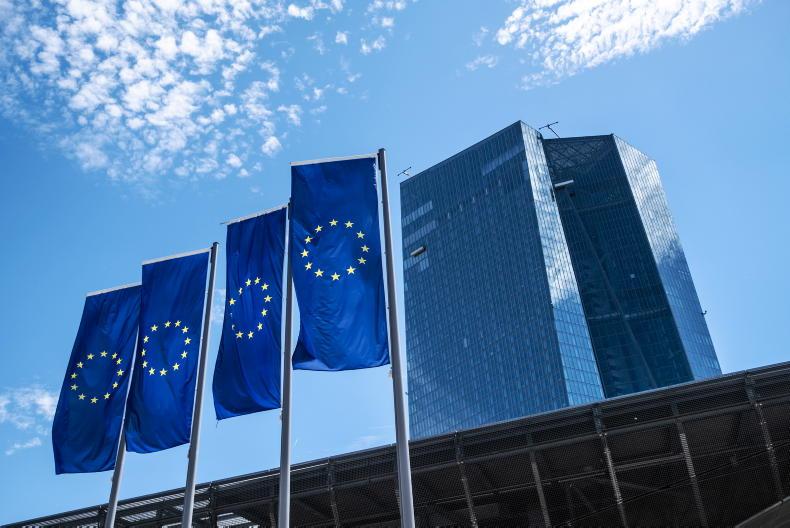
There are two serious threats to a successful re-emergence of the eurozone economies to an early recovery.
Italian public debt is already 135% of GDP
The first is the willingness of the European authorities to support weaker states, especially Italy, through the crisis. Italian public debt is already 135% of GDP. A couple of years of 10% budget deficits against a declining GDP would see the ratio hit 170% or higher.
The European Central Bank has been buying Italian bonds these last few weeks to keep the lid on borrowing costs, but their resolve will be tested well into next year.
The second threat concerns the banks.
Several European banks still have weak balance sheets 10 years after the last crisis and will take another hit from forbearance policies and the inevitable bad debts. There could be a further need for bank rescues before this is over, not just in Italy, and the expectations of early resolution are unrealistic.




SHARING OPTIONS