


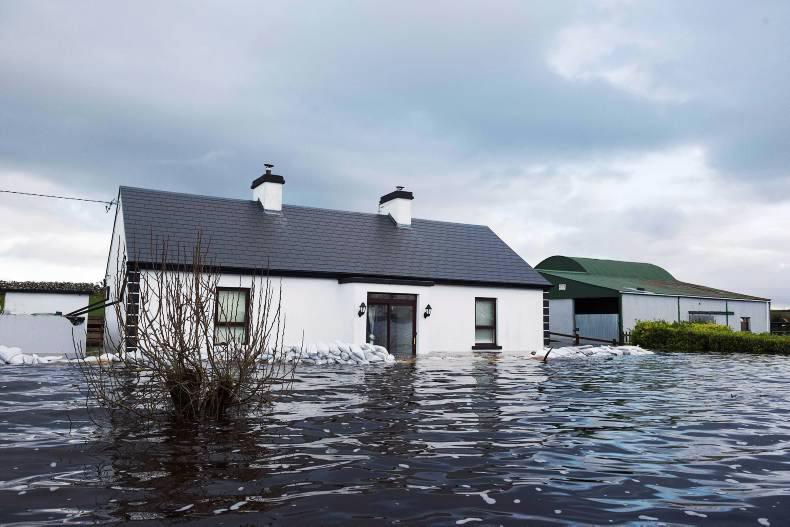
The Government has been browbeating insurance companies about flood cover without making clear what they want them to do.
As a general rule, politicians want insurers to do three inconsistent things simultaneously: first, provide cover to all-comers at low premiums; second, pay out on claims, generously and promptly; and finally, stay solvent.
Doing the first and second makes the third unlikely for obvious reasons. Irish insurance companies have not always been successful in staying solvent and the Government has a poor record in insurance supervision. There were two major insurance crashes back in the 1980s when both PMPA and the Insurance Corporation of Ireland, owned by AIB, went wallop.
A levy on policyholders was instituted to clean up the mess and there will be levies indefinitely following the more recent failures of Quinn Insurance and of Setanta. Several other companies, including FBD and the Irish unit of RSA, had to strengthen their balance sheets recently in order to stay inside solvency guidelines.
It is ironic that the companies are under pressure to relax underwriting standards just now: a new EU supervisory regime for insurers, called Solvency II, came into effect on 1 January. Its principal objective is to tighten up the underwriting process and the Central Bank has new powers to ensure that insurers maintain adequate reserves to meet claims. Proper implementation of Solvency II should reduce sharply the incidence of company failures and the consequent levy impositions on policyholders.
Two weeks ago, An Taoiseach was quoted as follows in the Irish Times: “Major insurance companies are making ‘sizeable’ profits in Ireland and must do more for those who have been flooded or face a high risk of being affected.”
The companies will doubtless have informed Mr Kenny that they have been making losses, not profits, on most lines of insurance business in Ireland in recent years. The profitability of insurance companies is driven largely by the “combined ratio”, the relationship between the claims and expenses they have incurred and the premium income they have earned.
Surplus
If the combined ratio is below 100, they have made an underwriting surplus and the return they earn on their investments will put them in overall profit. Since premium income is received before claims are paid out, the companies have cash to invest, usually in low-risk government bonds and bank deposits. Investment returns have been very poor in the low-interest environment of recent years and the combined ratio in the property/casualty business, which includes motor and household policies, has been well above 100.
If further risks to insurance company solvency are to be avoided they need to increase premiums and to avoid underwriting mistakes. Indeed the Central Bank, which has been seeking to strengthen its supervision capabilities, will expect them to do both of these things. The companies, in short, are in no position to provide flood cover in high-risk areas at normal premiums and the Central Bank would object were they foolish enough to do so.
Since climate scientists fear that flooding in western Europe is set to increase, there is a serious policy problem. It cannot be solved solely by engineering works and there may well be buildings – residential and commercial – which cannot be defended at manageable cost. They will have to be abandoned.
In some cases, for example in coastal towns and cities vulnerable to rising sea levels, it may be worthwhile to invest in engineering solutions. There also needs to be a more coherent system of flood warnings and of cost-effective mitigation measures. Surprise floods do damage that could be avoided with adequate notice.
And it is high time there was a comprehensive investigation into the planning mistakes of recent decades. It appears that numerous residential developments were permitted by local authorities in areas which should have been avoided.
The floods appear finally to be subsiding and there is an opportunity to move on from emergency response to a more considered strategy. Insurance companies, already under financial pressure, need to be kept solvent while this is undertaken.





SHARING OPTIONS