


The heavy rain over the weekend has put a stop to our grazing the lightest weanlings by day and getting the slurry out on the freshly grazed paddocks.
While the slurry is in control, we have much less out by this time than normal and the tanks are getting noticeably fuller. We will transfer slurry in between tanks if we have to but it’s a job that is a complete waste of time and diesel.
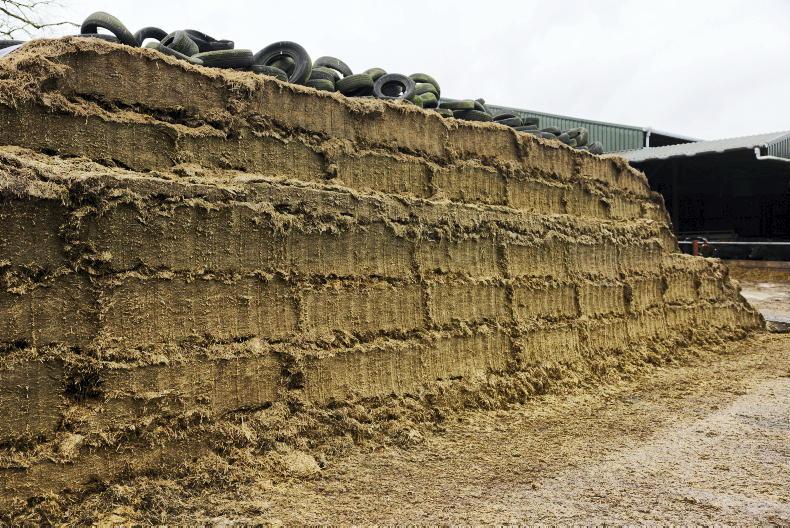
Meanwhile, I cannot ever remember a case of listeria before. I mentioned a few weeks ago that we were mixing hay with some mediocre silage made in messy conditions. The end of that pit has the remains of silage that must be about three years old but we want to clean it out and start with a completely fresh section of silage slab for the 2016 cut.
I am blaming that old silage which was probably contaminated with some soil for the young bull contracting listeria. The symptoms were classic listeria – slightly unsteady gait, a drooping ear and general listlessness.
The vet gave him a long-acting antibiotic – we put him in a straw-bedded house. So far, he has continued to eat and has got over the first crucial 24 hours, so we will see how he goes.
Meantime, the wheaten straw from the 2014 harvest has gone to the mushroom composters and, while there has been some waste, mainly the bales on top of the pile, the condition of the bulk of the bales is better than I expected.
While I have been fully paid, the hard core base I put in to store straw on is much muckier than I would like and as for the discarded top layer of bales, they are really only fit for spreading as farmyard manure. As the wet weather goes on, I am resigned to spreading it after the harvest rather than getting it out of the way on to tillage land and being ploughed down this spring.
The more lectures and demonstrations I go to, the more cautious I am becoming about compaction and damage to soil structure, so we will postpone this type of work until a time when likely damage is minimised.





SHARING OPTIONS