The budget is now a matter of record.
As we digested the details of Paschal Donohoe's and Jack Chambers' speeches and the detailed press release from Martin Heydon relating to the Department of Agriculture’s budget, the verdict in Farmers Journal towers was that of a scoreless draw.
Nothing lost, little gained. I heard a farm leader use the very same words a few hours later.
So, forgive me if I’ve moved from thinking about Budget 2026 (there’s a wealth of information and analysis across this week’s paper and this website, including two Budget 2026 podcast specials.)
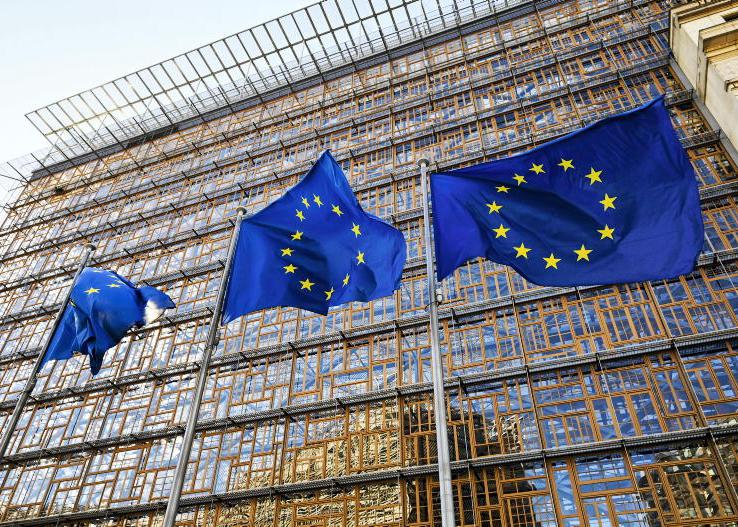
I’m already thinking about a different budget - that of the European Union for most of the next decade.
Because the man best placed to maximise that budget for Ireland, and in particular the CAP budget for Ireland’s farmers, is suddenly more vulnerable than he has been at any stage of the last 14 years.
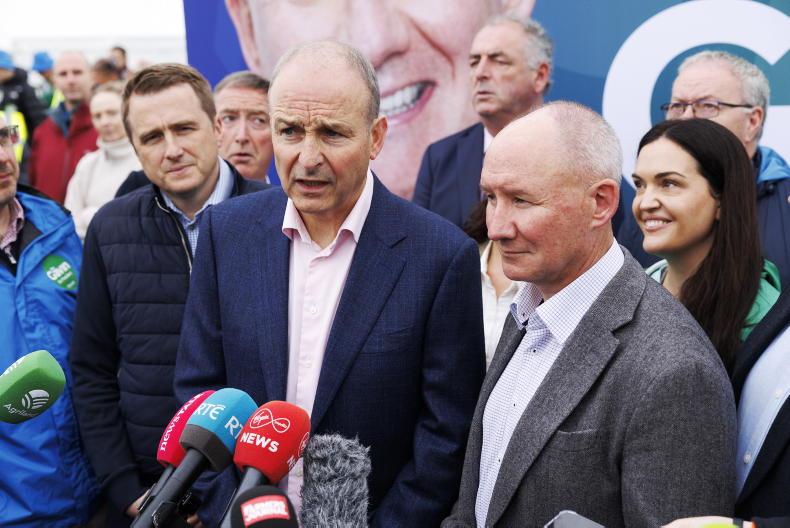
The question I’ve been wrestling with is this; will the fallout from Jim Gavin’s withdrawal from the presidential election cost Micheál Martin the leadership of Fianna Fáil?
Tenure
Not immediately, would be my opinion, but it may shorten his tenure.
Martin is due to remain as Taoiseach through 2026. Crucially, that would mean chairing the EU’s Presidential Council from July through to the end of December next year.
It could be a vital period for the medium-term future of farming, as the Irish Agriculture minister, presumably Martin Heydon, will oversee crucial CAP talks among his counterparts from the other 26 member states.
One of the biggest issues facing the CAP is the budget proposal that would see up to 20% of the current funding for farming lost under the Von der Leyen/Serafin plan.
It will be the Irish Taoiseach’s job to improve on that bleak scenario; it’s the prime ministers who agree the multi-annual financial framework on behalf of the member states. Micheál Martin is well-known and respected across Europe and among the EU's prime ministers. He would, I think, carry more weight as chair of the EU council than any potential successor.
Chairing that council would be a final crowning achievement for Micheál Martin. He has already become the second longest-serving leader of his party, having brought it from the nadir of 2011 back to being the largest party in the country, in the Dáil, the Seanad and across local government.
Only Éamon de Valera led the party he founded for longer than the 15 years Martin will have chalked up by next January. Could his critics within the parliamentary party have the numbers to take that ministerial council cup from his lips? Only time will tell. If they do, let’s hope farmers aren’t victims of the transition, losing out on CAP funding for the years from 2028 through to 2035.
Martin knew that a presidential campaign involving Bertie Ahern would quickly descend into a debate around Fianna Fáil’s stewardship of the country and the economy as we went from boom to bust
Martin certainly invested a lot of personal political capital in pushing Jim Gavin as his party’s nominee for the presidency. People forget now, but up until Mary Robinson’s surge from the left into the centre of Irish political life during the 1990 presidential election campaign, being the Fianna Fáil presidential nominee had always resulted in becoming president. Since then, only Mary McAleese has worn the Fianna Fáil jersey into the winner’s enclosure. She was the party’s nominee, but came from outside party politics.
It’s hard to blame Micheál Martin for trying to replicate that winning formula.
It seems obvious to me that Jim Gavin was selected by Micheál Martin and his closest allies to ensure that Bertie Ahern would not become the party’s nominee.
Remember, in 2012, Bertie Ahern resigned from Fianna Fáil after Micheál Martin had proposed his expulsion. He only rejoined the party two years ago.
Flagbearer
There’s a difference in being allowed back into the fold and being asked to become the party’s flagbearer once more. Martin knew that a presidential campaign involving Bertie Ahern would quickly descend into a debate around Fianna Fáil’s stewardship of the country and the economy as we went from boom to bust.
Had light-touch regulation as the economy surfed on the crest of the Celtic Tiger wave been a primary cause in that wave crashing on the rocks of the 2007-08 global downturn? Had “everyone partied” as Bertie Ahern once contended?
Finding a Dublin candidate outflanked Bertie Ahern’s proponents in the party.
The emergence of Billy Kelleher as the alternative to Gavin forced Martin to personally and openly endorse his preferred candidate. He was now a hostage to Gavin’s fortunes. The quiet, understated approach of Gavin as a football manager and rules administrator failed to fit the bill.
“We’ll do our talking on the pitch” is fine when there is a match to be played and won, but when the pitch is the national airwaves, and the match is verbal, that won’t work. And so, the pressure had mounted even before Gavin accompanied Michael Martin to the National Ploughing Championships.
Judgement call
Jim Gavin stepped away from the presidential election following confirmation that he failed to repay €3,300 to a former tenant who had inadvertently overpaid after the rental period had ended.
He didn’t bring Ray Burke back into cabinet, as Bertie Ahern did in 1997. Burke had been jettisoned by Albert Reynolds when he succeeded Charlie Haughey as party leader and Taoiseach in 1992.
Ahern appointed him as Minister for Foreign Affairs in 1997, but Burke had to resign within months as allegations that he had received corrupt payments, long-rumoured, resurfaced. Burke would eventually serve a prison sentence.
Like Al Capone, it was tax avoidance of dubious payments that led to his conviction rather than the payments themselves. I would argue that appointing Ray Burke back into cabinet was a much more serious error of judgement than anything that has been associated with Jim Gavin.
Opportunity for mischief
The Irish people now have a unique chance to act the jinnet. Jim Gavin has withdrawn from the presidential election, but he must remain on the ballot as per the Presidential Election Act of 1993.
The only way that could possibly change would be if the Dáil and Seanad were to pass emergency legislation. We can discount that possibility now; there’s less than two weeks to go. And the electoral commission has confirmed that votes for Jim Gavin will be valid, will be counted, and will be transferable should he finish below the other two candidates with neither of them securing a majority of votes, necessitating a second count.
This means that Jim Gavin could be legally elected president, despite having withdrawn his candidacy. And the Irish people’s innate sense of the ridiculous makes this a possibility, if only a remote one.
Satirical works
Our proud literary tradition is littered with satirical works, from Gulliver’s Travels, written by Dean of Christchurch Jonathan Swift, to James Joyce’s Finnegan’s Wake, Flann O’Brien’s The Third Policeman, through to Paul Hpward's Ross O’Carroll Kelly novels and I, Keano combining Saipan with Ancient Rome. That was co-written by Arthur Mathews of Fr Ted fame, Paul Woodful, his former colleague in U2 spoof 'the Joshua Trio' and Gary Cooke, one of the Après Match team, who lampooned sports punditry on the same shows as the punditry itself. We sent Dustin the Turkey puppet to the Eurovision song contest with a song that lampooned the event itself. Only in Ireland.
We are also the nation that hijacked online polls all over the world. Irish votes saw A Nation Once Again voted the best song of all time in a BBC World Service poll.
David Bowie toured in the early days of the internet, but allowed his fans to pick what songs he should perform from his pretty wonderful back catalogue when he visited their country.
Only the Irish chose to include his 1967 novelty song The Laughing Gnome a result Bowie reportedly found hilarious, but ultimately ignored.
In 1999, little-known Irish footballer Ronnie O’Brien, had secured a transfer to Juventus from Middlesbrough. He never made a league appearance for either club, eventually spending most of a decent career in the US.
As the 20th century was drawing to a close, TIME magazine held an online poll to decide who was the person of the century.
They were surprised to find O’Brien leading the poll, and eventually disqualified him as a 'whimsical candidate'. Albert Einstein eventually won.
Unfortunately, the electoral commission cannot dismiss Jim Gavin as a 'whimsical candidate'. The Presidential Council can do something along those lines, should Gavin actually win, but only after the election has been completed.
Practical joke
Of course, Gavin himself would not accept the presidency should he win. The man may have made mistakes, but his entire life is one of service, to his nation in the Defence Forces, and to the GAA as a player, manager and administrator. I can’t envisage him having a Frodo Baggins moment, declaring “the presidency is mine” if the Irish people decide to play a practical joke on the electoral process.
Jim Gavin is not an outlier in terms of recent presidential elections. We have seen a slew of candidates who came from outside politics with impressive records of service in Irish life get destroyed - Adi Roche, who co-founded the Chernobyl Children’s project; Mary Davis, synonymous with the Special Olympics, not just in Ireland but worldwide, and Joan Freeman, who founded Pieta House, all came under intense and - at times - pretty vicious personal scrutiny during their campaigns.
And it’s not just people from outside politics. Prior to her withdrawal as the Fine Gael nominee, Mairead McGuinness had to deal with stories around her rental of an office on the farm during her period in European politics and her level of activity when coping with injuries received in a car crash back in 2003.
I happen to remember meeting her after her accident, as I had recently worked for her in the Farming Independent, and she was in considerable pain. Being the trooper she is, she continued to work to the best of her ability while dealing with her injuries.
The point is, we’re turning the presidential election into something nobody will want to go near. The people I have named above represent the best of us, and they all suffered as a result of allowing their names to go forward to be our head of state.
Perhaps the nature of the presidential campaign lends itself to this kind of intense scrutiny. There are no manifestos, no policy platforms, simply a few people standing on their record of achievement and their force of personality. Their public life achievements are up for examination, and every detail of their private life is too. Very few of us would come through that cauldron without some flaws appearing; I know I certainly wouldn’t.
The danger is that the centre of the presidential campaign becomes completely hollowed out. We could end up with a situation where very serious flaws become indistinguishable from comparatively minor ones in terms of outcome. And that opens the door for people of very dubious character to contest and win the presidency. We've seen this happen in other countries
There is one other interesting aspect of the presidential electoral process to be watched. Should Jim Gavin receive 25% of a quota, which would be anything over one-eighth (12.5%) of the overall vote on 24 October, he would receive up to €250,000 in electoral expenses. Quite a lot of those expenses, particularly posters, pamphlets and election material, had been printed prior to his withdrawal.
Cynicism abounds
I don’t think I’m the only one who feels a distinct air of cynicism around this election. The relentless pursuit of weakness in the candidates is close to the line of acceptability. I think Joe Brolly and Ivan Yates both tripped across that line in recent days.
In particular, Yates’s contention that the Heather Humphreys campaign should “smear the bejaysis” out of Catherine Connolly falls short of what one would want a former government minister to contribute to the national dialogue.
If it was an opinion genuinely held for the candidate of the party he once sought the leadership of, Yates only had to call his former protégé, Paul Kehoe, who is Heather Humphreys’ campaign manager for a quiet word. Saying it in public actually has hampered the Humphreys team, as every question raised about Catherine Connolly by them will now be seen by a large section of the public as negative campaigning, and perhaps smearing. The entire Fine Gael machine will be operating under a yellow card for the last two weeks of the campaign.
Farm leadership under similar scrutiny
One final aside. In recent years we have seen a similar air of cynical assessment attached to the actions, and sometimes the motivations, of leaders of farm organisations.
The proliferation of farmer representation is partly a result of specialisation, where most farmers now focus mainly on a single enterprise, as opposed to the mixed farms that once abounded.
But it’s also, in part, a reflection of the emergence of social media during this 21st century, where anyone can read anyone else’s opinion. And it’s easy to knock those who step forward to represent their community, their parish or county, or indeed, their fellow farmers.
For instance, it would be perfectly easy to couch the budgetary provision for the tillage sector as a failure on behalf of the IFA and the grain growers, who sought an additional €60m and €80-90m respectively.
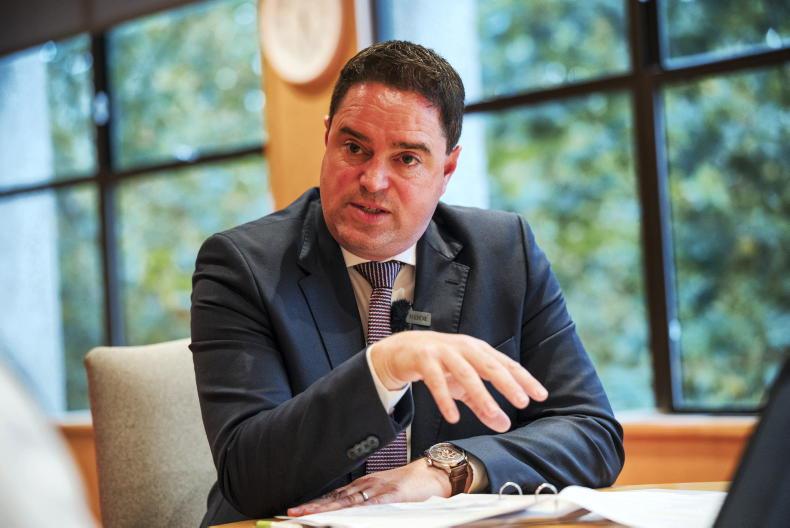
Minister Martin Heydon interviewed on Budget Day, discussing key measures for the farming sector. \ Claire Nash
That’s a false narrative. All farm organisations can do is lobby hard, it’s the politicians who must deliver. And in fairness to Martin Heydon, he could reasonably assert that €60m might have been found for tillage if it weren’t for the spiralling cost of TB control.
A cynic might say you are judged on results, not excuses. I think with the state of the world, we need critical analysis, absolutely, but a little less cynicism and a little more understanding and appreciation of each other.
The budget is now a matter of record.
As we digested the details of Paschal Donohoe's and Jack Chambers' speeches and the detailed press release from Martin Heydon relating to the Department of Agriculture’s budget, the verdict in Farmers Journal towers was that of a scoreless draw.
Nothing lost, little gained. I heard a farm leader use the very same words a few hours later.
So, forgive me if I’ve moved from thinking about Budget 2026 (there’s a wealth of information and analysis across this week’s paper and this website, including two Budget 2026 podcast specials.)
I’m already thinking about a different budget - that of the European Union for most of the next decade.
Because the man best placed to maximise that budget for Ireland, and in particular the CAP budget for Ireland’s farmers, is suddenly more vulnerable than he has been at any stage of the last 14 years.
The question I’ve been wrestling with is this; will the fallout from Jim Gavin’s withdrawal from the presidential election cost Micheál Martin the leadership of Fianna Fáil?
Tenure
Not immediately, would be my opinion, but it may shorten his tenure.
Martin is due to remain as Taoiseach through 2026. Crucially, that would mean chairing the EU’s Presidential Council from July through to the end of December next year.
It could be a vital period for the medium-term future of farming, as the Irish Agriculture minister, presumably Martin Heydon, will oversee crucial CAP talks among his counterparts from the other 26 member states.
One of the biggest issues facing the CAP is the budget proposal that would see up to 20% of the current funding for farming lost under the Von der Leyen/Serafin plan.
It will be the Irish Taoiseach’s job to improve on that bleak scenario; it’s the prime ministers who agree the multi-annual financial framework on behalf of the member states. Micheál Martin is well-known and respected across Europe and among the EU's prime ministers. He would, I think, carry more weight as chair of the EU council than any potential successor.
Chairing that council would be a final crowning achievement for Micheál Martin. He has already become the second longest-serving leader of his party, having brought it from the nadir of 2011 back to being the largest party in the country, in the Dáil, the Seanad and across local government.
Only Éamon de Valera led the party he founded for longer than the 15 years Martin will have chalked up by next January. Could his critics within the parliamentary party have the numbers to take that ministerial council cup from his lips? Only time will tell. If they do, let’s hope farmers aren’t victims of the transition, losing out on CAP funding for the years from 2028 through to 2035.
Martin knew that a presidential campaign involving Bertie Ahern would quickly descend into a debate around Fianna Fáil’s stewardship of the country and the economy as we went from boom to bust
Martin certainly invested a lot of personal political capital in pushing Jim Gavin as his party’s nominee for the presidency. People forget now, but up until Mary Robinson’s surge from the left into the centre of Irish political life during the 1990 presidential election campaign, being the Fianna Fáil presidential nominee had always resulted in becoming president. Since then, only Mary McAleese has worn the Fianna Fáil jersey into the winner’s enclosure. She was the party’s nominee, but came from outside party politics.
It’s hard to blame Micheál Martin for trying to replicate that winning formula.
It seems obvious to me that Jim Gavin was selected by Micheál Martin and his closest allies to ensure that Bertie Ahern would not become the party’s nominee.
Remember, in 2012, Bertie Ahern resigned from Fianna Fáil after Micheál Martin had proposed his expulsion. He only rejoined the party two years ago.
Flagbearer
There’s a difference in being allowed back into the fold and being asked to become the party’s flagbearer once more. Martin knew that a presidential campaign involving Bertie Ahern would quickly descend into a debate around Fianna Fáil’s stewardship of the country and the economy as we went from boom to bust.
Had light-touch regulation as the economy surfed on the crest of the Celtic Tiger wave been a primary cause in that wave crashing on the rocks of the 2007-08 global downturn? Had “everyone partied” as Bertie Ahern once contended?
Finding a Dublin candidate outflanked Bertie Ahern’s proponents in the party.
The emergence of Billy Kelleher as the alternative to Gavin forced Martin to personally and openly endorse his preferred candidate. He was now a hostage to Gavin’s fortunes. The quiet, understated approach of Gavin as a football manager and rules administrator failed to fit the bill.
“We’ll do our talking on the pitch” is fine when there is a match to be played and won, but when the pitch is the national airwaves, and the match is verbal, that won’t work. And so, the pressure had mounted even before Gavin accompanied Michael Martin to the National Ploughing Championships.
Judgement call
Jim Gavin stepped away from the presidential election following confirmation that he failed to repay €3,300 to a former tenant who had inadvertently overpaid after the rental period had ended.
He didn’t bring Ray Burke back into cabinet, as Bertie Ahern did in 1997. Burke had been jettisoned by Albert Reynolds when he succeeded Charlie Haughey as party leader and Taoiseach in 1992.
Ahern appointed him as Minister for Foreign Affairs in 1997, but Burke had to resign within months as allegations that he had received corrupt payments, long-rumoured, resurfaced. Burke would eventually serve a prison sentence.
Like Al Capone, it was tax avoidance of dubious payments that led to his conviction rather than the payments themselves. I would argue that appointing Ray Burke back into cabinet was a much more serious error of judgement than anything that has been associated with Jim Gavin.
Opportunity for mischief
The Irish people now have a unique chance to act the jinnet. Jim Gavin has withdrawn from the presidential election, but he must remain on the ballot as per the Presidential Election Act of 1993.
The only way that could possibly change would be if the Dáil and Seanad were to pass emergency legislation. We can discount that possibility now; there’s less than two weeks to go. And the electoral commission has confirmed that votes for Jim Gavin will be valid, will be counted, and will be transferable should he finish below the other two candidates with neither of them securing a majority of votes, necessitating a second count.
This means that Jim Gavin could be legally elected president, despite having withdrawn his candidacy. And the Irish people’s innate sense of the ridiculous makes this a possibility, if only a remote one.
Satirical works
Our proud literary tradition is littered with satirical works, from Gulliver’s Travels, written by Dean of Christchurch Jonathan Swift, to James Joyce’s Finnegan’s Wake, Flann O’Brien’s The Third Policeman, through to Paul Hpward's Ross O’Carroll Kelly novels and I, Keano combining Saipan with Ancient Rome. That was co-written by Arthur Mathews of Fr Ted fame, Paul Woodful, his former colleague in U2 spoof 'the Joshua Trio' and Gary Cooke, one of the Après Match team, who lampooned sports punditry on the same shows as the punditry itself. We sent Dustin the Turkey puppet to the Eurovision song contest with a song that lampooned the event itself. Only in Ireland.
We are also the nation that hijacked online polls all over the world. Irish votes saw A Nation Once Again voted the best song of all time in a BBC World Service poll.
David Bowie toured in the early days of the internet, but allowed his fans to pick what songs he should perform from his pretty wonderful back catalogue when he visited their country.
Only the Irish chose to include his 1967 novelty song The Laughing Gnome a result Bowie reportedly found hilarious, but ultimately ignored.
In 1999, little-known Irish footballer Ronnie O’Brien, had secured a transfer to Juventus from Middlesbrough. He never made a league appearance for either club, eventually spending most of a decent career in the US.
As the 20th century was drawing to a close, TIME magazine held an online poll to decide who was the person of the century.
They were surprised to find O’Brien leading the poll, and eventually disqualified him as a 'whimsical candidate'. Albert Einstein eventually won.
Unfortunately, the electoral commission cannot dismiss Jim Gavin as a 'whimsical candidate'. The Presidential Council can do something along those lines, should Gavin actually win, but only after the election has been completed.
Practical joke
Of course, Gavin himself would not accept the presidency should he win. The man may have made mistakes, but his entire life is one of service, to his nation in the Defence Forces, and to the GAA as a player, manager and administrator. I can’t envisage him having a Frodo Baggins moment, declaring “the presidency is mine” if the Irish people decide to play a practical joke on the electoral process.
Jim Gavin is not an outlier in terms of recent presidential elections. We have seen a slew of candidates who came from outside politics with impressive records of service in Irish life get destroyed - Adi Roche, who co-founded the Chernobyl Children’s project; Mary Davis, synonymous with the Special Olympics, not just in Ireland but worldwide, and Joan Freeman, who founded Pieta House, all came under intense and - at times - pretty vicious personal scrutiny during their campaigns.
And it’s not just people from outside politics. Prior to her withdrawal as the Fine Gael nominee, Mairead McGuinness had to deal with stories around her rental of an office on the farm during her period in European politics and her level of activity when coping with injuries received in a car crash back in 2003.
I happen to remember meeting her after her accident, as I had recently worked for her in the Farming Independent, and she was in considerable pain. Being the trooper she is, she continued to work to the best of her ability while dealing with her injuries.
The point is, we’re turning the presidential election into something nobody will want to go near. The people I have named above represent the best of us, and they all suffered as a result of allowing their names to go forward to be our head of state.
Perhaps the nature of the presidential campaign lends itself to this kind of intense scrutiny. There are no manifestos, no policy platforms, simply a few people standing on their record of achievement and their force of personality. Their public life achievements are up for examination, and every detail of their private life is too. Very few of us would come through that cauldron without some flaws appearing; I know I certainly wouldn’t.
The danger is that the centre of the presidential campaign becomes completely hollowed out. We could end up with a situation where very serious flaws become indistinguishable from comparatively minor ones in terms of outcome. And that opens the door for people of very dubious character to contest and win the presidency. We've seen this happen in other countries
There is one other interesting aspect of the presidential electoral process to be watched. Should Jim Gavin receive 25% of a quota, which would be anything over one-eighth (12.5%) of the overall vote on 24 October, he would receive up to €250,000 in electoral expenses. Quite a lot of those expenses, particularly posters, pamphlets and election material, had been printed prior to his withdrawal.
Cynicism abounds
I don’t think I’m the only one who feels a distinct air of cynicism around this election. The relentless pursuit of weakness in the candidates is close to the line of acceptability. I think Joe Brolly and Ivan Yates both tripped across that line in recent days.
In particular, Yates’s contention that the Heather Humphreys campaign should “smear the bejaysis” out of Catherine Connolly falls short of what one would want a former government minister to contribute to the national dialogue.
If it was an opinion genuinely held for the candidate of the party he once sought the leadership of, Yates only had to call his former protégé, Paul Kehoe, who is Heather Humphreys’ campaign manager for a quiet word. Saying it in public actually has hampered the Humphreys team, as every question raised about Catherine Connolly by them will now be seen by a large section of the public as negative campaigning, and perhaps smearing. The entire Fine Gael machine will be operating under a yellow card for the last two weeks of the campaign.
Farm leadership under similar scrutiny
One final aside. In recent years we have seen a similar air of cynical assessment attached to the actions, and sometimes the motivations, of leaders of farm organisations.
The proliferation of farmer representation is partly a result of specialisation, where most farmers now focus mainly on a single enterprise, as opposed to the mixed farms that once abounded.
But it’s also, in part, a reflection of the emergence of social media during this 21st century, where anyone can read anyone else’s opinion. And it’s easy to knock those who step forward to represent their community, their parish or county, or indeed, their fellow farmers.
For instance, it would be perfectly easy to couch the budgetary provision for the tillage sector as a failure on behalf of the IFA and the grain growers, who sought an additional €60m and €80-90m respectively.

Minister Martin Heydon interviewed on Budget Day, discussing key measures for the farming sector. \ Claire Nash
That’s a false narrative. All farm organisations can do is lobby hard, it’s the politicians who must deliver. And in fairness to Martin Heydon, he could reasonably assert that €60m might have been found for tillage if it weren’t for the spiralling cost of TB control.
A cynic might say you are judged on results, not excuses. I think with the state of the world, we need critical analysis, absolutely, but a little less cynicism and a little more understanding and appreciation of each other.
SHARING OPTIONS