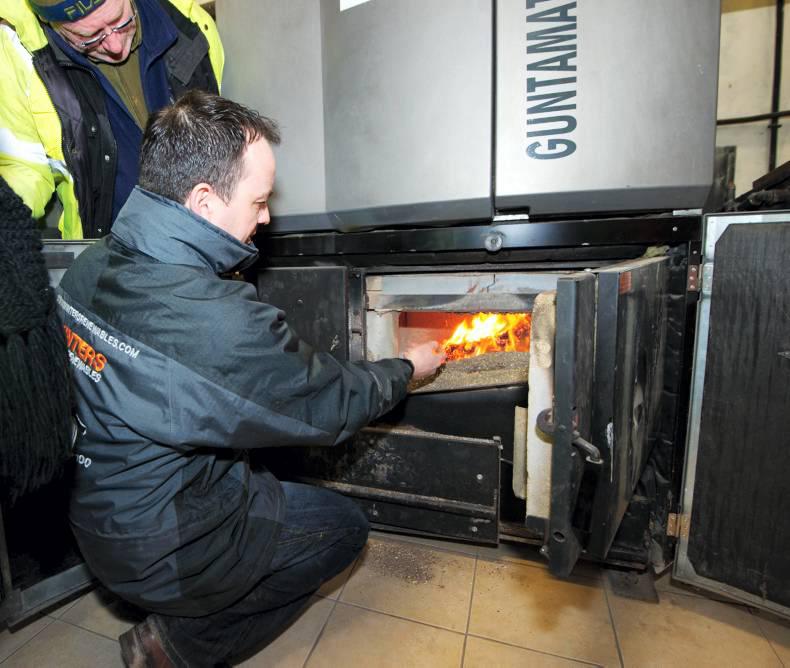
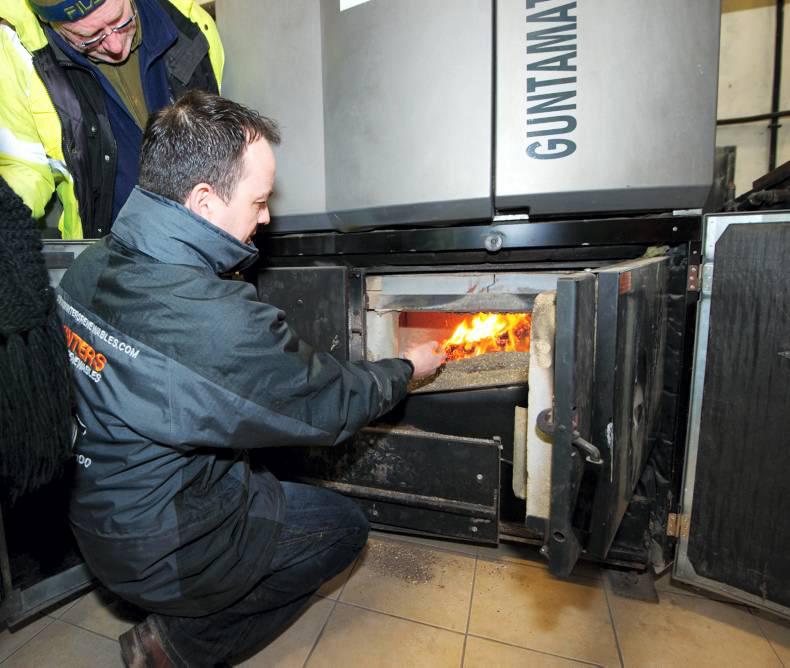
Gavins Winters of the Renewable Energy Business Network demonstrates a wood chip boiler.
ADVERTISEMENT
The IrBEA was one of the groups submitting reports to the the its submission, the IrBEA advocates for 15-year tariffs to make biomass more attractive than fossil fuels to heat business premises. For example, replacing a 100kW natural gas boiler with a wood pellet one should attract a payment of nearly €13,000 per year, according to the organisation.
ADVERTISEMENT
A similar scheme is in place in the UK and has proved beneficial to pig and poultry farmers in Northern Ireland. They are big heat users and many have moved to quickly install biomass boilers to cut expensive heating bills. In some cases, they can also get a payment for heating houses.
But the IrBEA says the incentive would be beneficial to the wider rural economy. “One of the more important benefits often overlooked is the benefit to the agriculture and forest industries. There are many new private forest plantations requiring thinnings. Many farmers have invested also in energy crops, and in some cases are left with no local market for the harvested crop,” the submission reads, adding that a support scheme would “help the biomass energy supply chain to mature and stimulate regional demand for forest thinnings, energy crops and other sources of biomass”.
The Government is considering a RHI scheme primarily to cut greenhouse gas emissions. Ireland has made European commitments to generate 12% of its heat from renewables by 2020 and the IrBEA says existing capacity should double to meet this target – with €500m in fines looming in case of failure.
This content is available to digital subscribers and loyalty code users only. Sign in to your account, use the code or subscribe to get unlimited access.
The reader loyalty code gives you full access to the site from when you enter it until the following Wednesday at 9pm. Find your unique code on the back page of Irish Country Living every week.
CODE ACCEPTED
You have full access to the site until next Wednesday at 9pm.
CODE NOT VALID
Please try again or contact support.
The IrBEA was one of the groups submitting reports to the the its submission, the IrBEA advocates for 15-year tariffs to make biomass more attractive than fossil fuels to heat business premises. For example, replacing a 100kW natural gas boiler with a wood pellet one should attract a payment of nearly €13,000 per year, according to the organisation.
A similar scheme is in place in the UK and has proved beneficial to pig and poultry farmers in Northern Ireland. They are big heat users and many have moved to quickly install biomass boilers to cut expensive heating bills. In some cases, they can also get a payment for heating houses.
But the IrBEA says the incentive would be beneficial to the wider rural economy. “One of the more important benefits often overlooked is the benefit to the agriculture and forest industries. There are many new private forest plantations requiring thinnings. Many farmers have invested also in energy crops, and in some cases are left with no local market for the harvested crop,” the submission reads, adding that a support scheme would “help the biomass energy supply chain to mature and stimulate regional demand for forest thinnings, energy crops and other sources of biomass”.
The Government is considering a RHI scheme primarily to cut greenhouse gas emissions. Ireland has made European commitments to generate 12% of its heat from renewables by 2020 and the IrBEA says existing capacity should double to meet this target – with €500m in fines looming in case of failure.
If you would like to speak to a member of our team, please call us on 01-4199525.
Link sent to your email address
We have sent an email to your address. Please click on the link in this email to reset your password. If you can't find it in your inbox, please check your spam folder. If you can't find the email, please call us on 01-4199525.
ENTER YOUR LOYALTY CODE:
The reader loyalty code gives you full access to the site from when you enter it until the following Wednesday at 9pm. Find your unique code on the back page of Irish Country Living every week.





SHARING OPTIONS