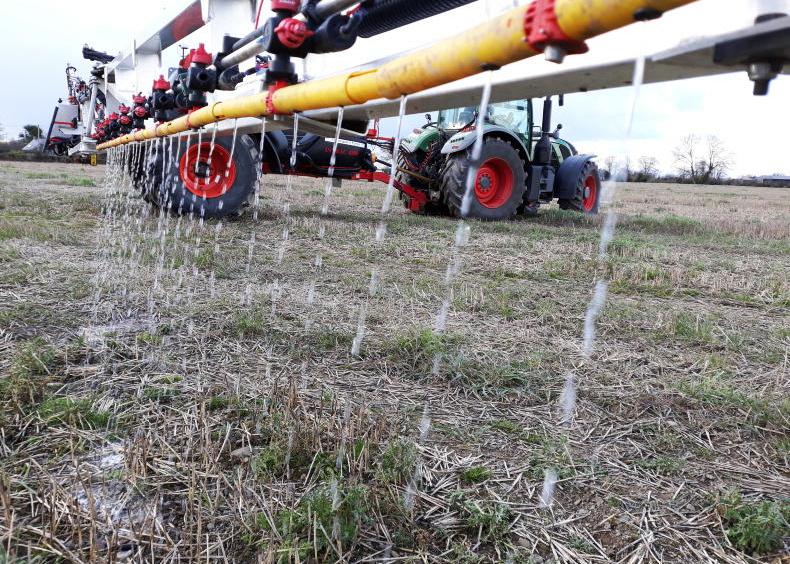
Liquid nitrogen showing reduction in emissions
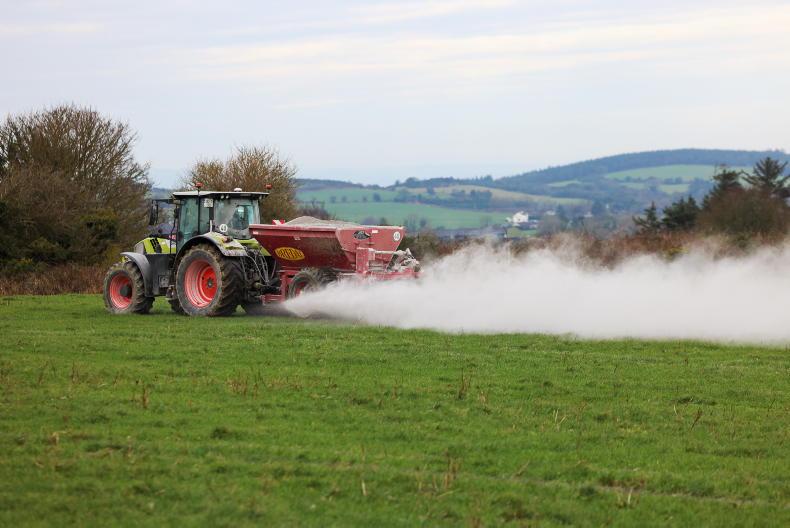
Over recent years there has been increasing interest and questions relating to liquid forms of nitrogen (N). Liquid urea ammonium nitrate (UAN) is available through a number of agricultural supply outlets around the country. UAN products typically deliver about half of their N as urea-N with the remainder roughly split half and half between ammonium-N and nitrate-N depending on the product. As a result, while nitrate-N is provided in UAN, the proportion present as nitrate-N is less than for CAN. Another liquid N product available to farmers is an acidified amide N product, eg FLEX and N-xt. Recently published trial work conducted under conditions favouring denitrification has shown that the nitrous oxide emissions from the acidified amide N product FLEX are as low as from solid urea and significantly lower than from CAN (Figure 1). In this same trial work, the nitrous oxide emissions from UAN were also significantly lower compared to CAN. The yield performance of the liquid fertilisers was better than from solid standard urea (Figure 2). Promisingly, preliminary results from ammonia loss testing at Teagasc, Johnstown Castle indicate that the FLEX liquid N had very low ammonia loss, indicating that it is protected through its formulation. Liquid UAN also had much lower levels of ammonia loss compared to solid standard urea. These results indicate that liquid fertilisers have potential to provide another option to reduce nitrous oxide emissions on farms, while sustaining yields with low levels of ammonia loss.
– Patrick Forrestal
New developments in AgNav
In 2025, AgNav became open to all Bord Bia and ICBF registered dairy and beef farmers through self-registration, marking a major milestone in national rollout. This expansion allows for over 49,000 farmers across Ireland to access the platform directly, view their sustainability data, and create tailored action plans without needing to enrol through programmes. By integrating data already held within national databases, AgNav reduces paperwork and provides a single, trusted source of truth. Expansion to Tillage Farms – a major 2025 development was extending AgNav to tillage farms. It uses a Life Cycle Assessment (LCA) model designed by Teagasc, with collaboration from Tirlán, specifically for Irish conditions. Farmers input their data through a survey on AgNav, including details on fertiliser, lime, organic manures, tractor passes, crop yields, and straw or cover crop practices. The platform then calculates the gross and net greenhouse gas (GHG) emissions per tonne of produce; net GHG emissions include extra carbon stored in soils. Early results indicate that Irish tillage farmers’ carbon footprints are low. Growers can now quantify the carbon footprints of their crops, review emission profiles to identify hotspots and potential areas of improvements and communicate the low-emissions profile of Irish grain. From the beginning of 2025, AgNav has included soil carbon functionality. By switching on the carbon capture toggle in AgNav, farmers can view a more complete picture of their farm’s overall carbon balance. To access this feature, farmers must complete the soil survey, providing information on land use, soil type, and management. This functionality highlights the climate benefits of well-managed soils, showing how land use and management decisions can reduce net emissions and contribute positively to GHG reduction targets. It also highlights that some soils are sources of emissions and not sinks. The soil carbon approach included is a simple tier one approach with more complex approaches expected in the future.
– Natasha Browne
Habitat scores on
Signpost farms
Signpost demonstration farms were surveyed using drone mounted cameras and LIDAR. The imagery taken allowed for mapping of habitats on the farms. To assess the value of the habitats on each farm, each habitat was given a score.
For example, blanket bogs had a score of nine and improved grassland a score of 3/ha.
Hedgerows received a value of 6/ha (this is a hectare covered by hedgerows, not a hectare of land surrounded by hedgerows). Using this scoring system, an area weighted score was calculated for each Signpost demonstration farm (Figure 3).
The most common score was between 2.2 and 3.2. Most farms have values less than 4.5. Those with higher values are farms with wetland/upland components. There is considerable scope to enhance the habitat score on these farms by better managing the hedgerows.
For management purposes, hedges fall into two categories:
1. Topped hedges and treeline hedges. And we want both. Topped/managed hedges are a man-made habitat. Best practice management of topped hedges is to allow them grow as tall and as wide as possible, the bulkier the better, in a triangular profile to allow light to the base. 2. Treeline hedges are effectively narrow linear woodland and we need to aim for at least 50% of hedges on our farms to be treeline hedges. Treeline hedges do not need to be cut. Never top, but overhanging branches can be cut if causing interference. – Stuart Green and Eoghan O’Reilly
Liquid nitrogen showing reduction in emissions
Over recent years there has been increasing interest and questions relating to liquid forms of nitrogen (N). Liquid urea ammonium nitrate (UAN) is available through a number of agricultural supply outlets around the country. UAN products typically deliver about half of their N as urea-N with the remainder roughly split half and half between ammonium-N and nitrate-N depending on the product. As a result, while nitrate-N is provided in UAN, the proportion present as nitrate-N is less than for CAN. Another liquid N product available to farmers is an acidified amide N product, eg FLEX and N-xt. Recently published trial work conducted under conditions favouring denitrification has shown that the nitrous oxide emissions from the acidified amide N product FLEX are as low as from solid urea and significantly lower than from CAN (Figure 1). In this same trial work, the nitrous oxide emissions from UAN were also significantly lower compared to CAN. The yield performance of the liquid fertilisers was better than from solid standard urea (Figure 2). Promisingly, preliminary results from ammonia loss testing at Teagasc, Johnstown Castle indicate that the FLEX liquid N had very low ammonia loss, indicating that it is protected through its formulation. Liquid UAN also had much lower levels of ammonia loss compared to solid standard urea. These results indicate that liquid fertilisers have potential to provide another option to reduce nitrous oxide emissions on farms, while sustaining yields with low levels of ammonia loss.
– Patrick Forrestal
New developments in AgNav
In 2025, AgNav became open to all Bord Bia and ICBF registered dairy and beef farmers through self-registration, marking a major milestone in national rollout. This expansion allows for over 49,000 farmers across Ireland to access the platform directly, view their sustainability data, and create tailored action plans without needing to enrol through programmes. By integrating data already held within national databases, AgNav reduces paperwork and provides a single, trusted source of truth. Expansion to Tillage Farms – a major 2025 development was extending AgNav to tillage farms. It uses a Life Cycle Assessment (LCA) model designed by Teagasc, with collaboration from Tirlán, specifically for Irish conditions. Farmers input their data through a survey on AgNav, including details on fertiliser, lime, organic manures, tractor passes, crop yields, and straw or cover crop practices. The platform then calculates the gross and net greenhouse gas (GHG) emissions per tonne of produce; net GHG emissions include extra carbon stored in soils. Early results indicate that Irish tillage farmers’ carbon footprints are low. Growers can now quantify the carbon footprints of their crops, review emission profiles to identify hotspots and potential areas of improvements and communicate the low-emissions profile of Irish grain. From the beginning of 2025, AgNav has included soil carbon functionality. By switching on the carbon capture toggle in AgNav, farmers can view a more complete picture of their farm’s overall carbon balance. To access this feature, farmers must complete the soil survey, providing information on land use, soil type, and management. This functionality highlights the climate benefits of well-managed soils, showing how land use and management decisions can reduce net emissions and contribute positively to GHG reduction targets. It also highlights that some soils are sources of emissions and not sinks. The soil carbon approach included is a simple tier one approach with more complex approaches expected in the future.
– Natasha Browne
Habitat scores on
Signpost farms
Signpost demonstration farms were surveyed using drone mounted cameras and LIDAR. The imagery taken allowed for mapping of habitats on the farms. To assess the value of the habitats on each farm, each habitat was given a score.
For example, blanket bogs had a score of nine and improved grassland a score of 3/ha.
Hedgerows received a value of 6/ha (this is a hectare covered by hedgerows, not a hectare of land surrounded by hedgerows). Using this scoring system, an area weighted score was calculated for each Signpost demonstration farm (Figure 3).
The most common score was between 2.2 and 3.2. Most farms have values less than 4.5. Those with higher values are farms with wetland/upland components. There is considerable scope to enhance the habitat score on these farms by better managing the hedgerows.
For management purposes, hedges fall into two categories:
1. Topped hedges and treeline hedges. And we want both. Topped/managed hedges are a man-made habitat. Best practice management of topped hedges is to allow them grow as tall and as wide as possible, the bulkier the better, in a triangular profile to allow light to the base. 2. Treeline hedges are effectively narrow linear woodland and we need to aim for at least 50% of hedges on our farms to be treeline hedges. Treeline hedges do not need to be cut. Never top, but overhanging branches can be cut if causing interference. – Stuart Green and Eoghan O’Reilly
SHARING OPTIONS