The Department of Agriculture is about one-third of its way through a nationwide programme of 19 Basic Income Support for Sustainability (BISS) clinics and 10 information events.
The attendance has been steadily growing with upwards of 200 farmers attending Tuesday’s clinic held in Oranmore, Co Galway.
The level of understanding of the new application process is said to be variable with some farmers attending the clinics having a good understanding of new concepts such as conditionality and space for nature, the Eco Scheme, Complementary Redistributive Income Support for Sustainability (CRISS), land eligibility changes and active farmer checks, while other farmers have a poor understanding of the changes.
The Irish Farmers Journal attended the clinic held in Oranmore to get a flavour of the queries cropping up and the Department’s top tips for submitting a successful BISS application.
1 Space for nature
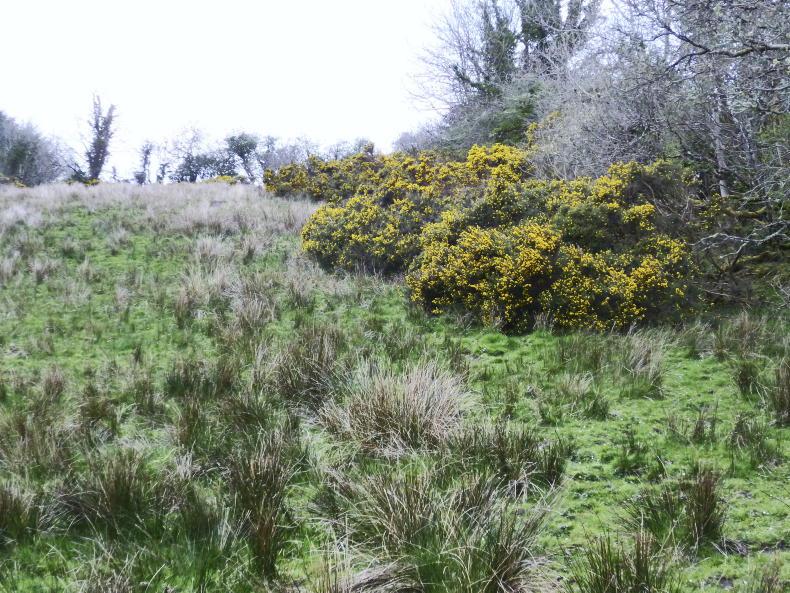
Good Agricultural and Environmental Condition (GAEC) and space for nature requirements have been heavily discussed in recent months. Features which contribute to space for nature estimates include beneficial features such as scrub and landscape features such as hedgerows and drains.
Under GAEC 8, at least 4% of an applicant’s lands must be categorised as space for nature. A figure of at least 7% will satisfy one Eco Scheme measure while a figure of 10% will satisfy the two Eco Scheme measures.
The Department has carried out preliminary estimates and mapped these features. BISS applicants are being advised to check their maps via agfood.ie to confirm that the estimates are accurate or to identify any corrections. This requirement is creating a level of unease among some participants who are of the opinion that maps have to be marked 100% accurate.
The Department says that while it is favourable that maps are as accurate as possible, participants are not expected to have these 100% accurate. If an applicant for example has a Space for Nature percentage at 15% and loses 2% for any reason such as an administrative check they will still qualify once in excess of 10%.
2 Eligible and claimed area
The new CAP Strategic Plan 2023-2027 affords farmers an opportunity to get paid on features which deliver a biodiversity benefit and would have been listed as ineligible for payment heretofore. These so-called beneficial features include scrub, woodland, habitat, trees and rocks. Under the new rules up to 50% of a parcel can comprise of beneficial features and be included for payment.
The beneficial features totalling up to 50% of a parcel can be used for the purposes of receiving payments under the BISS, Eco Scheme, CRISS, Young Farmers Scheme etc. The Department has taken account of these areas in a new figure called the ‘eligible hectare’.
If farmers want to use the area of beneficial features to increase the area submitted for payment purposes then the claimed area submitted in your BISS application must be increased to take account of this. Beneficial features will not contribute to stocking rate calculations.
3 Merging parcels
Land parcels can be merged in certain circumstances to bring the area of beneficial features below the 50% mark to receive full payment on the eligible area.
It should be noted that there must be an agricultural activity taking place in this parcel, for it to be deemed eligible.
The parcels to be merged must also have definite boundaries. The following parcels cannot be merged:
Non-adjoining parcels.Those where no physical feature is present between the new parcel and other parcels following merging.Parcels with different ownership status.Parcels in different ACRES measures.Parcels in CP zones in ACRES.There are two ways of merging parcels. The preferred approach recommended by the Department is to take note of the LPIS number of the smaller parcel, delete it and then add a line in to the notes section that you wish for this parcel to be merged with the larger parcel, stating its LPIS number also.
The other method is deleting the two parcels and adding a new plot but this route will delete all the space for nature information related to these parcels.
4 Commercial forestry is not natural woodland
Natural woodland is regarded as a beneficial feature and can be counted as eligible for the relevant schemes. Commercial forestry is not categorised in the same manner and is ineligible for inclusion as a beneficial feature. Lands afforested under the Afforestation Grant and Premium Scheme are considered areas eligible for payment.
5 Opt-in default for schemes
The Department’s BISS application system’s scheme selection screen enables applicants to choose the schemes they wish to participate in. These include BISS, Eco Scheme, CRISS, Areas of Natural Constraint, the Straw Incorporation Measure and the Protein Aid Scheme.
If you have applied and have been accepted into Organics and/or ACRES these selections will be pre-selected on the scheme selection screen.
6 Active farmer and stocking rate
In excess of 80% of applications already satisfy the active farmer status, a key requirement under the new EU regulations. Those with no stock can satisfy the requirement through the application using the options presented, ie cutting hay and silage. There may be scenarios where the applicant will be asked to record an agriculture activity on individual parcels. This may include:
Commonage applicants.Grassland but no livestock present.Highly stocked applicants with a stocking density of greater than three livestock units per hectare. There are five dropdown options to select for each of these parcels as follows:
1) Grazing livestock.
2) Grazing livestock and cutting hay/silage/haylage.
3) Cutting hay/silage/haylage.
4) Other maintenance activities.
5) No agricultural activity
The Department’s system will also give an assessment of the farm’s historical stocking rate. This information is also used for the purposes of the Eco Scheme extensive livestock production measure and for other schemes where a minimum level of agricultural activity is required.
7 Utilise available resources
The Department’s BISS clinics are a great resource for farmers to gain one-to-one assistance with their application. There are numerous other resources available that can help with your application.
The BISS step-by-step application guide is a short leaflet that covers the important points of the application.
For more complex applications the Department’s “how to” videos address aspects such as adding parcels/plots and deleting lands and submitting requests to change the eligible area of a parcel.
A full list of remaining meetings and contact details for dedicated BISS support can be found here.
The Department’s office in Portlaoise is also open standard working hours to deal with queries at its helpdesk on 057-867 4422.
The Department of Agriculture is about one-third of its way through a nationwide programme of 19 Basic Income Support for Sustainability (BISS) clinics and 10 information events.
The attendance has been steadily growing with upwards of 200 farmers attending Tuesday’s clinic held in Oranmore, Co Galway.
The level of understanding of the new application process is said to be variable with some farmers attending the clinics having a good understanding of new concepts such as conditionality and space for nature, the Eco Scheme, Complementary Redistributive Income Support for Sustainability (CRISS), land eligibility changes and active farmer checks, while other farmers have a poor understanding of the changes.
The Irish Farmers Journal attended the clinic held in Oranmore to get a flavour of the queries cropping up and the Department’s top tips for submitting a successful BISS application.
1 Space for nature
Good Agricultural and Environmental Condition (GAEC) and space for nature requirements have been heavily discussed in recent months. Features which contribute to space for nature estimates include beneficial features such as scrub and landscape features such as hedgerows and drains.
Under GAEC 8, at least 4% of an applicant’s lands must be categorised as space for nature. A figure of at least 7% will satisfy one Eco Scheme measure while a figure of 10% will satisfy the two Eco Scheme measures.
The Department has carried out preliminary estimates and mapped these features. BISS applicants are being advised to check their maps via agfood.ie to confirm that the estimates are accurate or to identify any corrections. This requirement is creating a level of unease among some participants who are of the opinion that maps have to be marked 100% accurate.
The Department says that while it is favourable that maps are as accurate as possible, participants are not expected to have these 100% accurate. If an applicant for example has a Space for Nature percentage at 15% and loses 2% for any reason such as an administrative check they will still qualify once in excess of 10%.
2 Eligible and claimed area
The new CAP Strategic Plan 2023-2027 affords farmers an opportunity to get paid on features which deliver a biodiversity benefit and would have been listed as ineligible for payment heretofore. These so-called beneficial features include scrub, woodland, habitat, trees and rocks. Under the new rules up to 50% of a parcel can comprise of beneficial features and be included for payment.
The beneficial features totalling up to 50% of a parcel can be used for the purposes of receiving payments under the BISS, Eco Scheme, CRISS, Young Farmers Scheme etc. The Department has taken account of these areas in a new figure called the ‘eligible hectare’.
If farmers want to use the area of beneficial features to increase the area submitted for payment purposes then the claimed area submitted in your BISS application must be increased to take account of this. Beneficial features will not contribute to stocking rate calculations.
3 Merging parcels
Land parcels can be merged in certain circumstances to bring the area of beneficial features below the 50% mark to receive full payment on the eligible area.
It should be noted that there must be an agricultural activity taking place in this parcel, for it to be deemed eligible.
The parcels to be merged must also have definite boundaries. The following parcels cannot be merged:
Non-adjoining parcels.Those where no physical feature is present between the new parcel and other parcels following merging.Parcels with different ownership status.Parcels in different ACRES measures.Parcels in CP zones in ACRES.There are two ways of merging parcels. The preferred approach recommended by the Department is to take note of the LPIS number of the smaller parcel, delete it and then add a line in to the notes section that you wish for this parcel to be merged with the larger parcel, stating its LPIS number also.
The other method is deleting the two parcels and adding a new plot but this route will delete all the space for nature information related to these parcels.
4 Commercial forestry is not natural woodland
Natural woodland is regarded as a beneficial feature and can be counted as eligible for the relevant schemes. Commercial forestry is not categorised in the same manner and is ineligible for inclusion as a beneficial feature. Lands afforested under the Afforestation Grant and Premium Scheme are considered areas eligible for payment.
5 Opt-in default for schemes
The Department’s BISS application system’s scheme selection screen enables applicants to choose the schemes they wish to participate in. These include BISS, Eco Scheme, CRISS, Areas of Natural Constraint, the Straw Incorporation Measure and the Protein Aid Scheme.
If you have applied and have been accepted into Organics and/or ACRES these selections will be pre-selected on the scheme selection screen.
6 Active farmer and stocking rate
In excess of 80% of applications already satisfy the active farmer status, a key requirement under the new EU regulations. Those with no stock can satisfy the requirement through the application using the options presented, ie cutting hay and silage. There may be scenarios where the applicant will be asked to record an agriculture activity on individual parcels. This may include:
Commonage applicants.Grassland but no livestock present.Highly stocked applicants with a stocking density of greater than three livestock units per hectare. There are five dropdown options to select for each of these parcels as follows:
1) Grazing livestock.
2) Grazing livestock and cutting hay/silage/haylage.
3) Cutting hay/silage/haylage.
4) Other maintenance activities.
5) No agricultural activity
The Department’s system will also give an assessment of the farm’s historical stocking rate. This information is also used for the purposes of the Eco Scheme extensive livestock production measure and for other schemes where a minimum level of agricultural activity is required.
7 Utilise available resources
The Department’s BISS clinics are a great resource for farmers to gain one-to-one assistance with their application. There are numerous other resources available that can help with your application.
The BISS step-by-step application guide is a short leaflet that covers the important points of the application.
For more complex applications the Department’s “how to” videos address aspects such as adding parcels/plots and deleting lands and submitting requests to change the eligible area of a parcel.
A full list of remaining meetings and contact details for dedicated BISS support can be found here.
The Department’s office in Portlaoise is also open standard working hours to deal with queries at its helpdesk on 057-867 4422.





SHARING OPTIONS