Too much of the discussion surrounding Teagasc’s Marginal Abatement Cost Curve (MACC) has been focused on the incorrect commentary that it includes a herd cull or efforts to actively reduce the suckler herd in particular.
This message has been extremely destructive to farmers’ morale, and ignores the reality that the herd projections are just that, projections. At no point in the 363 pages of the complete MACC document does the word “cull” or the phrase “herd reduction” appear.
Instead the projections for the herds, suckler and dairy alike, are based on existing trends. A person would have to be completely disconnected from reality to not be aware of the trajectory of the suckler herd.
Price volatility, rising costs, ageing populations and increasing weather difficulties are clearly reflected in the numbers of beef cows. Should then Teagasc have ignored these trends and projected an unrealistic future for the national herd? Do we believe the weatherman makes tomorrow wet or dry when they deliver their forecast?
Herd expansion
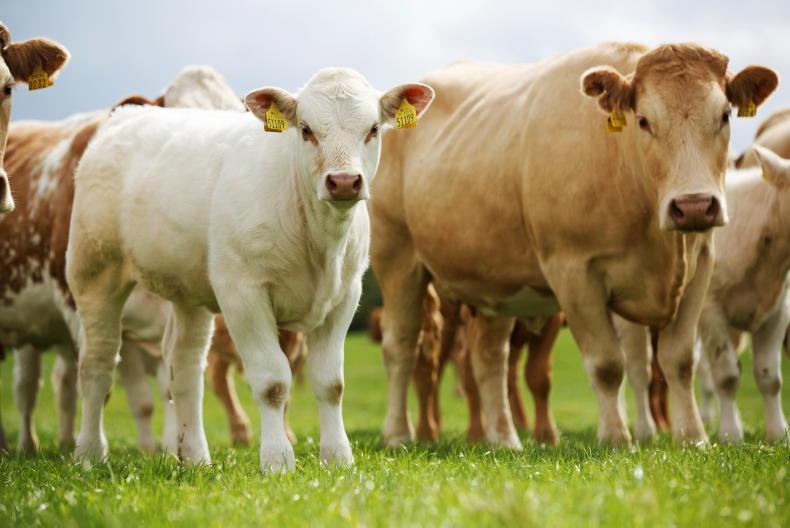
The reality is that it’s now widely accepted that the dairy herd’s expansion has slowed significantly, if not outright stopped. As the herd naturally turns from expansion, this will mean more beef-bred calves entering the supply chain.
With the political situation on calf importers such as the Netherlands increasingly uncertain, it’s likely the beef kill will continue its existing trend of more dairy beef. Nor should this be seen as “dumping calves” on anyone; in fact, the opportunity for a more viable income is clear. The challenge to do so, though, is rightly being placed mostly on the dairy herd.
One of the most significant efforts the MACC outlines will be on the dairy herd to improve their beef breeding. The effort to reduce age at slaughter by three months on average will likely not come heavily on the suckler bred animals, as many of them are already able to achieve carcase weights desirable within a better timeframe; instead it will be improving beef sires on dairy cows.
The days of scrawny, Jersey-blooded bullocks from scrub bulls or lanky Holsteins will have to be assigned to history. Some of that will happen naturally, as farmers without calf buyers will find their bulk tanks uncollected under new Bord Bia policies.
For those who do decide to exit livestock farming or just stop keeping breeding stock, as many have done and will do in future for their own reasons, the MACC also lays out the need for viable incomes. Rather than the wishy-washy nature of political promises, the MACC’s version of ‘diversification’ is hardline.
Direct selling, alternative enterprises and organics will play a role, but anaerobic digestion will be core, providing a viable outlet for the sale of high quality silage to digestors along with slurry.
AD plants
The Government has set an aim of establishing 200 anaerobic digestion (AD) plants by 2030, which some see as overly ambitious, but feeding such will provide farmers an opportunity. With advancements in low-carbon forages, such as red clover and multi-species swards, these returns could improve the diversity of our landscape.
Our natural response may be to worry about losing food producing land, but Ireland once produced much of its fibre and fuel across the landscape too before the rise of cheap clothing. In many ways, this is a return not a departure.
Accepting a truth
Sadly, these falsehoods about herd culls have overshadowed the real truth we as a farming community have to accept. Either we reduce our emissions or we will be forced to reduce our herds.
Nor is there a political reality where a sector failing its targets in 2025 won’t face greater enforcement. Whatever the makeup of the Government in 2025, we would do well to remember that every political party voted for the carbon budgets in the Climate Act.
It isn’t, however, all gloom. Even pessimists who preach no future may have been confronted with the outlook of lead researcher Dr Gary Lanigan, who clearly explained that we could be one of the few sectors to not just meet, but surpass our targets.
Turning from climate villains in the eyes of too many of the public to climate heroes.