



Irish agriculture and food production are set to take centre stage this month as global leaders gather in Ireland for the 14th Nuffield Triennial, running from 18-26 May.
Organised by Nuffield, an international scholarship programme that supports agricultural professionals to study, travel, and share knowledge across the sector, the event brings together innovators, policymakers, and industry figures from around the world.
Across the nine-day programme, more than 50 farm visits, industry engagements, and cultural experiences are planned, offering delegates a unique opportunity to explore Ireland’s agri food landscape firsthand.
At its core, the Triennial is designed to foster collaboration and the exchange of ideas among those shaping the future of global agriculture.
The schedule builds towards a flagship Agri-Summit on Friday 22 May at the Killashee Hotel in Co Kildare, where over 300 delegates and high-profile speakers are expected to attend.
Pivotal role
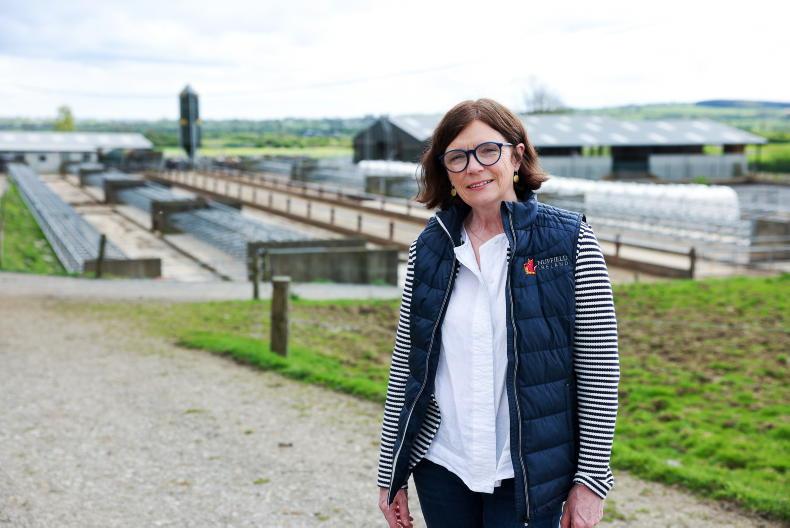
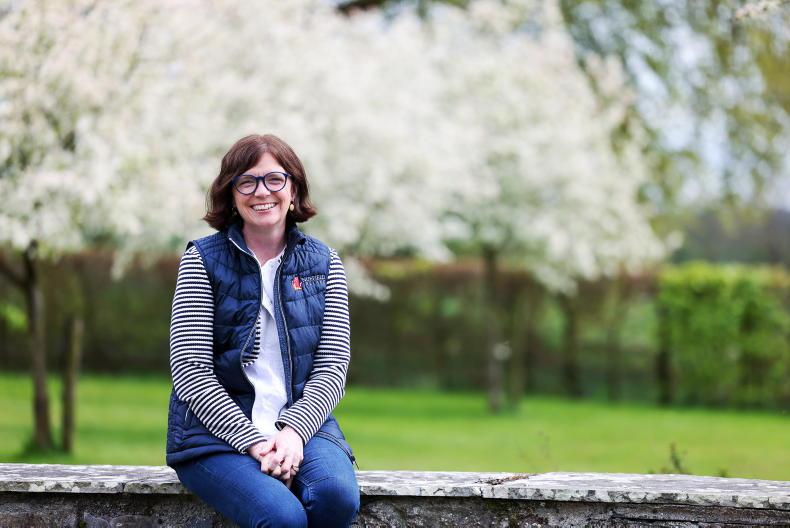
At the heart of this landmark is Gráinne Dwyer, chairperson of Nuffield Ireland. From becoming the first female recipient of a Nuffield scholarship in 1999 to now leading the organisation as it hosts the International Triennial, she is playing a pivotal role in bringing a global cohort of agri food leaders to Ireland.
“I grew up in Kildare. My father was a property auctioneer, so we had some land. He wasn’t a full-time farmer, so it wouldn’t have been traditional land,” she says.
Gráinne developed a keen interest in agriculture, growing up in a rural area and being heavily involved in Macra, as she was the county chair for Kildare in 1987.
“We had sheep at home. And my abiding memory of them was being called at 4am because the sheep were on the road,” she recalls.
Gráinne married her husband Jim, and because of the commute to Newbridge she gave up her job in the Law Society, where she had been for six years.
“I came home; it was the late 80s, jobs weren’t plentiful, so I wanted to work on the farm. I had no practical agricultural education, and then went looking for it, which was the precursor to my Nuffield topic,” says Gráinne.
Discovering research
At the time, the level of educational pathways and routes into agriculture weren’t as plentiful or flexible as they are today. Gráinne visited the ag colleges but didn’t want to live on campus and couldn’t find a suitable course.
“To be fair to Jim, he taught me a lot, and we set up The Damer Discussion Group 34 years ago. That was a group of farmers around the same age as ourselves, who had all recently married, and the women were all involved. We learned so much; it was a comfortable environment,” says Gráinne.
Being friends allowed them to learn in a safe space where there was no judgment, as they all respected each other.
“There was great support and patience because all of the women were in a similar situation. I learnt an awful lot through that, and people were very open and honest. At that stage, we were milking 120 cows and trying to milk more and lease out land with milk quotas,” she recalls.
Gráinne was friends with Ella and the late Padraig Walsh. Padraig had just been awarded a Nuffield scholarship.
“I remember they were here two nights before he went off to Australia on his travels, and he was telling us all about the wonderful opportunity [it was],” says Gráinne.
Inspired by the early scholars like Padraig and others, within four years Gráinne decided to apply for a Nuffield Scholarship herself.
She fine-tuned her theme, which was looking at the role of women in agriculture, where she travelled to Norway, France, New Zealand, and Australia to research her Nuffield topic.
“I was fortunate enough to get the scholarship; it opened so many doors into a world that you didn’t know existed.
“I knew what I wanted to study, and Nuffield is about leadership. I was able to show through my involvement with Macra and the discussion group that I had leadership potential,” she says.
Through her travels, Gráinne met the ‘most amazing people’.
“In France, they had set up female-only discussion groups, which were interesting. What I learnt there was that it’s ok to give the women background knowledge, information about production agriculture or fill the gaps that were needed, but once they had that confidence, they were put into a mixed discussion group, and that was the success,” she says.
In Australia, Gráinne met women in agriculture who felt they had already gone through the grassroots and were now trying to focus on getting more women involved in the industry.
In the 27 years since Gráinne did her Nuffield, there has been a change in the diversification of agriculture. There are more women working across the sector, giving them such an opportunity to shape the industry going forward.
In 2023, Gráinne was elected to the Nuffield Ireland board and in 2025, she became the chairperson.
Part of her mission during her term as chair is to increase the gender participation of Nuffield Ireland, as it currently sits at 25% females to 75% males [in Ireland], and internationally that split is 50/50.
Coming up with a theme for this year’s Triennial wasn’t an easy task, with the planning starting in January 2025, according to Gráinne. In an increasingly uncertain world, the issue of food security demands urgent attention, which is why they settled on the theme ‘Feed the World: Our Responsibility?’
Climate change, political instability, and large-scale migration are placing unprecedented pressure on global economies and food systems.
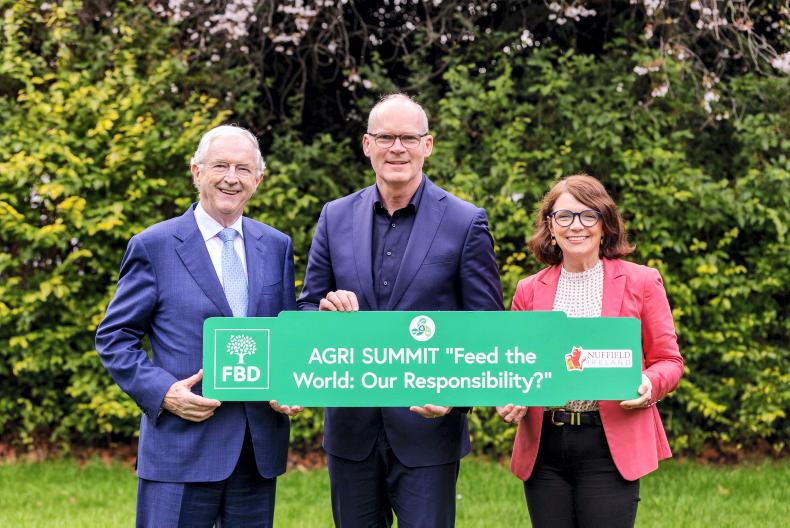
“The backdrop for the theme was showcasing all aspects of Irish agriculture, which is production, research and development, while also thinking about the bigger picture of global food security. There are so many NGOs there, saying we should be only feeding our own, but there is a moral obligation as well,” emphasises Gráinne.
With international leaders attending, Nuffield Ireland has an opportunity to showcase the best of Irish agriculture.
“We want to facilitate good discussion and the support we’re getting has been phenomenal from people who are opening their doors and hosting visits on their farms or in their agri businesses,” says Gráinne.
Providing a platform
The age profile of alumni and attendees will be mixed, with some scholars having done research over 25 years ago, similar to Gráinne herself, along with more recent scholars.
“You’re reinvigorated by the younger scholars, because of what they’re doing, and agriculture has changed. You’re back learning again, and you’re being stimulated and challenged, and that’s what leaders should be.
“That’s what the triennial is about, it’s an opportunity for global agri leaders to come together, to share their experiences, share their knowledge, network, and make friends,” says Gráinne.
Some of the attendees will be farmers coming over from Western Australia who are farming thousands of hectares. They’ll be visiting smaller farms in Ireland, but there challeges are similar.
“It’s generation renewal, it’s still about the environment and sustainability. You have to be sustainable if you have 20 hectares or 2000,” explains Gráinne.
Some of the speakers at the Agri-Summit on Friday 22 May include Lord Iveagh Edward Guinness, Phil Hogan, Alan Matthews, David McWilliams and Simon Coveney. Among the panel discussions and presentations, there are going to be debates
“It’s to stretch and broaden the breadth of thinking,” says Gráinne.
To see the full summit programme and to book your place, see nuffield2026.com. Tickets are €175, including a gala banquet.



SHARING OPTIONS