A health programme will be dependent on the type of lambs purchased and the background history. For example, long-keep lambs will be better able to justify a more extensive health programme. There are a number of areas that should be considered including the use of a quarantine period.
Quarantine period
A quarantine period will depend on the range in dates in which lambs are purchased and if they are likely to come in contact with sheep already on the farm. When it comes to the length of the quarantine period, the longer the better. As a general rule of thumb, animals should be quarantined for a minimum of 21 days before joining the rest of the flock.
Safeguarding against resistant worms
Anthelmintic resistance is becoming a growing problem for sheep flocks, with resistance rising to varying degrees to benzimidazole, levamisole and avermectin, all active ingredients in commonly used products. To combat this risk, there are two approaches recommended.
The more traditional approach used in recent years is to treat animals with a product containing levamisole (yellow drench) and avermectin, with a moxidectin-based product the drug of choice due to lower levels of resistance. A more modern approach that is now regarded as the safest is to treat animals with a moxidectin product and one of the new generation wormers – Zolvix, which contains the active ingredient monepantel, or Startect which contains the new active ingredient derquantel and abamectin.
Sheep should be treated on arrival and kept off pasture for 24 to 48 hours so that worm eggs present in the gut will not pass onto pasture. Following treatment, sheep should be turned onto pasture that is referred to as dirty, that is ground that has been previously grazed by sheep.
Investigate the presence of liver fluke
Getting as much background information as possible from the owner of the sheep will help in strengthening the quarantine protocol. Where previous liver fluke treatments are unknown, animals should be considered as potentially having liver fluke and treating accordingly. This will become more important as the season progresses. The advice is to use products containing trichlabendazole and another active ingredient such as closantel to safeguard against resistance to trichlabendazole.
External parasites
Dipping is the optimum method in controlling external parasite risks such as sheep scab, lice, ticks etc. For complete control, sheep should be immersed for 60 seconds with their head plunged under the solution two to three times. If dipping is not an option, an alternative is to treat sheep scab with the use of an avermectin product, but be wary as there are no injectable products that cover all external parasites.
In this scenario, treatment may need to be doubled up with suitable pour-ons that cover sucking and biting lice and other target external parasites. It is also important to read manufacturers’ product guidelines closely as some products need repeat treatment seven to 14 days later to target parasites that have hatched from eggs.
Early intervention critical with lameness
Sheep should also be given a footbath on arrival. The commonly used products are copper and zinc sulphate (10% solution) and formalin (3%) although other products are available on the market. Sheep should be monitored closely throughout the quarantine period and run through the footbath at any stage of handling. Particular caution should be paid to footrot or CODD (contagious ovine digital dermatitis) which can spread rapidly through a flock.
What should be considered in vaccination?
While vaccinations often contribute to the greatest cost of a quarantine health programme, they have an important role in reducing the risk of disease. Their use can be reduced in some cases by purchasing from known high-health-status flocks. The main one to consider is clostridial diseases.
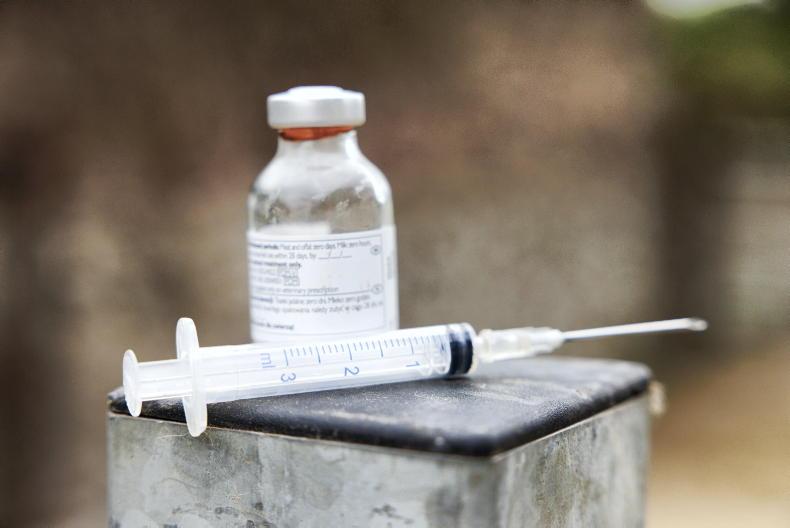
The clostridial disease vaccine should be administered shortly after arrival and depending on the duration lambs spend on the farm a booster should be administered four to six weeks later to build full immunity. Decisions will need to be taken on selecting a vaccine that covers the full range of clostridial diseases or one that also provides protection for Pasteurella pneumonia.
Read more
Tullamore demo 4: Store lambs – deciding on what to buy
Tullamore demo 5: Top tips for buying or selling store lambs
Information sheets from all Tullamore show demonstrations
A health programme will be dependent on the type of lambs purchased and the background history. For example, long-keep lambs will be better able to justify a more extensive health programme. There are a number of areas that should be considered including the use of a quarantine period.
Quarantine period
A quarantine period will depend on the range in dates in which lambs are purchased and if they are likely to come in contact with sheep already on the farm. When it comes to the length of the quarantine period, the longer the better. As a general rule of thumb, animals should be quarantined for a minimum of 21 days before joining the rest of the flock.
Safeguarding against resistant worms
Anthelmintic resistance is becoming a growing problem for sheep flocks, with resistance rising to varying degrees to benzimidazole, levamisole and avermectin, all active ingredients in commonly used products. To combat this risk, there are two approaches recommended.
The more traditional approach used in recent years is to treat animals with a product containing levamisole (yellow drench) and avermectin, with a moxidectin-based product the drug of choice due to lower levels of resistance. A more modern approach that is now regarded as the safest is to treat animals with a moxidectin product and one of the new generation wormers – Zolvix, which contains the active ingredient monepantel, or Startect which contains the new active ingredient derquantel and abamectin.
Sheep should be treated on arrival and kept off pasture for 24 to 48 hours so that worm eggs present in the gut will not pass onto pasture. Following treatment, sheep should be turned onto pasture that is referred to as dirty, that is ground that has been previously grazed by sheep.
Investigate the presence of liver fluke
Getting as much background information as possible from the owner of the sheep will help in strengthening the quarantine protocol. Where previous liver fluke treatments are unknown, animals should be considered as potentially having liver fluke and treating accordingly. This will become more important as the season progresses. The advice is to use products containing trichlabendazole and another active ingredient such as closantel to safeguard against resistance to trichlabendazole.
External parasites
Dipping is the optimum method in controlling external parasite risks such as sheep scab, lice, ticks etc. For complete control, sheep should be immersed for 60 seconds with their head plunged under the solution two to three times. If dipping is not an option, an alternative is to treat sheep scab with the use of an avermectin product, but be wary as there are no injectable products that cover all external parasites.
In this scenario, treatment may need to be doubled up with suitable pour-ons that cover sucking and biting lice and other target external parasites. It is also important to read manufacturers’ product guidelines closely as some products need repeat treatment seven to 14 days later to target parasites that have hatched from eggs.
Early intervention critical with lameness
Sheep should also be given a footbath on arrival. The commonly used products are copper and zinc sulphate (10% solution) and formalin (3%) although other products are available on the market. Sheep should be monitored closely throughout the quarantine period and run through the footbath at any stage of handling. Particular caution should be paid to footrot or CODD (contagious ovine digital dermatitis) which can spread rapidly through a flock.
What should be considered in vaccination?
While vaccinations often contribute to the greatest cost of a quarantine health programme, they have an important role in reducing the risk of disease. Their use can be reduced in some cases by purchasing from known high-health-status flocks. The main one to consider is clostridial diseases.
The clostridial disease vaccine should be administered shortly after arrival and depending on the duration lambs spend on the farm a booster should be administered four to six weeks later to build full immunity. Decisions will need to be taken on selecting a vaccine that covers the full range of clostridial diseases or one that also provides protection for Pasteurella pneumonia.
Read more
Tullamore demo 4: Store lambs – deciding on what to buy
Tullamore demo 5: Top tips for buying or selling store lambs
Information sheets from all Tullamore show demonstrations








SHARING OPTIONS