


Lambing progress: This week’s weather has provided ideal conditions for lambing. Take advantage of it to free up lambing pens and get set up again. Ewes and lambs that have developed a satisfactory bond should be released early in the morning and in small groups to prevent mis-mothering.
While the days are warm, nighttime temperatures are falling below zero and therefore letting lambs outdoors later in the day presents the risk of lambs getting cold. Continue to select fields with the best shelter and those with the driest underfoot conditions.
Tasks like, for example, applying rubber rings or tagging should be carried out in advance of turning ewes and lambs outdoors. Keep an eye on lambs released outdoors at intervals during the day to ensure lambs are following and suckling ewes. Once lambs get hardy, small groups can be joined together and grazed in higher numbers.
Where possible, use the opportunity of freeing up space in lambing pens to clean out and disinfect pens. This will serve great benefits in the long-run in reducing the build-up of disease. Spreading hydrated or builders lime will help to disinfect without needing to power wash and disinfect the area.
Where lambing outdoors, removing freshly lambed ewes and their lambs to a new paddock will allow newborn lambs to be identified much quicker. For those not lambing outdoors until later in the month, some farmers have a paddock system set up whereby ewes that have not lambed are moved every morning. It leaves behind freshly lambed ewes and allows them to develop a stronger bond for 12 to 24 hours before being moved on.
Supplementing ewes and lambs: While weather has improved, grass growth is only starting to get going. Where grass supplies are inadequate, or you are holding up ewes and lambs to give grass supplies a chance to build, concentrate supplementation is essential. Where grass supplies are below 4cm (top of your wellington toe) ewes will require supplementation. The recommended feeding level for twin suckling ewes in good body condition, and an average to low intake of grass, ranges from 0.7kg to 1kg per head per day.
If ewes are in poor body condition, increase supplementation by 0.2kg to 0.3kg. It is important to split feeding levels to prevent digestive upsets. Single bearing ewes will be sufficient receiving 0.4kg to 0.7kg supplementation (dependent on body condition).
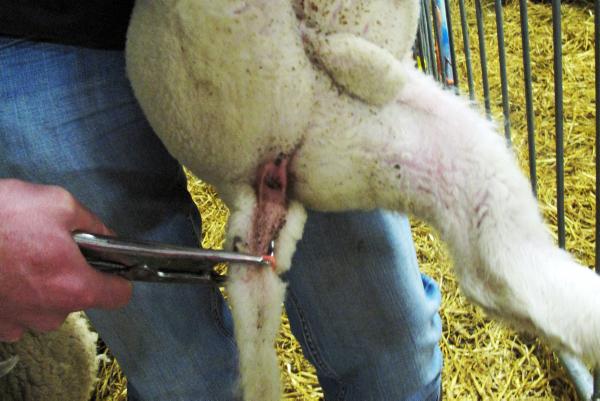
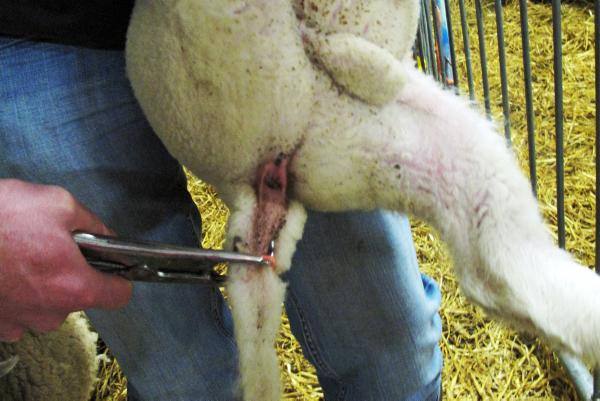
Tail docking: When tail docking, there are regulations that have to be adhered to. The minimum length of tail that is allowed under legislation is a tail long enough to cover the vulva in female sheep and the anus in male sheep. A sheep’s tail generally grows in unison with the animal as they get older, therefore a tail long enough to cover the anus and vulva is required at docking.
If using rubber rings, farmer’s experience includes lifting the tail and putting the ring on at the area where the flesh meets the wool on the underside of the tail. Other farmers use a method of the width of three to four fingers to guage the length.


SHARING OPTIONS