Lactating hoggets: Some mid-season lambing flocks are beginning to lamb yearling hoggets. Litter sizes are higher than previous years, with a significant percentage of multiple births. Hoggets suckling twin lambs will need close attention and preferential management up until weaning. These sheep should be managed in the same manner as mature triplet suckling ewes with access to top-quality grass and 0.5kg concentrate supplementation for at least the first five weeks of lactation. Where grass supply or quality is limiting, feeding rates will need to be doubled. Lambs should also have access to 300g to 500g creep feeding (rates dependent on grass quality) up until weaning. For hoggets in poor body condition or likely to struggle to rear two lambs, the advice is to remove one lamb for cross-fostering or artificial rearing. Hoggets in good body condition and suckling a single lamb will generally perform satisfactorily with access to good-quality grass. Again, if grass supply is limiting or condition below target it is worth supplementing at 0.3kg to 0.5kg concentrates per head until grass growth kicks in and supplies recover.
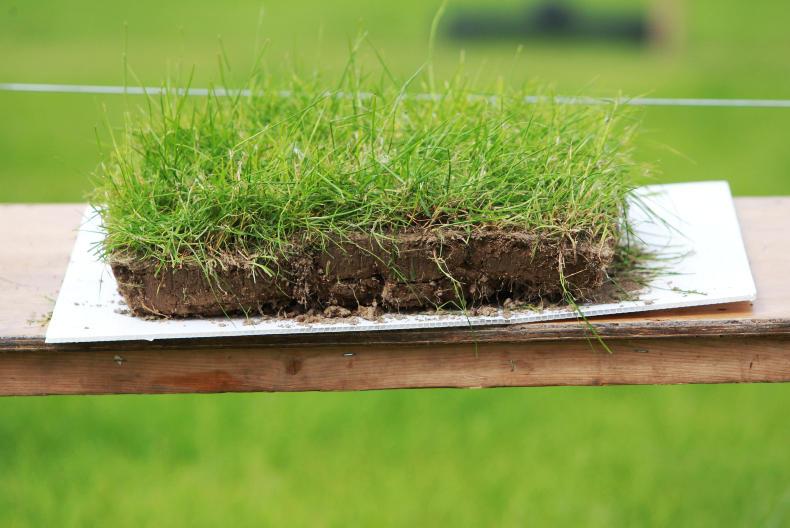
Granulated lime: Last week’s sheep feature on getting tired soils working attracted close attention. There have been a few queries on the recommended application rate of granulated lime products. Teagasc recommend applying granulated lime at a rate of 3:1, ground limestone to granulated limestone. For example, if the soil sample analysis shows up a requirement of 3t/acre over a five-year period, then this is the equivalent of 1t/acre of granulated limestone. Since granulated lime is composed of fine lime and all is available within the year of application, the recommendation is to apply 200kg per acre for each of the five years.
There were also a few queries on spreading lime and slurry/urea and applying ground limestone on silage ground. Where possible you should avoid spreading lime on heavy covers unless there is an opportunity to wash into the soil prior to grazing. If ground limestone is applied, you should avoid using urea-based fertilisers or slurry for at least three months after lime has been applied. Alternatively, urea or slurry can be applied first, with lime applied after a week to 10 days. You should also hold off applying on ground intended for first-cut silage until after harvesting. Granulated lime generally has lower risks of interactions.
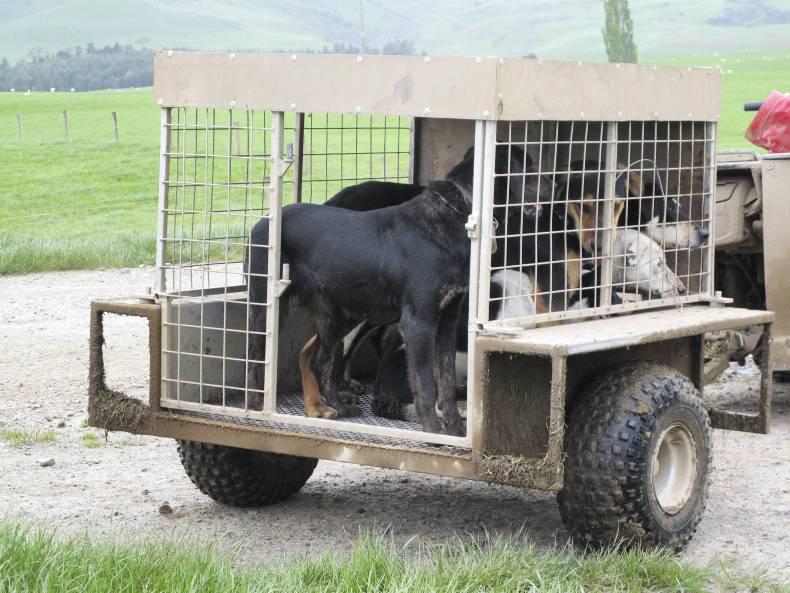
Dog microchipping: From 31 March 2016, all dogs over 12 weeks of age must be microchipped and registered on an approved database. Dogs that have been previously microchipped but not registered must now be registered on one of the four databases approved: Animark, Fido, Irish Coursing Club or the Irish Kennell Club. Legislation is also already in place requiring any pup born since 1 June 2015 to be microchipped and registered by the time they reach 12 weeks of age or on leaving the holding of birth if this occurs before the pup reaches 12 weeks of age. More detail of the new rules and regulations can be found at www.farmersjournal.ie/5-000-fine-for-non-microchipped-dogs-202697.
Areas of Natural Constraint: Farmers who want to comply with ANC stocking rate requirements by the end of October, will need to purchase stock in the coming week to satisfy a minimum stocking rate of 0.15LU/ha for a seven-month consecutive period and also satisfy an average stocking rate of 0.15LU/ha over the 12-month calendar year.
Lactating hoggets: Some mid-season lambing flocks are beginning to lamb yearling hoggets. Litter sizes are higher than previous years, with a significant percentage of multiple births. Hoggets suckling twin lambs will need close attention and preferential management up until weaning. These sheep should be managed in the same manner as mature triplet suckling ewes with access to top-quality grass and 0.5kg concentrate supplementation for at least the first five weeks of lactation. Where grass supply or quality is limiting, feeding rates will need to be doubled. Lambs should also have access to 300g to 500g creep feeding (rates dependent on grass quality) up until weaning. For hoggets in poor body condition or likely to struggle to rear two lambs, the advice is to remove one lamb for cross-fostering or artificial rearing. Hoggets in good body condition and suckling a single lamb will generally perform satisfactorily with access to good-quality grass. Again, if grass supply is limiting or condition below target it is worth supplementing at 0.3kg to 0.5kg concentrates per head until grass growth kicks in and supplies recover.
Granulated lime: Last week’s sheep feature on getting tired soils working attracted close attention. There have been a few queries on the recommended application rate of granulated lime products. Teagasc recommend applying granulated lime at a rate of 3:1, ground limestone to granulated limestone. For example, if the soil sample analysis shows up a requirement of 3t/acre over a five-year period, then this is the equivalent of 1t/acre of granulated limestone. Since granulated lime is composed of fine lime and all is available within the year of application, the recommendation is to apply 200kg per acre for each of the five years.
There were also a few queries on spreading lime and slurry/urea and applying ground limestone on silage ground. Where possible you should avoid spreading lime on heavy covers unless there is an opportunity to wash into the soil prior to grazing. If ground limestone is applied, you should avoid using urea-based fertilisers or slurry for at least three months after lime has been applied. Alternatively, urea or slurry can be applied first, with lime applied after a week to 10 days. You should also hold off applying on ground intended for first-cut silage until after harvesting. Granulated lime generally has lower risks of interactions.
Dog microchipping: From 31 March 2016, all dogs over 12 weeks of age must be microchipped and registered on an approved database. Dogs that have been previously microchipped but not registered must now be registered on one of the four databases approved: Animark, Fido, Irish Coursing Club or the Irish Kennell Club. Legislation is also already in place requiring any pup born since 1 June 2015 to be microchipped and registered by the time they reach 12 weeks of age or on leaving the holding of birth if this occurs before the pup reaches 12 weeks of age. More detail of the new rules and regulations can be found at www.farmersjournal.ie/5-000-fine-for-non-microchipped-dogs-202697.
Areas of Natural Constraint: Farmers who want to comply with ANC stocking rate requirements by the end of October, will need to purchase stock in the coming week to satisfy a minimum stocking rate of 0.15LU/ha for a seven-month consecutive period and also satisfy an average stocking rate of 0.15LU/ha over the 12-month calendar year.







SHARING OPTIONS